
Which of the following statements with reference to 'blood' is/are correct ? 1. Blood is composed of plasma and different types of cells. 2. The presence of haemoglobin makes blood appear red. Select the correct answer from the code given below : Code :
- (a)Only 2
- (b)Both 1 and 2
- (c)Neither 1 nor 2
- (d)Only 1
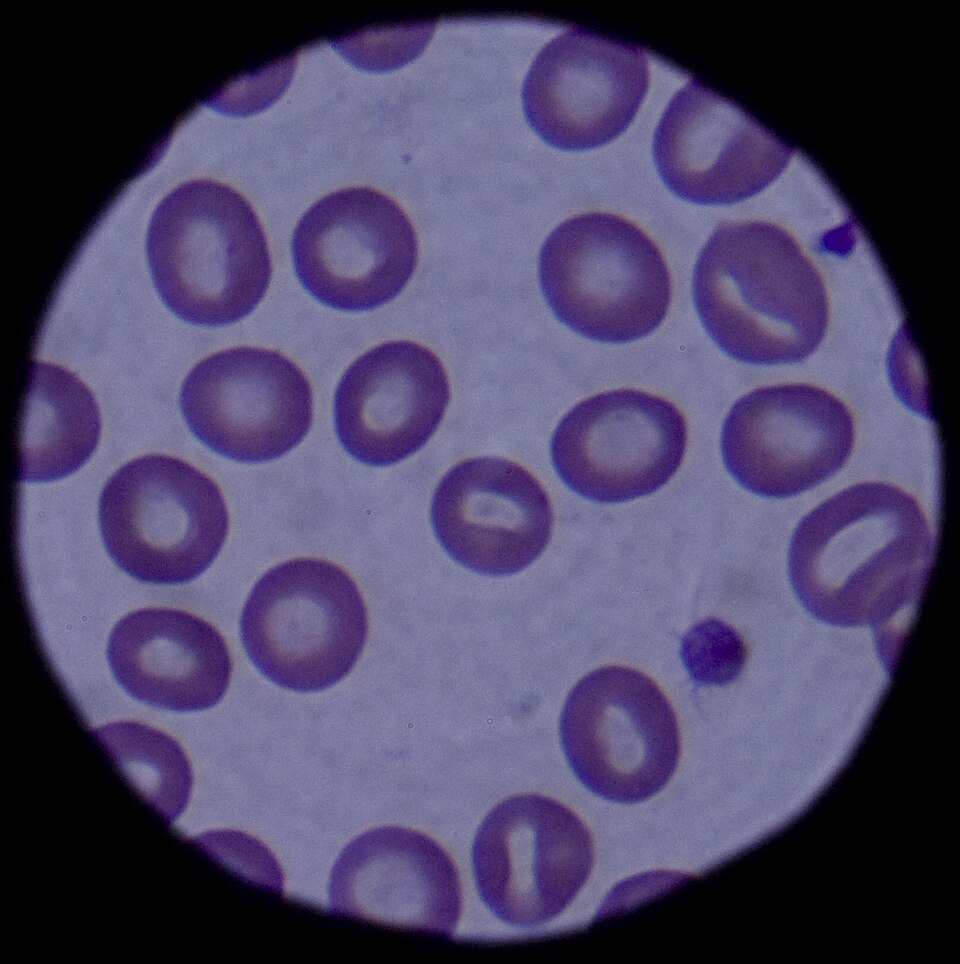
Correct — B, Both 1 and 2. Statement 1 is right: blood is a fluid connective tissue made of a straw-coloured liquid matrix called plasma, which is roughly 55 per cent of the volume and about nine-tenths water, in which three kinds of formed elements are suspended — red blood cells or erythrocytes, white blood cells or leucocytes, and platelets. So blood is indeed plasma plus different types of cells. Statement 2 is also right: the colour comes from haemoglobin, the iron-containing pigment packed inside red blood cells. Each haem group holds an iron atom that binds oxygen, and it is this haem-iron that absorbs light in a way that makes oxygenated blood bright scarlet and deoxygenated blood a darker, duller red.
- (a)Only 2 — This denies statement 1, but plasma plus formed elements is the standard description of blood in every textbook. A candidate might hesitate over the fact that platelets are strictly fragments of larger cells rather than complete cells; that technicality does not overturn the statement, which is about blood being a mixture of a liquid and cellular components.
- (c)Neither 1 nor 2 — Both statements are correct, so this rules out the answer altogether. It is the option for a candidate who over-thinks both clauses at once.
- (d)Only 1 — This denies statement 2, but haemoglobin is precisely what makes blood red. The proof runs the other way too: animals whose circulating fluid lacks haemoglobin are not red — a cockroach's haemolymph carries no respiratory pigment at all and looks colourless, while many molluscs and arthropods use the copper-based haemocyanin and have bluish blood.
Blood is classed as a fluid connective tissue: unlike other tissues its matrix is liquid. Plasma, about 55 per cent of blood by volume, is roughly 90 to 92 per cent water and carries proteins such as albumin, globulins and fibrinogen, along with glucose, salts, hormones and wastes. The remaining 45 per cent, the packed cell volume or haematocrit, consists of erythrocytes, leucocytes and platelets. Erythrocytes are the most numerous by far, and in adult humans they are biconcave discs that have lost their nucleus, which leaves the maximum room for haemoglobin — an iron-containing protein of four polypeptide chains, each carrying a haem group.
Two-statement questions like this are settled by testing each clause on its own rather than looking for a hidden catch. Statement 1 is the definition of blood; statement 2 is the reason for its colour. The only place a candidate can talk themselves out of the answer is by demanding textbook precision — that platelets are cell fragments, or that it is the haem group rather than the whole haemoglobin molecule that carries the colour. Neither refinement makes the statement wrong, and the way to check the second one is to remember what happens when haemoglobin is absent: the blood is no longer red.
- Plasma is about 55 per cent of blood volume and is roughly 90 to 92 per cent water; the formed elements make up the remaining 45 per cent, the packed cell volume
- The formed elements are erythrocytes (red blood cells), leucocytes (white blood cells) and thrombocytes (platelets); mature human red blood cells have no nucleus
- Haemoglobin is the iron-containing pigment inside red blood cells; a healthy adult carries roughly 12 to 16 grams of it per 100 millilitres of blood, and a red blood cell lives about 120 days
- Oxygenated haemoglobin is bright red and deoxygenated haemoglobin is a darker red — the colour difference that distinguishes arterial from venous blood
- Not all animal blood is red: haemocyanin, a copper-based pigment, gives many molluscs and arthropods bluish blood, and a cockroach's haemolymph carries no respiratory pigment and looks colourless
- Treating plasma and serum as the same thing — serum is plasma with the clotting factors, chiefly fibrinogen, removed
- Assuming every animal's blood is red; the absence of haemoglobin, not the absence of blood, is what changes the colour
- Forgetting that mature human red blood cells are enucleate, or counting platelets as complete cells rather than fragments
UPPSC keeps this at the definitional level — two plain statements about composition or colour, to be marked correct or incorrect. UPSC turns the same material into applied questions: why carbon monoxide starves tissues of oxygen, whether blood holds more platelets than white cells, or what proportion of blood volume the cells occupy.
With reference to the blood in a normal person, which one of the following statements is correct?
- (a) Compared to arteries, veins are less numerous and hold less of the body’s blood at any given time
- (b) Blood cells constitute about 70 % of the total volume of the blood
- (c) White Blood Cells (WBC) are made by lymph nodes only
- (d) The blood has more platelets than WBC
Answer(d) The blood has more platelets than WBC
Directly the same ground as statement 1. One of its distractors claims blood cells are about 70 per cent of blood volume, which is wrong for the same reason the UPPSC statement is right — cells are roughly 45 per cent and plasma the larger share. It also fixes the relative counts of platelets and white cells.
Excessive release of the pollutant carbon monoxide (CO) into the air may produce a condition in which oxygen supply in the human body decreases. What causes this condition ?
- (a) When inhaled into the human body, CO is converted into CO₂
- (b) The inhaled CO has much higher affinity for haemoglobin as compared to oxygen
- (c) The inhaled CO destroys the chemical structure of haemoglobin
- (d) The inhaled CO adversely affects the respiratory centre in the brain
Answer(b) The inhaled CO has much higher affinity for haemoglobin as compared to oxygen
The applied form of statement 2. It works only if you know that haemoglobin is the oxygen-carrying pigment in blood: carbon monoxide binds it far more tightly than oxygen does, which is why the gas causes hypoxia.
Which of the following organisms has white blood ?
- (a) Lizard
- (b) Cockroach
- (c) House bug
- (d) Mosquito
Answer(b) Cockroach
The cleanest possible test of statement 2, from UPPSC's own paper. The cockroach's body fluid looks white precisely because it contains no haemoglobin — the same fact stated the other way round.
'Blue baby syndrome' is due to the presence of which of the following in the blood ?
- (a) Haemoglobin
- (b) Methemoglobin
- (c) Lead
- (d) Nitrate
Answer(b) Methemoglobin
Extends the haemoglobin idea one step further: when nitrite oxidises the iron in haemoglobin, the resulting methemoglobin can no longer carry oxygen, which is what produces blue baby syndrome. Same pigment, same iron chemistry, applied to health and water quality.
- practice — not a real PYQ
Which of the following gives human blood its red colour?
- (a)Haemocyanin
- (b)Haemoglobin
- (c)Melanin
- (d)Fibrinogen
Answer(b) Haemoglobin — the iron-containing pigment inside red blood cells; haemocyanin is the copper-based pigment that gives some invertebrates bluish blood.
- practice — not a real PYQ
Approximately what proportion of the volume of human blood is plasma?
- (a)About 25 per cent
- (b)About 40 per cent
- (c)About 55 per cent
- (d)About 75 per cent
Answer(c) About 55 per cent — the remaining 45 per cent or so is the packed cell volume made up of the formed elements.