
Which of the following organisms has white blood?
- (a)Lizard
- (b)Cockroach
- (c)House bug
- (d)Mosquito
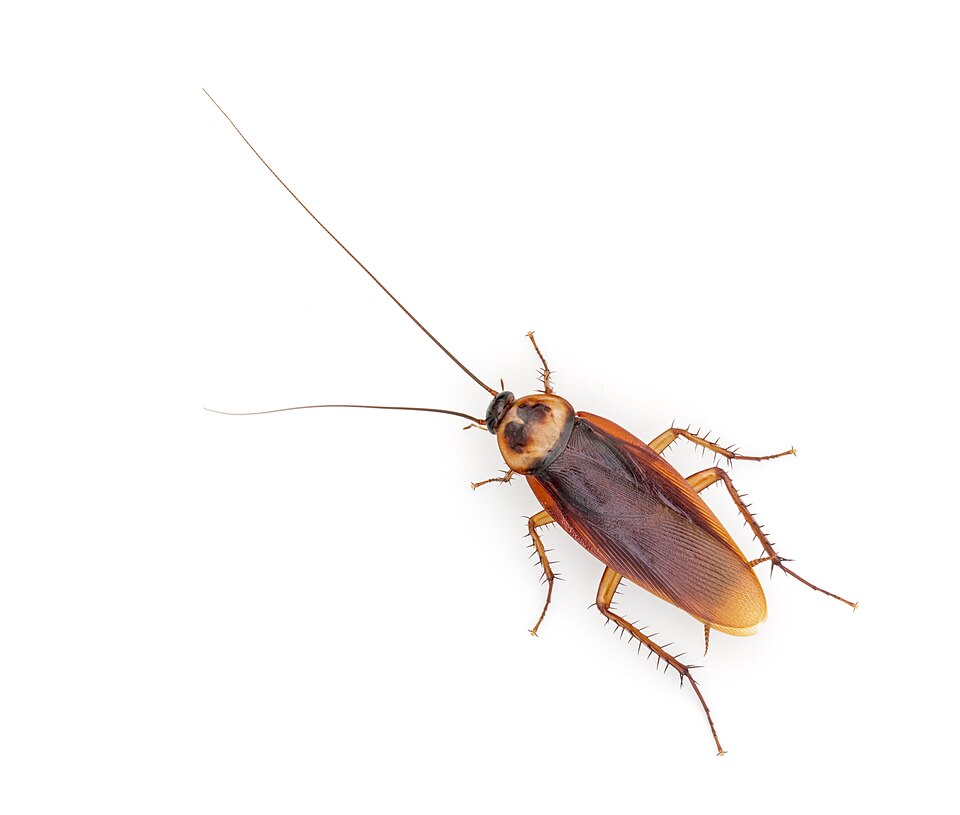
Correct — B, cockroach. The cockroach is the standard textbook example of an animal with 'white' blood: its body fluid is haemolymph, a colourless to milky-white fluid that carries no respiratory pigment at all. It looks white rather than red because it contains no haemoglobin and no red blood cells — oxygen never travels in it. Instead the cockroach breathes through a tracheal system: air enters through spiracles on the sides of the body and branching tracheae and tracheoles deliver it straight to the tissues, so the circulating fluid is freed of any oxygen-carrying job and only moves nutrients, hormones, wastes and immune cells (haemocytes) around the open, sinus-based circulatory system.
- (a)Lizard — A lizard is a vertebrate, and like all vertebrates it has red blood — haemoglobin packed inside red blood cells, circulating in a closed circulatory system with a heart and vessels. It is the clear odd one out among these four options.
- (c)House bug — The household bug (khatmal/bed bug) is an insect, so its own haemolymph is also pigment-free. But it is an obligate blood-feeder: after a meal its abdomen is visibly swollen and red with ingested host blood, so it is never the organism cited as an example of white blood — and that visible red is exactly what the question is separating out.
- (d)Mosquito — Same reason as the bug — the female mosquito engorges on vertebrate blood, and a fed mosquito is conspicuously red-bodied. The question wants the insect whose own fluid is what you see, not the one carrying somebody else's blood.
Insects do not have blood in the vertebrate sense. They have haemolymph, a colourless, pale-yellow or greenish fluid that fills the body cavity (haemocoel) and is pushed around by a dorsal tubular heart in an open circulatory system, bathing organs directly instead of running through capillaries. Because oxygen is delivered by the tracheal system straight to the tissues, haemolymph carries no respiratory pigment; its jobs are nutrient transport, hormone transport, waste removal, hydraulic pressure (used in moulting and wing expansion) and immunity through haemocytes.
Read the options as a vertebrate-versus-insect sort first: the lizard goes out immediately because vertebrates have haemoglobin. Among the three insects, all in fact have pigment-free haemolymph, but the bed bug and the mosquito are blood-feeders whose bodies look red once fed, so the cockroach is the only one that a textbook (and the examiner) will call an animal with white blood. Honest caveat worth carrying: colourless haemolymph is a feature of insects generally, not of the cockroach uniquely, and a few exceptions such as Chironomus larvae ('bloodworms') do carry haemoglobin in their haemolymph.
- Insect body fluid is haemolymph — colourless or milky, with no haemoglobin and no red blood cells.
- Insects have an open circulatory system with a dorsal tubular heart; haemolymph bathes the organs directly.
- Oxygen reaches insect tissues through spiracles, tracheae and tracheoles, not through the circulating fluid.
- Haemolymph carries nutrients, hormones, wastes and haemocytes (immune cells), and provides hydraulic pressure during moulting.
- Exception to remember: Chironomus (midge) larvae, the 'bloodworms', do possess haemoglobin in their haemolymph.
- Assuming 'white blood' means white blood cells (leucocytes); the question is about the colour of the circulating fluid, not a cell type.
- Thinking cockroaches are unique — colourless haemolymph is common to insects; the cockroach is simply the standard example, and blood-feeding insects look red only because of the host blood in their gut.
- Confusing colourless insect haemolymph with the blue blood of crabs, prawns and molluscs, which does carry a pigment — copper-based haemocyanin.
UPPSC asks single-line biology recall of this kind ('which organism has white blood', 'which has blue blood'); UPSC prefers the mechanism behind it — how insects respire, or which pigment an animal group uses — so learn the reason, not just the example.
How do most insects respire?
- (a) Through skin
- (b) Through gills
- (c) By lungs
- (d) By tracheal system
Answer(d) By tracheal system
The same concept from the other end — because the tracheal system carries oxygen straight to insect tissues, the haemolymph needs no haemoglobin, which is exactly why a cockroach's 'blood' is white.
- practice — not a real PYQ
The blood (haemolymph) of a cockroach appears colourless mainly because it lacks
- (a)Plasma proteins
- (b)Haemoglobin
- (c)Haemocytes
- (d)Dissolved salts
Answer(b) Haemoglobin — insect haemolymph carries no respiratory pigment, since oxygen is delivered directly to tissues by the tracheal system.
- practice — not a real PYQ
The blue colour of the blood of crabs and prawns is due to the presence of
- (a)Haemoglobin
- (b)Haemocyanin
- (c)Chlorophyll
- (d)Melanin
Answer(b) Haemocyanin — a copper-containing respiratory pigment that turns blue when oxygenated, found in many crustaceans and molluscs, unlike the iron-based haemoglobin of vertebrates.