With reference to Jnanpith Award, which of the following statements is/are correct ? 1. The 58th Jnanpith Award was conferred upon Sanskrit Scholar Jagadguru Rambhadracharya Ji. 2. The 1st Jnanpith Award was given in 1965. Select the correct answer from the code given below : Code :
- (a)Only 2
- (b)Both 1 and 2
- (c)Neither 1 nor 2
- (d)Only 1
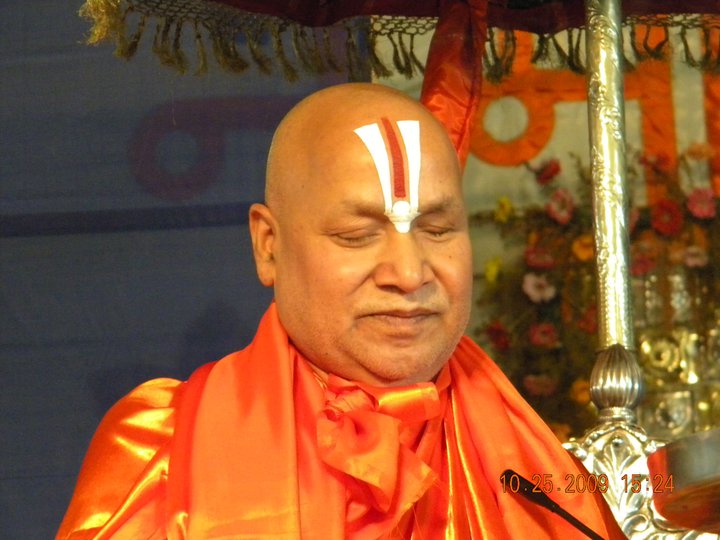
Correct — B, Both 1 and 2. Statement 1 is right: the 58th Jnanpith Award, for the year 2023, was announced on 17 February 2024 and went jointly to Jagadguru Rambhadracharya, who writes in Sanskrit, and to the Urdu poet and lyricist Gulzar. The statement says the award was conferred upon the Sanskrit scholar Rambhadracharya, which is exactly what happened; it simply does not add that he shared it, and sharing does not make the statement false. Statement 2 is also right: the Jnanpith, administered by the Bharatiya Jnanpith, was conferred for the first time in 1965, on the Malayalam poet G. Sankara Kurup for his collection Odakkuzhal, 'The Bamboo Flute'.
- (a)Only 2 — This rejects statement 1, presumably because the 58th award was shared with Gulzar or because it was announced in 2024 rather than 2023. Neither point contradicts the statement as written — Rambhadracharya, a Sanskrit scholar, genuinely is a recipient of the 58th Jnanpith.
- (c)Neither 1 nor 2 — Both statements are in fact correct, so this rules out the answer entirely. It is the option for a candidate who half-remembers that the 58th award was shared and also doubts the 1965 starting year.
- (d)Only 1 — This rejects the first-award year. 1965 is correct — that is when G. Sankara Kurup received the inaugural Jnanpith. A candidate who confuses the Jnanpith's first year with the Sahitya Akademi Awards, which began in 1955, would land here.
The Jnanpith is India's most prestigious literary award, given by the Bharatiya Jnanpith to an Indian writer for an outstanding contribution to literature. It is a lifetime-contribution honour rather than a book prize, and it covers writing in the languages of the Eighth Schedule as well as English. The winner receives a citation, a bronze figure of Vagdevi (Saraswati) and a cash prize, revised to eleven lakh rupees. It should not be confused with the Sahitya Akademi Award, which is given every year in each of twenty-four languages by a national academy, or with the Akademi's own highest honour, election as a Fellow.
Award questions in a state prelims almost always carry a local hook, and this one does: Jagadguru Rambhadracharya is based at Chitrakoot in Uttar Pradesh, which is what makes him a natural UPPSC subject. The reasoning discipline here is to read the statement exactly as written. A shared award still counts as 'conferred upon' each recipient, and the award year (2023) is not the same as the announcement date (February 2024) — candidates who let either of those niceties turn statement 1 false end up at option (a). Present-day note for a 2026 reader: the anchor for this paper is the exam date of 12 October 2025, and later Jnanpith cycles do not disturb either statement.
- The first Jnanpith Award was conferred in 1965 on the Malayalam poet G. Sankara Kurup for his poetry collection Odakkuzhal
- The 58th Jnanpith, for the year 2023, was announced on 17 February 2024 and shared by Jagadguru Rambhadracharya (Sanskrit) and Gulzar (Urdu)
- Rambhadracharya, based at Chitrakoot in Uttar Pradesh, is the second Sanskrit writer to receive the award — Satya Vrat Shastri won the 42nd Jnanpith for 2006
- The award is administered by the Bharatiya Jnanpith and carries a citation, a bronze Vagdevi and a cash prize of eleven lakh rupees
- Amitav Ghosh, the 54th recipient for 2018, was the first writer in English to receive the Jnanpith
- Treating a jointly awarded prize as disqualifying a statement that names only one of the two recipients
- Mixing up the award year with the announcement year, or the ordinal number with either of them
- Confusing the Jnanpith with the Sahitya Akademi Award — different institutions, different first years and a different basis for selection
UPPSC asks the personality and the number — which award, which edition, which recipient — usually as a two-statement item. UPSC leans towards the institution instead: which body confers an honour, what its highest recognition is, or where an award stands in relation to Article 18 of the Constitution.
Consider the following statements : 1. The National School of Drama was set up by Sangeet Natak Akademi in 1959. 2. The highest honour conferred by the Sahitya Akademi on a writer is by electing him its Fellow. Which of the statements given above is/are correct ?
- (a) 1 only
- (b) 2 only
- (c) Both 1 and 2
- (d) Neither 1 nor 2
Answer(c) Both 1 and 2
Same concept from the institutional side — the hierarchy of India's literary honours. Knowing that the Sahitya Akademi's highest recognition is Fellowship, and that the Jnanpith is a separate award of the Bharatiya Jnanpith, is exactly what stops a candidate conflating the two bodies in the UPPSC question.
Who is the Author of the famous Novel “All the Lives We Never Lived”, which received the Sahitya Akademi Award, 2022?
- (a) Shobha De
- (b) Anuradha Roy
- (c) Anita Desai
- (d) Sudha Murthy
Answer(b) Anuradha Roy
Same concept — identifying the recipient of a major Indian literary award for a named year. UPPSC put the Sahitya Akademi Award in 2023 and the Jnanpith in 2025, so the pair maps the two most-asked domestic literary honours.
The author of the Booker Prize Winner 2019 book "Girl, Women, Other" is
- (a) Margaret Atwood
- (b) Elif Shafak
- (c) Salman Rushdie
- (d) Bernadine Evaristo
Answer(d) Bernadine Evaristo
The international counterpart of the same habit — a literary prize for a stated year and the writer who won it. Reading these together shows how consistently UPPSC turns the previous year's literary awards into a one-line factual question.
- practice — not a real PYQ
The 58th Jnanpith Award was shared by Jagadguru Rambhadracharya and which of the following writers?
- (a)Gulzar
- (b)Javed Akhtar
- (c)Damodar Mauzo
- (d)Nilamani Phookan
Answer(a) Gulzar — the Urdu poet and lyricist shared the 58th award; Damodar Mauzo (Konkani, 57th) and Nilamani Phookan (Assamese, 56th) were earlier recipients.
- practice — not a real PYQ
The first Jnanpith Award, given in 1965 to G. Sankara Kurup, was for a work in which language?
- (a)Kannada
- (b)Malayalam
- (c)Telugu
- (d)Tamil
Answer(b) Malayalam — the award recognised his poetry collection Odakkuzhal, 'The Bamboo Flute'.