
Who among the following resigned from the Viceroy's Executive Council, saddened by the Jallianwala Bagh Massacre ? 1. Chettur Sankaran Nair 2. Ishwari Prasad 3. Muhammad Shafi 4. Iqbal Narain Gurtu Select the correct answer from the code given below : Code :
- (a)2 and 3
- (b)3 and 4
- (c)Only 4
- (d)Only 1
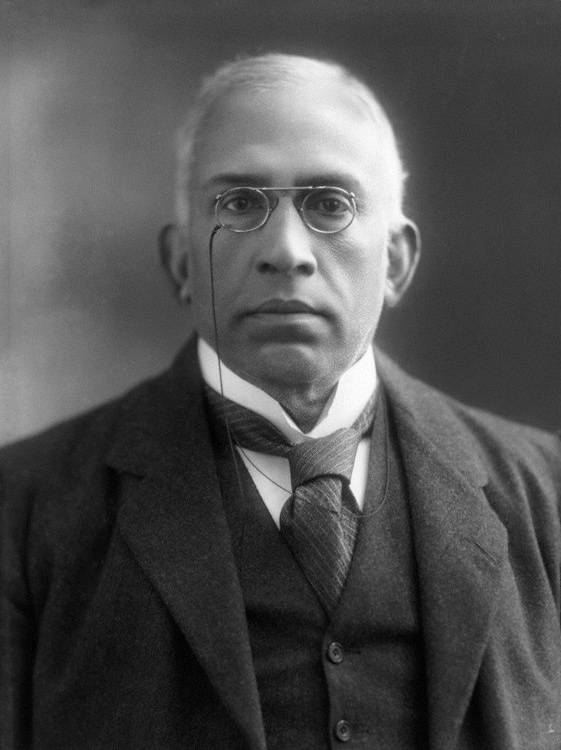
Correct — D, Only 1: Chettur Sankaran Nair. Read the letter off the page, because this booklet does not follow the layout most candidates have drilled — here 'Only 1' sits at (d) and the two-name codes occupy (a) and (b). Sankaran Nair was the sole Indian member of the Viceroy's Executive Council, appointed in 1915 with the education portfolio, and he gave up that seat in 1919 in protest at the Jallianwala Bagh massacre of 13 April and the martial-law regime imposed on Punjab. It was the single most conspicuous act of official protest by an Indian inside the government of the day, and it cost him a position no other Indian then held. He was no radical: a Madras High Court judge, Congress President as far back as the Amravati session of 1897, and a lifelong constitutionalist who would later quarrel bitterly with Gandhi. That is precisely what gave the resignation its force. He continued the fight in print, publishing 'Gandhi and Anarchy' in 1922, which attacked Sir Michael O'Dwyer, the Lieutenant-Governor of Punjab, for his part in the repression. O'Dwyer sued him for libel in London, and in 1924 the Court of King's Bench found for O'Dwyer by eleven votes to one, awarding 500 pounds in damages and 7,000 pounds in costs; Nair refused to apologise and paid. None of the other three names sat on the Viceroy's Executive Council in April 1919, so none of them could have resigned from it. The answer is the single name, statement 1 alone, and on this paper that is option (d).
- (a)2 and 3 — Neither name works. Ishwari Prasad (1888–1986) was a historian of medieval India who taught at the University of Allahabad and wrote on the Tughluqs, Humayun and the Mughal Empire; he received the Padma Bhushan in 1984 and was elected three times to the Uttar Pradesh Legislative Council from the graduates' constituency — a provincial body, and decades later. He was never a member of the Viceroy's Executive Council. Mian Muhammad Shafi is the sharper trap, because he genuinely was a member of that council — but he JOINED it in July 1919, serving from 1919 to 1924 with education and health and later law, and acting as vice-president of the Governor-General's Executive Council between 1922 and 1925. He entered the council in the year Nair left it; he did not resign from it over Amritsar.
- (b)3 and 4 — Repeats the Muhammad Shafi error — a man who came into the Viceroy's Executive Council in July 1919 and stayed on it until 1924, later knighted KCSI — and adds Iqbal Narain Gurtu, a Banaras educationist and public figure whose work lay in provincial and civic life rather than in the Government of India's cabinet. The Viceroy's Executive Council was a very small body with only one Indian member at the time, which is the fact that quietly disposes of every multi-name option here: if only one Indian sat on it, only one Indian could resign from it.
- (c)Only 4 — Iqbal Narain Gurtu was not a member of the Viceroy's Executive Council and so cannot be the answer. This option is attractive only because it has the right shape — a single name — and a candidate who has correctly worked out that the answer must be one person, but cannot recall which, may reach for it. In this booklet the single-name options are deliberately split between (c) and (d), so shape alone will not carry you; the identification has to be made.
The Viceroy's Executive Council was the small cabinet that ran British India, and after the Morley-Minto reforms of 1909 it carried a single Indian member. In 1915 that seat went to Chettur Sankaran Nair, who took the education portfolio. When General Dyer's troops fired on the Baisakhi gathering at Jallianwala Bagh in Amritsar on 13 April 1919 and Punjab was placed under martial law, Nair resigned it. The gesture matters in the standard narrative because it belongs to a cluster of high-status renunciations that followed the massacre and turned a provincial atrocity into a national rupture — Rabindranath Tagore renounced his knighthood at the end of May 1919, and Gandhi returned his Kaiser-i-Hind medal the following year during Non-Cooperation.
This is a 'who held which office' question, and the way to solve it is by the office rather than by the name. The Viceroy's Executive Council in 1919 had exactly one Indian member, so at most one of four names can be the answer — which immediately kills options (a) and (b), both of which propose two resignations from a seat only one person occupied. That leaves a choice between two single names at (c) and (d), and only the identification can settle it. Note how the examiner has built the trap: Muhammad Shafi is on the list precisely because he really did sit on that council, so a candidate who remembers the name in connection with the Viceroy's Executive Council but not the direction of travel will convict him. He arrived in July 1919; Nair left in 1919. Same council, same year, opposite movement.
- Chettur Sankaran Nair joined the Viceroy's Executive Council in 1915 with the education portfolio, as its sole Indian member, and resigned it in 1919 over the Jallianwala Bagh massacre and the Punjab martial law
- He had been President of the Indian National Congress at the Amravati session of 1897, and had served as a judge of the Madras High Court
- His 1922 book 'Gandhi and Anarchy' condemned Lieutenant-Governor Sir Michael O'Dwyer's role in the Punjab repression; O'Dwyer sued for libel in 1924 and the Court of King's Bench found for him eleven to one, awarding 500 pounds damages and 7,000 pounds costs. Nair refused to apologise and paid
- Mian Muhammad Shafi was a member of the Viceroy's Executive Council from 1919 to 1924 — he became a member in July 1919, held education, health and later law, acted as vice-president of the Governor-General's Executive Council from 1922 to 1925 and was knighted KCSI in 1925
- Ishwari Prasad (1888–1986) was a historian of medieval India at the University of Allahabad, elected three times to the UP Legislative Council from the graduates' constituency and awarded the Padma Bhushan in 1984 — never a member of the Viceroy's Executive Council
- The massacre triggered a chain of renunciations by Indians holding imperial honours and offices: Nair's resignation, Rabindranath Tagore's renunciation of his knighthood at the end of May 1919, and Gandhi's return of the Kaiser-i-Hind medal in 1920
- The official inquiry that followed was the Hunter Committee of 1919; the Congress ran its own parallel inquiry, and Secretary of State Edwin Montagu described Dyer's action as 'preventive murder'
- This paper's shuffled option order. 'Only 1' sits at (d), not at (a), and the single-name options are split between (c) and (d) so that shape alone cannot be used to guess
- Convicting Mian Muhammad Shafi. He was a member of the Viceroy's Executive Council, but he joined it in July 1919 and served until 1924 — the association is real, the direction is reversed
- Confusing the resignation of an office with the renunciation of an honour. Nair gave up a seat in the government; Tagore gave up a knighthood; Gandhi returned a medal. Examiners swap the three freely
UPPSC asks the Jallianwala Bagh cluster in several shapes — who resigned, who renounced a title, which committee inquired, and where the massacre falls in a chronology — and it likes to build the wrong options out of real people from adjacent offices rather than invented names. UPSC has historically preferred the institutional angle, matching the Hunter Committee to its subject or asking who called the massacre 'preventive murder', so the person, the inquiry and the phrase are all worth holding together.
Match List I with List II and select the correct answer by using the codes given below the lists: List I I. Butler Committee II. Hurtog Committee Report III. Hunter Inquiry Committee Report IV. Muddiman Committee Report List II A) Jallianwala Bagh Massacre Report B) Relationship between the Indian States and Paramount Power C) Working of Dyarchy as laid down in the Montague-Chelmsford Reforms D) The growth of education in British India and potentialities of its further progress Codes:
- (a) I-C, II-B, III-A, IV-D
- (b) I-A, II-D, III-B, IV-C
- (c) I-B, II-A, III-C, IV-D
- (d) I-B, II-D, III-A, IV-C
Answer(d) I-B, II-D, III-A, IV-C
Covers the official response to the same event that provoked the resignation. The Hunter Inquiry Committee is the body that investigated Jallianwala Bagh, and holding it apart from the Butler, Hartog and Muddiman committees is the institutional half of this topic — the half UPSC prefers. Nair's resignation and the Hunter inquiry are the two standard reference points for how the massacre was answered from inside the imperial system, one by refusal and one by procedure.
Which one of the following events was characterised by Montague as ‘Preventive Murder’?
- (a) Killing of INA activists
- (b) Massacre of Jallianwala Bagh
- (c) Shooting of the Mahatma
- (d) Shooting of Curzon-Wythe
Answer(b) Massacre of Jallianwala Bagh
Gives the other famous protest from within the establishment. Edwin Montagu, the Secretary of State for India, called Dyer's action 'preventive murder'; Sankaran Nair, the one Indian in the Viceroy's Executive Council, resigned over it. Learning the two together builds the picture the UPPSC question depends on — that condemnation of Amritsar came not only from the nationalist platform but from senior office-holders, which is what made those gestures worth examining.
Arrange the following events in a chronological order and select the correct answer from the codes given below : I. Appointment of Simon Commission II. Jallianwala Bagh Massacre III. Mahatma Gandhi's Dandi March IV. Death of Ferozshah Mehta Codes :
- (a) IV, II, I, III
- (b) I, II, IV, III
- (c) II, III, IV, I
- (d) IV, III, II, I
Answer(a) IV, II, I, III
Places the massacre in the sequence UPPSC expects a candidate to hold — after Pherozeshah Mehta's death in 1915, before the Simon Commission and the Dandi March. That chronology is what makes the resignation intelligible: Nair had been in the Viceroy's Executive Council since 1915, and 13 April 1919 is the point at which a constitutionalist of that generation found the position untenable.
Which of the following events was the last in chronological order?
- (a) Jallianwala Bagh Massacre
- (b) Moplah Revolt
- (c) Khilafat Movement
- (d) Home Rule Movement
Answer(b) Moplah Revolt
Another UPPSC chronology built on the same event, this time set against the Home Rule Movement, the Khilafat agitation and the Moplah rebellion. It shows how persistently the commission returns to 1919 as the hinge of the period, and it is worth working alongside the present question so that the massacre is stored with both its date and its consequences — the Hunter inquiry, Tagore's knighthood and Sankaran Nair's seat.
- practice — not a real PYQ
Who among the following was the sole Indian member of the Viceroy's Executive Council at the time of the Jallianwala Bagh massacre?
- (a)Mian Muhammad Shafi
- (b)Chettur Sankaran Nair
- (c)S. P. Sinha
- (d)Tej Bahadur Sapru
Answer(b) Chettur Sankaran Nair — appointed in 1915 with the education portfolio, he resigned the seat in 1919 in protest at the massacre and the Punjab martial law.
- practice — not a real PYQ
The book 'Gandhi and Anarchy', which attacked Sir Michael O'Dwyer's conduct in Punjab and led to a celebrated libel action in London, was written by
- (a)Motilal Nehru
- (b)C. Sankaran Nair
- (c)Madan Mohan Malaviya
- (d)Lala Lajpat Rai
Answer(b) C. Sankaran Nair — published in 1922; O'Dwyer sued in 1924 and the King's Bench found for him eleven to one, but Nair refused to apologise and paid the damages.