
Which of the following pairs (National Park – State/Union Territory) is not correctly matched ?
- (a)Rajaji – Uttarakhand
- (b)Pin Valley – Jammu and Kashmir
- (c)Bandipur – Karnataka
- (d)Simlipal – Odisha
Correct — B, Pin Valley – Jammu and Kashmir. Pin Valley National Park is in Himachal Pradesh, not in Jammu and Kashmir. It occupies the valley of the Pin river, a tributary of the Spiti, in the Lahaul and Spiti district of Himachal Pradesh, and was declared a national park in 1987. This is cold-desert country on the Tibetan side of the main Himalayan range — high, dry, treeless and snowbound for much of the year — and the park is protected chiefly as snow-leopard habitat, along with its prey species, the Siberian ibex and the blue sheep, and animals such as the Himalayan wolf and the red fox. Jammu and Kashmir's own national parks are a different set — Dachigam, above Srinagar, the last stronghold of the hangul or Kashmir stag, Kishtwar High Altitude, Kazinag and City Forest (Salim Ali). The park students most often confuse with Pin Valley is Hemis, the other great snow-leopard reserve — and Hemis is in Ladakh, which has been a separate Union Territory since 31 October 2019, so it does not belong to Jammu and Kashmir either. The remaining three pairs are all correct: Rajaji is in Uttarakhand, Bandipur in Karnataka and Simlipal in Odisha. Hence (b) is the pair that is not correctly matched.
- (a)Rajaji – Uttarakhand — Correctly matched, so it cannot be the answer. Rajaji National Park spreads across the Shivalik foothills in the Haridwar, Dehradun and Pauri Garhwal districts of Uttarakhand. It was created in 1983 by merging the Rajaji, Motichur and Chilla sanctuaries, is named after C. Rajagopalachari, and was declared a tiger reserve in 2015.
- (c)Bandipur – Karnataka — Correctly matched. Bandipur lies in Chamarajanagar district in southern Karnataka, on the Mysuru–Ooty road, and was among the first nine reserves brought under Project Tiger in 1973. It forms part of the Nilgiri Biosphere Reserve and is contiguous with Nagarhole in Karnataka, Mudumalai in Tamil Nadu and Wayanad in Kerala.
- (d)Simlipal – Odisha — Correctly matched. Simlipal is in Mayurbhanj district in northern Odisha; it too was among the original Project Tiger reserves of 1973, is a biosphere reserve, and is the only place in the world with a breeding population of melanistic — near-black — tigers.
The national parks that examiners return to are the ones that stand for a distinctive habitat or a flagship species, and Pin Valley stands for the Indian cold desert. The trans-Himalayan tracts of Spiti, Lahaul and Ladakh lie in the rain shadow of the great Himalayan wall: rainfall is a few centimetres a year, there are no trees, and the vegetation is a sparse cover of cushion plants and hardy shrubs on bare mountainsides. That is snow-leopard country, and India protects it through Pin Valley and the Great Himalayan National Park in Himachal Pradesh, Hemis in Ladakh, Nanda Devi and Gangotri in Uttarakhand, and Kishtwar High Altitude in Jammu and Kashmir.
Every option in this question is a genuine park, so the work is purely locational, and the trap is that Pin Valley sounds as though it could belong anywhere in the western Himalaya. The discriminator is the name itself: the Pin is a tributary of the Spiti, and Spiti is in Himachal Pradesh. A second layer of difficulty has been added by the reorganisation of 31 October 2019, which split the old state of Jammu and Kashmir into two Union Territories — Jammu and Kashmir, and Ladakh. Any park question set after that date treats them separately, so Hemis is now answered as Ladakh, not as J&K, and Dachigam and Kishtwar High Altitude are the ones examiners use to answer 'Jammu and Kashmir'.
- Pin Valley National Park, declared in 1987, lies in the valley of the Pin river in Spiti, Lahaul and Spiti district, Himachal Pradesh — a high cold desert protected mainly for the snow leopard and its prey, the Siberian ibex and blue sheep.
- Himachal Pradesh's other national parks include the Great Himalayan National Park in Kullu district, inscribed as a UNESCO World Heritage Site in 2014, along with Inderkilla, Khirganga and Simbalbara.
- Jammu and Kashmir UT has four national parks — Dachigam (home of the hangul or Kashmir stag), Kishtwar High Altitude, Kazinag and City Forest (Salim Ali); Hemis National Park, the best-known snow-leopard park, is in Ladakh, a separate Union Territory since 31 October 2019.
- Rajaji National Park (Uttarakhand) was formed in 1983 by merging the Rajaji, Motichur and Chilla sanctuaries and became a tiger reserve in 2015; it is named after C. Rajagopalachari.
- Bandipur in Karnataka and Simlipal in Odisha were both among the first nine reserves notified under Project Tiger in 1973; Simlipal, in Mayurbhanj district, is also a biosphere reserve and the only known home of melanistic tigers.
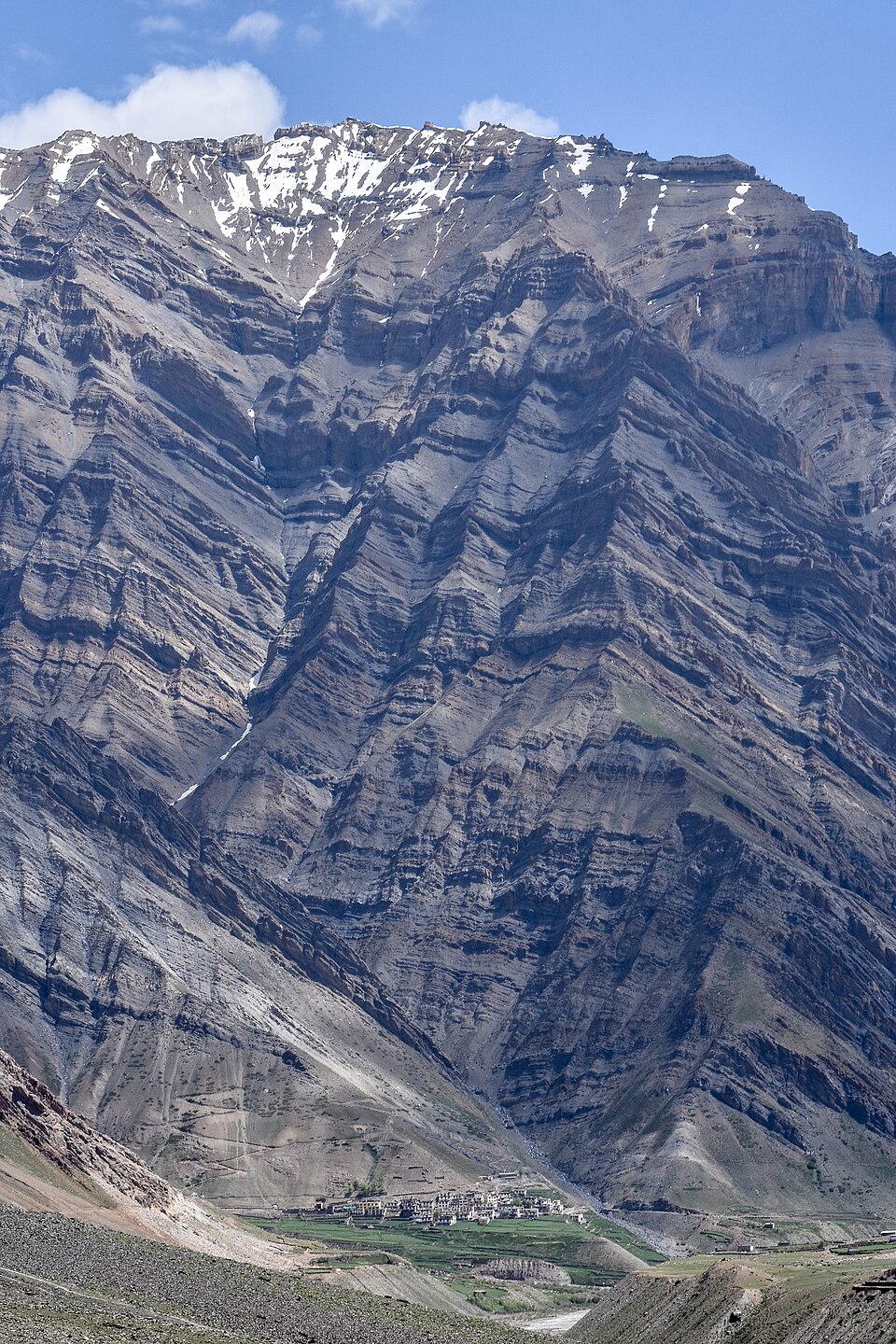
- Assuming that any cold, high, snow-leopard park must be in Jammu and Kashmir or Ladakh. Himachal Pradesh has two of the most important ones, Pin Valley and the Great Himalayan National Park.
- Ignoring the reorganisation of 31 October 2019: Hemis is now answered as Ladakh, a Union Territory, and not as Jammu and Kashmir. Post-2019 papers, including this one, use the phrase 'State/Union Territory' precisely for that reason.
- Reading 'Rajaji' as a place-name and hunting for it in the south — the park is named after C. Rajagopalachari and lies in the Shivaliks of Uttarakhand.
Park-and-state matching is one of the most reliably repeated formats in state PCS papers, and UPPSC usually keeps it plain — a four-pair list with one wrong state, or a match list of parks against states. UPSC dresses the same knowledge up: it will describe a habitat and ask which park fits ('which national park lies completely in the temperate alpine zone', 'which one is also known as Top Slip'), or pair a park with a river, a biosphere reserve or a species instead of with a state.
Match List I (National Park/Sanctuary) with List II (State) and select the correct answer using the codes given below: List I (A) Kanger Ghati National Park (B) Nagerhole National Park (C) Kugti Wildlife Sanctuary (D) Sultanpur Bird Sanctuary List II 1. Chhattisgarh 2. Haryana 3. Himachal Pradesh 4. Karnataka Codes: A B C D
- (a) 3 2 1 4
- (b) 1 4 3 2
- (c) 3 4 1 2
- (d) 1 2 3 4
Answer(b) 1 4 3 2
Exactly the same skill in UPSC's match-list form — protected areas held against the right state, with Himachal Pradesh among the answers and Nagarhole, Bandipur's neighbour in Karnataka, in the list.
Match List-I with List-II and select the correct answer using the codes given below the lists: List I (National Park/Wild-life Sanctuary) (A) Bondla Wildlife Sanctuary (B) Kangerghat National Park (C) Orang Sanctuary (D) Ushakothi Wildlife Sanctuary List II (State) 1. Orissa 2. Assam 3. Chhattisgarh 4. Goa 5. Tripura
- (a) A–2 B–4 C–5 D–1
- (b) A–4 B–3 C–2 D–1
- (c) A–2 B–3 C–5 D–4
- (d) A–4 B–1 C–2 D–3
Answer(b) A–4 B–3 C–2 D–1
Another park-to-state match list, useful for the same drill: fix one pair you are certain of, use it to strike out codes, and reserve your effort for the pair the examiner actually disturbed.
Match List – I with List – II and select the correct answer using the codes given below the lists : List – I (National Parks) A. Indravati B. Mollem C. Kalesar D. Betva List – II (States) 1. Jharkhand 2. Haryana 3. Goa 4. Chhattisgarh Codes :
- (a) A-4, B-3, C-2, D-1
- (b) A-4, B-2, C-3, D-1
- (c) A-4, B-1, C-3, D-2
- (d) A-3, B-4, C-2, D-1
Answer(a) A-4, B-3, C-2, D-1
UPPSC's own park-and-state question from four years earlier, showing how regularly the commission returns to this format — and that it favours the less-famous parks, which is where the marks are actually won.
- practice — not a real PYQ
Which one of the following national parks is a cold-desert habitat known for the snow leopard and the Siberian ibex?
- (a)Rajaji National Park
- (b)Pin Valley National Park
- (c)Simlipal National Park
- (d)Bandipur National Park
Answer(b) Pin Valley National Park — it lies in the trans-Himalayan cold desert of Spiti in Himachal Pradesh and is protected chiefly for the snow leopard and its prey species.
- practice — not a real PYQ
Which one of the following pairs (National Park – State/Union Territory) is NOT correctly matched?
- (a)Hemis – Ladakh
- (b)Dachigam – Jammu and Kashmir
- (c)Great Himalayan – Uttarakhand
- (d)Valley of Flowers – Uttarakhand
Answer(c) Great Himalayan – Uttarakhand — the Great Himalayan National Park is in Kullu district, Himachal Pradesh, and has been a UNESCO World Heritage Site since 2014.