
Consider the following events and arrange them in chronological order starting from the earliest : 1. Vellore Mutiny 2. Death of Nana Fadnavis 3. Recall of Wellesley 4. Anglo-Nepalese War Select the correct answer from the codes given below :
- (a)2, 3, 1, 4
- (b)4, 1, 3, 2
- (c)2, 3, 4, 1
- (d)3, 1, 2, 4
Correct — A, 2, 3, 1, 4. Put the four events on a date line and the sequence settles itself. (2) Nana Fadnavis, the Phadnavis or finance minister who had held the Maratha confederacy together from Poona for a quarter of a century, died on 13 March 1800 — the earliest of the four, and the event that historians treat as the moment the Maratha state lost its last competent central hand. (3) Richard Colley Wellesley's term as Governor-General ran from 18 May 1798 to 30 July 1805; the Court of Directors of the East India Company had turned against the expense and the high-handedness of his expansionist wars and his commercial and educational schemes, and he sailed home in the autumn of 1805, Cornwallis being sent out to replace him. (1) The Vellore Mutiny broke out on 10 July 1806 inside Vellore Fort in the Madras Presidency, when sepoys of the Madras Native Infantry rose against new dress regulations issued in November 1805 — no caste marks on the forehead, beards to be shaved, and a round hat with a leather cockade in place of the turban. (4) The Anglo-Nepalese or Gurkha War began on 1 November 1814, when Lord Hastings declared war on Nepal over the Tarai border, and ended with the Treaty of Sugauli on 4 March 1816. So 1800 → 1805 → 1806 → 1814, which is 2, 3, 1, 4 — option (a). Note the internal logic the examiner has built in: Wellesley's recall (1805) comes before Vellore (1806) precisely because the offending dress order of November 1805 was issued under his successor's watch at Madras, and the mutiny is what got the Governor of Madras, Lord William Bentinck, and the Commander-in-Chief, Sir John Cradock, recalled in their turn.
- (b)4, 1, 3, 2 — Exactly reverses the true order. It puts the Anglo-Nepalese War of 1814–16 first and the death of Nana Fadnavis in 1800 last, which is a fourteen-year error at both ends. This is the standard 'reverse sequence' decoy that UPPSC plants in every chronology item, and it is worth checking the first and last entries against a single known date before reading any further.
- (c)2, 3, 4, 1 — Gets the first two right — Nana Fadnavis (1800) then Wellesley's recall (1805) — and then swaps the last pair, placing the Anglo-Nepalese War (begun 1 November 1814) before the Vellore Mutiny (10 July 1806). This is the trap for a candidate who remembers that both belong to the early nineteenth century but cannot fix which came first. The Vellore rising is eight years the earlier of the two, and comes under Governor-General Sir George Barlow, whereas the Nepal war belongs to Lord Hastings.
- (d)3, 1, 2, 4 — Opens with the recall of Wellesley (1805) and pushes the death of Nana Fadnavis (13 March 1800) into third place, after the Vellore Mutiny of 1806. Nana Fadnavis died five years before Wellesley left India — indeed his death in 1800 is one reason the Second Anglo-Maratha War of 1803–05 went the way it did for Wellesley. The order of the first three items is therefore wrong.
The years 1798–1818 are the two decades in which the East India Company turned from one power among several into the paramount power in India. Wellesley's Subsidiary Alliance system, the Second Anglo-Maratha War, the Vellore Mutiny, the war with Nepal and finally the Third Anglo-Maratha War all fall inside them. A UPPSC chronology question on this period is really asking whether you can date the Company's expansion, so the examinable unit is not the event alone but the event plus its year and the Governor-General in office. The Governor-General sequence for these two decades runs Wellesley (1798–1805) → Cornwallis, who died within months → Sir George Barlow (acting, 1805–07) → Lord Minto (1807–13) → Lord Hastings (1813–23).
The fastest way to solve a four-item chronology is to anchor on the one date you are surest of and sort the rest around it. Here almost every candidate knows the Anglo-Nepalese War as 1814–16, ending in the Treaty of Sugauli — so item 4 must be last, which alone kills options (b) and (c). Of the two survivors, (a) and (d), the difference is whether Nana Fadnavis died before or after Wellesley was recalled; since Nana Fadnavis is a figure of the eighteenth-century Poona court and his death in 1800 is the standard textbook marker of the Maratha collapse, he must come first, and (a) survives. The tempting error is to associate the Vellore Mutiny loosely with 'the 1857 period' because it was a sepoy rising over religious grievances — it is in fact half a century earlier, in 1806, and is usually taught as the first major mutiny of Indian troops against the Company.
- Nana Fadnavis (12 February 1742 – 13 March 1800) was the Phadnavis, or finance minister, of the Maratha confederacy at Poona; he steered the state through the instability that followed the murder of Narayanrao in 1773 and the minority of Madhavrao II. His death in 1800 is the conventional marker for the end of effective central control at Poona.
- Richard Wellesley was Governor-General from 18 May 1798 to 30 July 1805 and introduced the Subsidiary Alliance. Hostility in the Court of Directors to the cost and reach of his policies led to his return home in the autumn of 1805; Cornwallis was sent out as his successor.
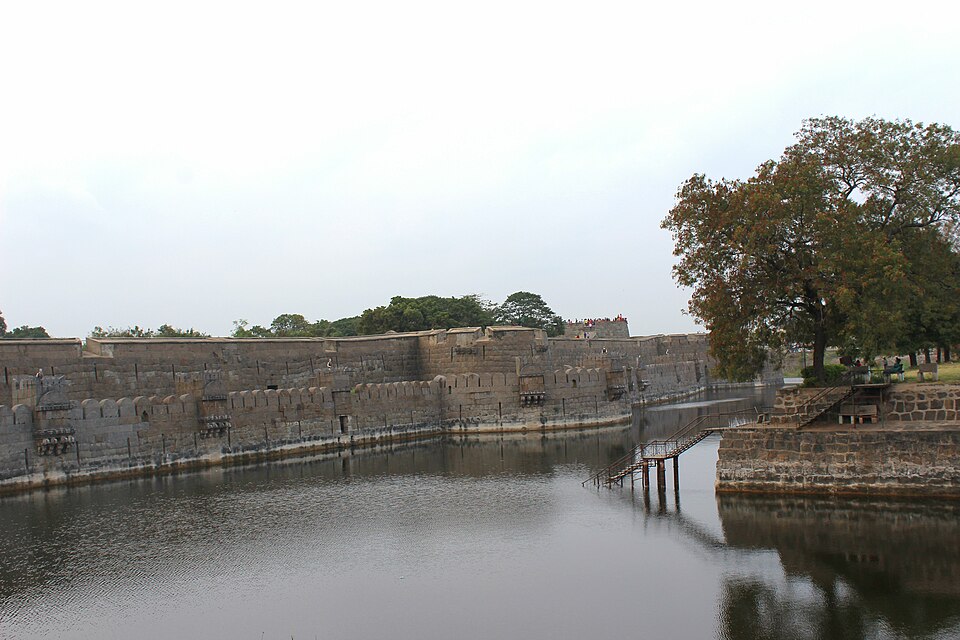
- The Vellore Mutiny took place on 10 July 1806 at Vellore Fort. The immediate cause was a set of dress regulations of November 1805 forbidding caste marks on the forehead, requiring beards to be shaved and substituting a round hat with a leather cockade for the turban. Tipu Sultan's family, held in the fort since 1799, was implicated. Around 350 sepoys were killed when the rising was crushed within hours by Colonel Rollo Gillespie's cavalry from Arcot; the orders were withdrawn, and the Governor of Madras, William Bentinck, and the Commander-in-Chief, Sir John Cradock, were both recalled.
- The Anglo-Nepalese (Gurkha) War ran from 1 November 1814 to 4 March 1816 and was declared by Lord Hastings, Francis Rawdon-Hastings, Earl of Moira. It ended with the Treaty of Sugauli, under which Nepal ceded the Tarai and the hill country west of the Kali river — Kumaon and Garhwal — and accepted a permanent British Resident at Kathmandu.
- Dating the Vellore Mutiny to the 1850s because it was a sepoy rising over religious grievances. It is 10 July 1806 — and the Company official recalled after it was William Bentinck, who would later return as Governor-General.
- Confusing Richard Wellesley, Governor-General 1798–1805, with his younger brother Arthur Wellesley, the future Duke of Wellington, who commanded at Assaye in 1803. Both are 'Wellesley' in Indian history writing.
- Confusing Warren Hastings (Governor-General 1773–85) with Lord Hastings, the Earl of Moira (1813–23), who fought the Nepal and third Maratha wars. Different men, forty years apart.
UPPSC almost always asks this period as 'arrange in chronological order' with four coded options, so speed comes from anchoring one certain date and eliminating; UPSC prefers to test the same material as a cause-and-effect statement ('Wellesley established Fort William College because…') or a single-fact identification.
Consider the following princely States of the British rule in India: 1. Jhansi 2. Sambalpur 3. Satara The correct chronological order in which they were annexed by the British is
- (a) 1, 2, 3
- (b) 1, 3, 2
- (c) 3, 2, 1
- (d) 3, 1, 2
Answer(c) 3, 2, 1
The same skill on the same subject — dating the milestones of Company expansion and putting them in coded sequence. Practise the anchor-and-eliminate method here before attempting the UPPSC item.
Which one of the following statements does not apply to the system of Subsidiary Alliance introduced by Lord Wellesley ?
- (a) To maintain a large standing army at other’s expense
- (b) To keep India safe from Napoleonic danger
- (c) To secure a fixed income for the Company
- (d) To establish British paramountcy over the Indian States
Answer(c) To secure a fixed income for the Company
Fills in what item 3 of this question stands for — the policy that made Wellesley's tenure so expensive, and therefore the reason the Court of Directors wanted him home in 1805.
Consider the reign of following Peshwas and arrange them in chronological order - (I) Balaji Viswanath (II) Bajirao I (III) Narayan Rao (IV) Madhav Rao I Select the correct answer using the code given below -
- (a) II, I, IV, III
- (b) I, II, IV, III
- (c) I, III, II, IV
- (d) I, II, III, IV
Answer(b) I, II, IV, III
The Poona court that item 2 of this question is about. Nana Fadnavis rose to power in the crisis after Narayanrao's murder in 1773 and ran the state until his death in 1800, so the Peshwa sequence is the frame in which that date makes sense.
- practice — not a real PYQ
The immediate cause of the Vellore Mutiny of 1806 was
- (a)the introduction of the greased cartridge
- (b)new regulations on the sepoys' dress and appearance, including a round hat with a leather cockade in place of the turban
- (c)the order requiring sepoys to serve overseas without extra allowance
- (d)the annexation of Awadh under the Doctrine of Lapse
Answer(b) The dress regulations of November 1805 — no caste marks on the forehead, beards to be shaved, and a round hat with a leather cockade replacing the turban — were the immediate provocation. The greased cartridge belongs to 1857, and the Doctrine of Lapse to Dalhousie in the 1840s–50s.
- practice — not a real PYQ
The Anglo-Nepalese War of 1814–16 was concluded by which treaty, and under which Governor-General was it fought?
- (a)Treaty of Titalia — Lord Minto
- (b)Treaty of Amritsar — Lord Wellesley
- (c)Treaty of Sugauli — Lord Hastings
- (d)Treaty of Bassein — Lord Cornwallis
Answer(c) Treaty of Sugauli — Lord Hastings. The treaty was signed on 4 March 1816. The Treaty of Titalia (1817) was with Sikkim, the Treaty of Amritsar (1809) with Ranjit Singh, and the Treaty of Bassein (1802) with the Peshwa Baji Rao II.