
Which one of the following statements is not correct about William A.J. Archbold ?
- (a)He was the Principal of Government College, Dacca.
- (b)He was the Principal of Lahore College, Lahore.
- (c)He was the Principal of MAO College, Aligarh.
- (d)He was the Principal of the Muir Central College, Allahabad.
Correct — B, 'He was the Principal of Lahore College, Lahore.' This is the statement that is not correct, and in a 'not correct' question that makes it the answer. William Arthur Jobson Archbold was a Cambridge man — admitted to Peterhouse in October 1884, a first in the Law Tripos with a B.A. and LL.B. in 1887 — who spent fifteen unbroken years in Indian colleges, and the Cambridge alumni record accounts for every one of them: Principal of the Muhammadan Anglo-Oriental College, Aligarh, 1905-09; Principal of Dacca College, 1909-18; Principal of Muir Central College, Allahabad, 1918-20. He then returned to Cambridge, where he worked for the Local Examinations and Lectures Syndicate and as Secretary of the Board of I.C.S. Studies, and he died on 1 June 1947. There is no gap in that sequence into which a Lahore principalship could fit, and no Lahore appointment appears anywhere in his record. Options (a), (c) and (d) each name a post he genuinely held, so only (b) can be the false statement.
- (a)He was the Principal of Government College, Dacca. — True, so it cannot be the answer. Archbold was Principal of Dacca College from 1909 to 1918 — a government college, and the longest of his three Indian postings. He moved there directly from Aligarh, and the transfer is worth noticing: Dacca was where the All-India Muslim League had been founded in December 1906, months after the deputation Archbold helped arrange.
- (c)He was the Principal of MAO College, Aligarh. — True, and it is the post that gives Archbold his place in Indian history. He was Principal of the Muhammadan Anglo-Oriental College at Aligarh from 1905 to 1909, and in 1906, while he was in Simla, Mohsin-ul-Mulk asked him to convey to the Viceroy the request of a group of Muslim leaders for an interview. That request produced the Simla Deputation to Lord Minto on 1 October 1906.
- (d)He was the Principal of the Muir Central College, Allahabad. — True. Archbold was Principal of Muir Central College, Allahabad, from 1918 to 1920 — his last Indian post, taken up after nine years at Dacca. Muir Central College had been founded in 1872 by Sir William Muir and was the institution around which the University of Allahabad grew.
Archbold matters to Indian history for one episode, not for a career. As Principal of the MAO College at Aligarh he stood at the point where the Aligarh movement of Sir Syed Ahmad Khan met the British administration. In the summer of 1906 he was at Simla; Nawab Mohsin-ul-Mulk, secretary of the college and the leading figure at Aligarh after Sir Syed's death, asked him to pass on to the Viceroy a request that a Muslim delegation be received. Lord Minto agreed, and on 1 October 1906 a deputation of some thirty-five Muslim notables led by the Aga Khan waited on him and asked that Muslim representation in the coming reforms be settled not by numbers alone but by weight and political importance. Minto's sympathetic reply is the origin of separate electorates. The All-India Muslim League was founded at Dacca on 30 December 1906, and separate electorates were written into law by the Indian Councils Act of 1909, the Morley-Minto Reforms.
'Which statement is NOT correct' questions on an obscure individual look unanswerable until you notice that they are usually built by taking a real curriculum vitae and adding one invented line. Here three of the four options name institutions of the United Provinces and Bengal that recur in the Aligarh story — Aligarh, Dacca, Allahabad — while the fourth names a city that has nothing to do with that circuit at all. Even a candidate who knows only that Archbold was the Aligarh principal at the time of the Simla Deputation can reason that his career ran along the Aligarh-Dacca-Allahabad line and that Lahore is the odd one out. A separate warning is worth carrying: Wikipedia and some secondary accounts describe Archbold as 'Principal of Aligarh Muslim University', which is an anachronism. In 1906 the institution was the Muhammadan Anglo-Oriental College, founded by Sir Syed Ahmad Khan in 1875; it became Aligarh Muslim University only in 1920, and the question is right to call it MAO College.
- William Arthur Jobson Archbold: admitted to Peterhouse, Cambridge on 1 October 1884; B.A. and LL.B. with a first in the Law Tripos in 1887; assumed the name Archbold in place of Jobson in October 1886; died on 1 June 1947.
- His Indian principalships, per the Cambridge alumni record: MAO College, Aligarh 1905-09; Dacca College 1909-18; Muir Central College, Allahabad 1918-20. No Lahore appointment appears in his career.
- The Simla Deputation of 1 October 1906: about thirty-five Muslim leaders led by Aga Khan III waited on Viceroy Lord Minto; the meeting was arranged after Mohsin-ul-Mulk asked Archbold, then in Simla, to convey the request. Contemporaries hostile to it, including Maulana Mohamed Ali, later described the deputation as a 'command performance'.
- The consequences ran fast: the All-India Muslim League was founded at Dacca on 30 December 1906, and separate electorates for Muslims were conceded by the Indian Councils Act, 1909 (the Morley-Minto Reforms).
- Muir Central College, Allahabad was founded in 1872 by Sir William Muir, Lieutenant-Governor of the North-Western Provinces, and became the nucleus of the University of Allahabad.
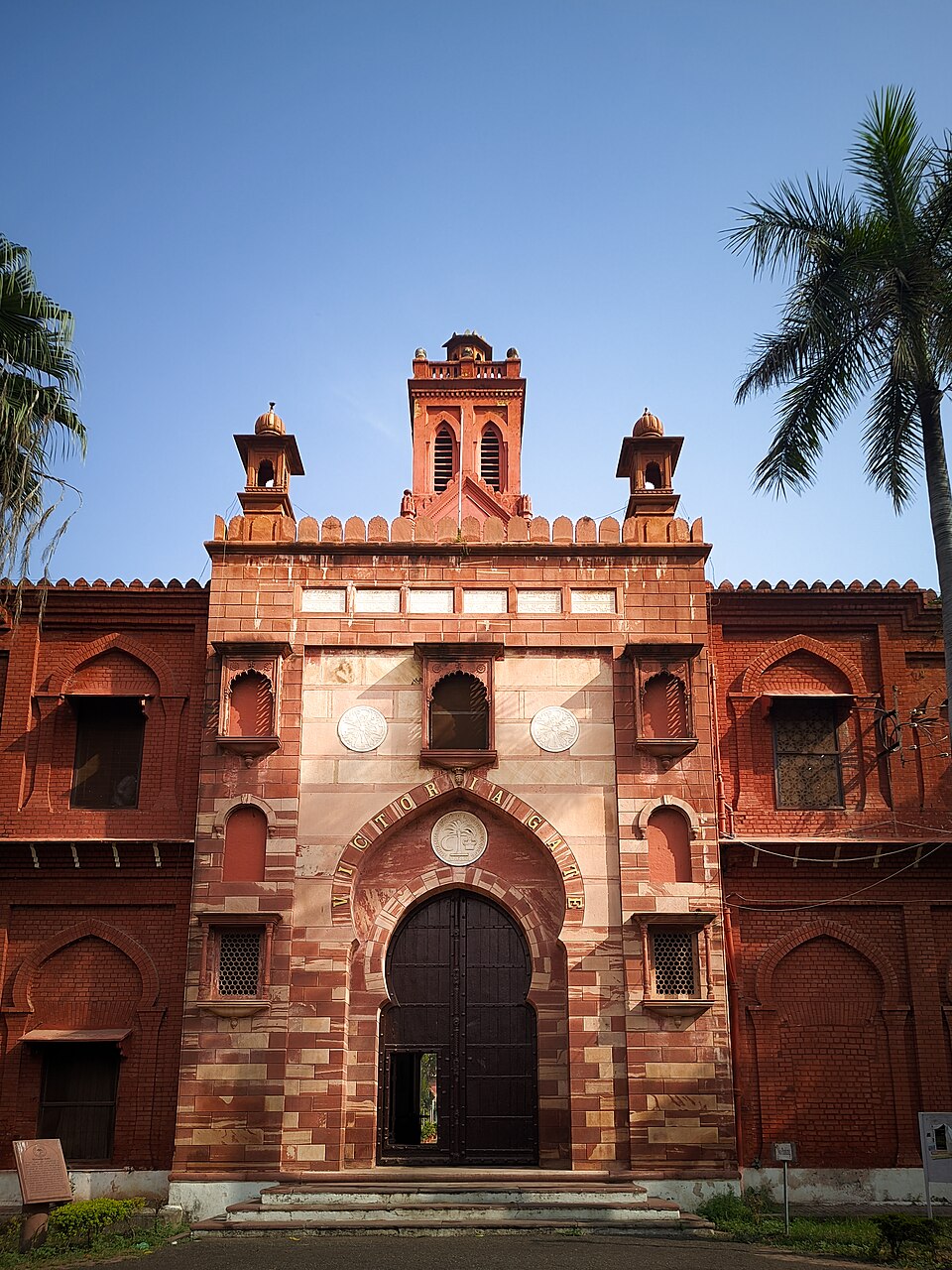
- Confusing Archbold with the other British principals of the MAO College — Theodore Beck, the long-serving Victorian principal who is himself a standard PYQ name, and Theodore Morison, who came between Beck and Archbold.
- Calling the Aligarh institution of 1906 'Aligarh Muslim University'. It was the Muhammadan Anglo-Oriental College until 1920, and some widely read sources get this wrong.
- Assuming a 'not correct' question requires you to verify all four statements. It is faster to spot the option that does not belong to the pattern the other three establish.
UPPSC likes the 'which statement is NOT correct about X' form for minor but historically pivotal figures, where the payoff is knowing one episode well rather than a whole biography. UPSC prefers to ask about the episode itself — who led the Simla Deputation, what the Morley-Minto Reforms conceded, when and where the Muslim League was founded.
Which of the following pairs are correctly matched? I. Theodore Beck : Mohammadan Anglo-Oriental College, Aligarh II. Ilbert Bill : Ripon III. Pherozesha : Indian National Congress IV. Badruddin Tyabji : Muslim League Select the correct answer using the codes given below:
- (a) I, II, III and IV
- (b) II and IV
- (c) I, III and IV
- (d) I, II and III
Answer(d) I, II and III
Pairs Theodore Beck with the Muhammadan Anglo-Oriental College at Aligarh — the same chair Archbold occupied a few years later. UPSC has already treated the college's British principals as examinable, which is exactly the knowledge this UPPSC item is testing.
Match List I with List II and select the correct answer by using the codes given below the lists: List I (Period) I. 1883 II. 1906 III. 1927 IV. 1932 List II (Event) A) Announcement of Communal Award from Whitehall B) Formation of the All-India State Peoples Conference C) Foundation of Muslim League at Dacca D) First session of National Conference at Calcutta Codes:
- (a) I – D, II – C, III – A, IV – B
- (b) I – C, II – D, III – A, IV – B
- (c) I – D, II – C, III – B, IV – A
- (d) I – C, II – D, III – B, IV – A
Answer(c) I – D, II – C, III – B, IV – A
Dates the foundation of the Muslim League at Dacca to 1906 — the event that followed within three months of the Simla Deputation Archbold helped to arrange, and the reason his name survives in Indian history at all.
"Can you show me one free country where there are separate electorates? ... The British element is gone, but they have left mischief behind". Who among the following said the above mentioned statement in the Constituent Assembly debates?
- (a) Somnath Lahiri
- (b) Jawaharlal Nehru
- (c) Sardar Vallabh Bhai Patel
- (d) N. G. Ranga
Answer(c) Sardar Vallabh Bhai Patel
Closes the loop that opens with Archbold's letter from Simla. Separate electorates, conceded after the 1906 deputation and written into the Indian Councils Act of 1909, were finally argued out of existence in the Constituent Assembly — the quotation in that question is the moment of their abolition.
- practice — not a real PYQ
The Simla Deputation which waited on Viceroy Lord Minto in October 1906 was led by
- (a)Nawab Salimullah of Dacca
- (b)Aga Khan III
- (c)Syed Ameer Ali
- (d)Nawab Mohsin-ul-Mulk
Answer(b) Aga Khan III — he headed the deputation of about thirty-five Muslim leaders on 1 October 1906. Mohsin-ul-Mulk arranged it through Archbold, Nawab Salimullah hosted the League's founding at Dacca that December, and Ameer Ali led the League's London branch from 1908.
- practice — not a real PYQ
Separate electorates for Muslims were first conceded by which one of the following?
- (a)Indian Councils Act, 1892
- (b)Indian Councils Act, 1909
- (c)Government of India Act, 1919
- (d)Government of India Act, 1935
Answer(b) Indian Councils Act, 1909 — the Morley-Minto Reforms, which followed directly from the Simla Deputation of 1906. The 1919 Act extended separate electorates to other communities and the 1935 Act carried them further still.