
Consider the reign of following Peshwas and arrange them in chronological order - (I) Balaji Viswanath (II) Bajirao I (III) Narayan Rao (IV) Madhav Rao I Select the correct answer using the code given below -
- (a)II, I, IV, III
- (b)I, II, IV, III
- (c)I, III, II, IV
- (d)I, II, III, IV
Correct — B, I, II, IV, III. In order of their tenure as Peshwa: Balaji Vishwanath (I, 1713-1720) was the first hereditary Peshwa under Chhatrapati Shahu; Bajirao I (II, 1720-1740), his son, greatly expanded Maratha power; then — after Balaji Bajirao/Nana Saheb (1740-1761), who is not in this list — came Madhav Rao I (IV, 1761-1772); and finally Narayan Rao (III, 1772-1773). So the sequence is I → II → IV → III.
- (a)II, I, IV, III — Wrong — it puts Bajirao I before Balaji Vishwanath. Balaji Vishwanath was the first Peshwa and Bajirao I was his son and successor, so I must precede II.
- (c)I, III, II, IV — Wrong — it places Narayan Rao (1772-73) second and Bajirao I (1720-40) third. Narayan Rao was actually the last of these four, and Bajirao I the second.
- (d)I, II, III, IV — Wrong — it makes Narayan Rao precede Madhav Rao I. In fact Madhav Rao I (1761-1772) ruled before his younger brother Narayan Rao (1772-1773), so IV must come before III.
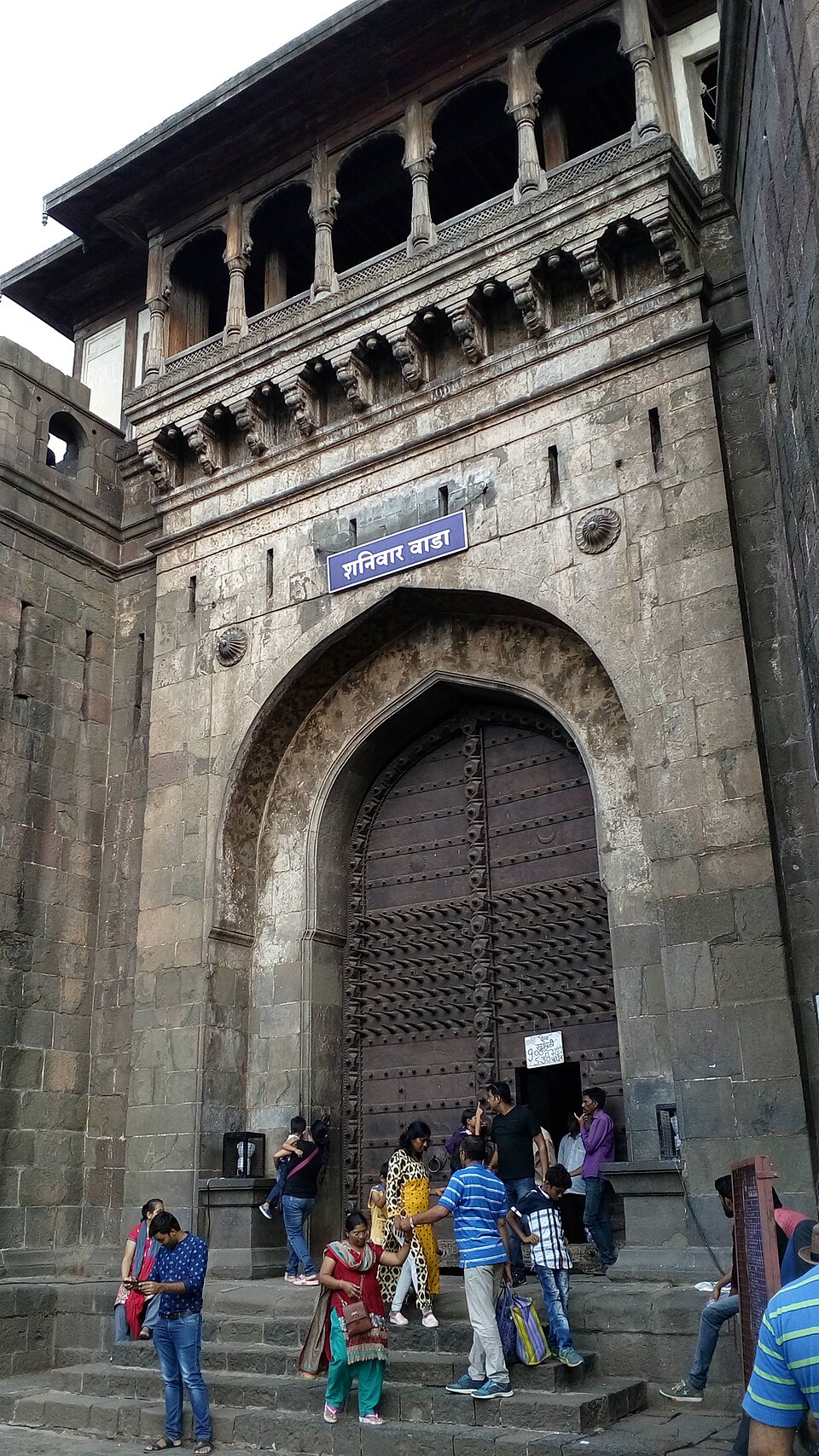
The Peshwas were the hereditary prime ministers of the Maratha Confederacy who became its de-facto rulers from the seat at Pune. The Bhat family line ran Balaji Vishwanath → Bajirao I → Balaji Bajirao (Nana Saheb) → Madhav Rao I → Narayan Rao → Raghunath Rao → Madhav Rao II → Bajirao II, the last surrendering to the British in 1818.
The examiner drops the well-known Balaji Bajirao (Nana Saheb, 1740-61) from the list, so you cannot simply recite the full line — you must place four specific Peshwas. Two anchors settle it: Balaji Vishwanath is the first Peshwa (so I is first), and Narayan Rao was murdered in 1773 near the end of this sequence (so III is last). That fixes the order as I, II, IV, III.
- Balaji Vishwanath: first hereditary Peshwa, 1713-1720, under Chhatrapati Shahu.
- Bajirao I: 1720-1740; undefeated general who extended Maratha power northward.
- Madhav Rao I: 1761-1772; revived Maratha strength after the defeat at Panipat (1761).
- Narayan Rao: 1772-1773; assassinated, triggering the intrigue involving Raghunath Rao.
- Reversing Balaji Vishwanath and Bajirao I (father-then-son order).
- Forgetting that Madhav Rao I precedes Narayan Rao — the two younger sons of Nana Saheb.
UPPSC/UPSC ask Maratha history as chronology or matching — order the Peshwas, or pair a Peshwa with an event (Panipat, an Anglo-Maratha war).
Who among the following streamlined the Maratha administration after Sambhaji?
- (a) Raja Ram
- (b) Balaji Viswanath
- (c) Ganga Bai
- (d) Nanaji Deshmukh
Answer(b) Balaji Viswanath
Both hinge on Balaji Vishwanath, the first Peshwa (item I here) who consolidated Maratha administration and founded the hereditary Peshwa line.
- practice — not a real PYQ
Who among the following was the first hereditary Peshwa of the Maratha Empire?
- (a)Bajirao I
- (b)Balaji Vishwanath
- (c)Madhav Rao I
- (d)Balaji Bajirao
Answer(b) Balaji Vishwanath — appointed Peshwa by Chhatrapati Shahu in 1713, the first of the hereditary line. - practice — not a real PYQ
Under which Peshwa did the Marathas recover their power in the decade after the Third Battle of Panipat (1761)?
- (a)Narayan Rao
- (b)Bajirao II
- (c)Madhav Rao I
- (d)Raghunath Rao
Answer(c) Madhav Rao I — his 1761-72 rule restored Maratha strength after the Panipat disaster.