
Given below are two statements, one is labelled as Assertion (A) and the other as Reason (R). Assertion (A) : Most of the early nationalists considered British rule as an act of providence destined to bring modernisation. Reason (R) : They complained only against “Un-British rule” in India. Select the correct answer from the codes given below :
- (a)Both (A) and (R) are true, but (R) is not the correct explanation of (A).
- (b)(A) is false, but (R) is true.
- (c)Both (A) and (R) are true and (R) is the correct explanation of (A).
- (d)(A) is true, but (R) is false.
Correct — C, both (A) and (R) are true and (R) is the correct explanation of (A). The Assertion states the settled reading of the early nationalists — the Moderates who led the Congress from 1885 to about 1905. Men like Dadabhai Naoroji, M.G. Ranade, Pherozeshah Mehta, Surendranath Banerjea and Gopal Krishna Gokhale held that the British connection had, whatever its abuses, broken open a stagnant social order and brought railways, a modern press, English education, the rule of law and a single administrative framework; several of them wrote of it in frankly providential terms, as something that had come to India for its modernisation. The Reason states the form their criticism took, and that form follows directly from the belief. If British rule is in principle a civilising force, then everything wrong with it in practice — the drain of wealth, the exclusion of Indians from the higher services, the crushing land revenue, the suppression of the press — can only be a betrayal of Britain's own standards, and the charge to bring is not that the rule is British but that it is un-British. That is exactly the charge Dadabhai Naoroji brought when he gathered his papers on the drain into Poverty and Un-British Rule in India, published in 1901: the indictment is framed as an appeal to British ideals of liberty and justice against British conduct in India. So the Assertion supplies the premise and the Reason describes the conclusion that necessarily follows from it — the two are welded together, and (c) is the answer rather than (a).
- (a)Both (A) and (R) are true, but (R) is not the correct explanation of (A). — The designed trap, and it is wrong because the link between the two statements is not accidental. A candidate who reads (R) as merely another fact about the Moderates will pick this. But an 'un-British rule' complaint is unintelligible unless you first grant that British rule as such is a good thing that is being betrayed — the whole rhetorical force of the word lies in holding Britain to its own professed standards. The belief in the Assertion is what makes the complaint in the Reason the only complaint available to them.
- (b)(A) is false, but (R) is true. — It denies the Assertion, but the Assertion is the least controversial thing in the question. The Moderates' faith in the British connection is documented in their own writings and in their method — petitions, memorials, deputations to London, appeals to British public opinion and to Parliament — a method that presupposes a government one expects to be persuadable and fundamentally well-intentioned.
- (d)(A) is true, but (R) is false. — It rejects the Reason, but 'Un-British' is not an examiner's invention — it is the early nationalists' own vocabulary, and Dadabhai Naoroji put it in the title of his best-known book, Poverty and Un-British Rule in India (1901). The one word in the Reason worth pausing over is 'only'; the Moderates did also criticise particular Indian social evils and did press for wider reform, but as regards the colonial state itself their critique was consistently framed as a complaint against un-British administration rather than against British rule as such.
The early nationalist or Moderate phase of the Congress, roughly 1885 to 1905, rested on a theory of the British connection that its own leaders later abandoned. The theory had two halves. First, British rule was historically progressive: it had ended internal warfare, unified the subcontinent administratively, introduced modern education, law and communications, and would in time carry India to self-government on the colonial model. Second, the actual administration had strayed from that mission — it drained India's wealth, ruined its handicrafts, taxed its peasantry beyond endurance and reserved the higher services for Englishmen. Holding both halves at once produced the characteristic Moderate demand: not the end of British rule, but its reform to match Britain's own principles. Their weapons followed from the theory — prayer, petition, memorials, press campaigns and propaganda in England — and so did the most damaging thing they produced, the economic critique of colonialism.
Assertion-Reason items are decided by asking whether the Reason supplies the logic of the Assertion or merely sits alongside it. Test it by reversing the sentences: 'the early nationalists complained only of un-British rule, because they believed British rule was providentially destined to modernise India' reads as a sound explanation, which is the signal for option (c). It is worth being honest about the one wrinkle a careful student will feel — strictly, the Reason describes the visible consequence of the belief in the Assertion rather than its cause, and a purist might argue for (a) on that ground. But standard historiography, and the commission's key, treat the two as a single position: the 'un-British' formula is the direct expression of faith in the British connection, not an independent fact about the Moderates. Also note what the Assertion does not say. It does not say the Moderates were uncritical. The same men produced the drain-of-wealth theory, which eventually did more to delegitimise the Raj than any amount of agitation.
- 'Un-British' is Dadabhai Naoroji's word. His Poverty and Un-British Rule in India, published in 1901, collected his earlier papers and speeches on the drain of wealth and framed the whole indictment as a departure from British standards of justice.
- The Moderate method — petitions, memorials, deputations, resolutions and propaganda in Britain, often summarised as 'prayer, petition and protest' — presupposed a rulership that could be persuaded by reasoned appeal, which is the practical face of the belief stated in the Assertion.
- The economic critique of colonialism was the Moderates' most enduring achievement: Dadabhai Naoroji on the drain, R.C. Dutt in The Economic History of India, and G. Subramania Iyer of The Hindu were all economic critics of colonial rule while still accepting the British connection.
- Bipan Chandra's The Rise and Growth of Economic Nationalism in India, first published in 1966, is the standard study of exactly this phase — the economic policies of the Indian national leadership between 1880 and 1905.
- The premise stated in the Assertion is what the Extremists after 1905 rejected: for Tilak, Lajpat Rai and Bipin Chandra Pal the problem was British rule itself, not its un-British execution, and the Surat split of 1907 marks the parting of the two positions.
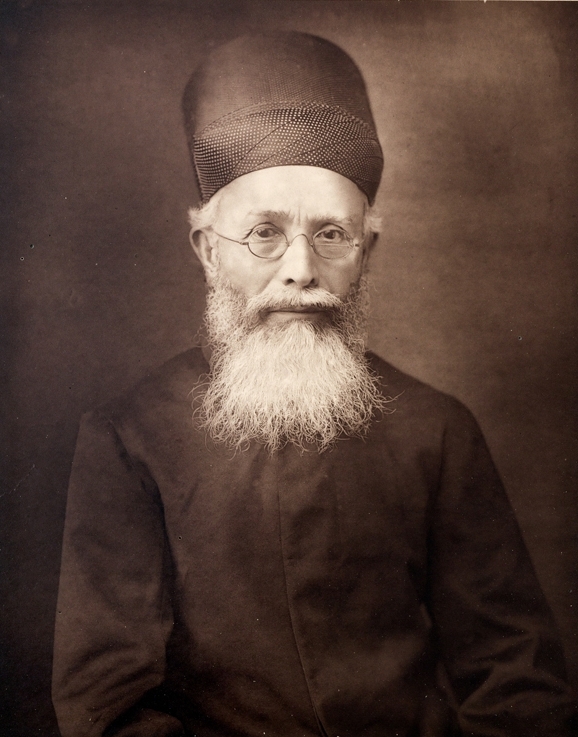
- Reading 'Un-British' as 'anti-British'. It means the opposite — a charge that British administration in India fell short of British principles, made by men who wanted the connection preserved and reformed.
- Concluding from the Assertion that the Moderates were mere loyalists. They produced the most damaging economic analysis of colonial rule that anyone produced, and the Extremists built on it.
- Choosing (a) because the Reason feels like a consequence rather than a cause. In Assertion-Reason items the Reason may state the position that follows necessarily from the belief in the Assertion, and that still counts as the correct explanation.
Both commissions like this period in Assertion-Reason form, and UPPSC in particular pairs a claim about Moderate ideology with a claim about Moderate rhetoric. UPSC more often asks it as identification — who used the phrase 'Un-British', who first estimated India's per capita income, who were the economic critics of colonialism. Learn the Moderates as a doctrine plus four or five names plus one book each.
Who among the following used the phrase ‘Un-British’ to criticize the English colonial control of India?
- (a) Anandmohan Bose
- (b) Badruddin Tyabji
- (c) Dadabhai Naoroji
- (d) Pherozeshah Mehta
Answer(c) Dadabhai Naoroji
Asks directly who used the phrase that the Reason in this question rests on. The answer, Dadabhai Naoroji, is the same man whose 1901 book supplies the title 'Poverty and Un-British Rule in India' — the two questions test the same single fact from opposite ends.
Assertion (A): The basic weakness of the early nationalist movement lay in its narrow social base. Reason (R): It fought for the narrow interests of the social groups which joined it.
- (a) Both A and R are true, and R is the correct explanation of A
- (b) Both A and R are true, but R is not a correct explanation of A
- (c) A is true, but R is false
- (d) A is false, but R is true
Answer(c) A is true, but R is false
The same Assertion-Reason format applied to the same early nationalists, and a useful contrast: there the Reason is false and the answer is (c), because the Moderates' narrow social base did not mean they fought only for their own class. Reading the two side by side teaches how to test whether a Reason really explains an Assertion.
Who of the following was/were economic critic/critics of colonialism in India? 1. Dadabhai Naoroji 2. G. Subramania Iyer 3. R.C. Dutt
- (a) 1 only
- (b) 1 and 2 only
- (c) 2 and 3 only
- (d) 1, 2 and 3
Answer(d) 1, 2 and 3
Fills in the substance behind the Moderate critique — Naoroji, G. Subramania Iyer and R.C. Dutt as economic critics of colonialism. It is the proof that accepting the British connection did not mean accepting British economic policy.
In which year the book 'Poverty and Unbritish Rule in India' was published?
- (a) 1900 A.D.
- (b) 1901 A.D.
- (c) 1902 A.D.
- (d) 1903 A.D.
Answer(b) 1901 A.D.
Asks for the publication year of the very book that gave the phrase 'Un-British rule' its currency. If you can date Poverty and Un-British Rule in India to 1901, the Reason in this 2024 question stops being an abstraction.
'The Rise and Growth of Economic Nationalism in India' was written by
- (a) Partha Sarthi Gupta
- (b) S. Gopal
- (c) B. R. Nanda
- (d) Bipin Chandra
Answer(d) Bipin Chandra
Points to the standard scholarly account of exactly this phase — Bipan Chandra's The Rise and Growth of Economic Nationalism in India, on the economic policies of the Indian national leadership between 1880 and 1905, which is where the reading of the Moderates given in this Assertion comes from.
- practice — not a real PYQ
When the early nationalists described British administration in India as 'Un-British', they meant that
- (a)British rule in India had no legal basis in international law
- (b)the administration in India betrayed Britain's own professed traditions of liberty, justice and good government
- (c)too few Britons were employed in the Indian administration
- (d)British rule had failed to introduce modern education and railways
Answer(b) The administration betrayed Britain's own professed standards — the phrase, popularised by Dadabhai Naoroji in Poverty and Un-British Rule in India (1901), holds Britain to its own principles rather than rejecting the connection.
- practice — not a real PYQ
Which one of the following was NOT a feature of the early nationalists (Moderates) of the period 1885-1905?
- (a)Faith in the British sense of justice and fair play
- (b)A demand for complete independence from British rule
- (c)Use of petitions, memorials and propaganda in Britain
- (d)An economic critique of colonialism centred on the drain of wealth
Answer(b) A demand for complete independence — the Moderates asked for reform and a share in government, not for an end to the British connection. Purna Swaraj was adopted by the Congress only at Lahore in 1929.