
Consider the following Peshwas and arrange them in ascending chronological order : 1. Raghunath Rao (Raghoba) 2. Balaji Baji Rao 3. Narayan Rao 4. Balaji Vishwanath Select the correct answer from the codes given below :
- (a)4, 2, 3, 1
- (b)3, 4, 1, 2
- (c)1, 2, 3, 4
- (d)1, 3, 2, 4
Correct — A, 4, 2, 3, 1. Ranked by when each man actually held the office of Peshwa: Balaji Vishwanath (4) came first, 1713–1720, the man under whom the Peshwaship became hereditary in the Bhat family under Chhatrapati Shahu. Balaji Baji Rao 'Nanasaheb' (2) — Balaji Vishwanath's grandson — was Peshwa 1740–1761, the tenure that ended with the Third Battle of Panipat. Narayan Rao (3) held the office only from 1772 until his murder in 1773. Raghunath Rao 'Raghoba' (1), Narayan Rao's uncle, was the last of the four, Peshwa 1773–1774. Hence the ascending sequence is 4 → 2 → 3 → 1.
- (b)3, 4, 1, 2 — Starts with Narayan Rao (1772) and places Balaji Vishwanath (1713) second — the earliest Peshwa of the four cannot come after the second-last one.
- (c)1, 2, 3, 4 — This is simply the printed serial order. It opens with Raghunath Rao (1773–74), the latest of the four, and closes with Balaji Vishwanath (1713–20), the earliest — the sequence is inverted at both ends.
- (d)1, 3, 2, 4 — Again begins with Raghunath Rao (1773) and ends with Balaji Vishwanath (1713); it also puts Narayan Rao (1772) ahead of Balaji Baji Rao (1740) — Narayan Rao was Balaji Baji Rao's son, so this reverses father and son.
The Peshwa was originally the chief minister of the Chhatrapati of the Marathas. From Balaji Vishwanath's appointment in 1713 the post became hereditary in the Bhat family of Shrivardhan, and within a generation the Peshwas at Pune — not the Chhatrapati at Satara — were the working heads of the Maratha confederacy. The Bhat line runs: Balaji Vishwanath (1713–20) → Baji Rao I (1720–40) → Balaji Baji Rao / Nanasaheb (1740–61) → Madhavrao I (1761–72) → Narayan Rao (1772–73) → Raghunath Rao (1773–74) → Madhavrao II 'Sawai Madhavrao' (1774–96) → Baji Rao II (1796–1818).
The four names are deliberately printed in an order that looks plausible if you only remember one anchor ('Balaji Vishwanath was the first'). The real discriminator is Raghunath Rao: because he is famous from the First Anglo-Maratha War, students instinctively place him early, whereas he is the latest of the four. Fix the two ends first — earliest is Balaji Vishwanath (4), latest is Raghunath Rao (1) — and only option (a) survives.
- Balaji Vishwanath, Peshwa 1713–1720, made the office hereditary in the Bhat family under Chhatrapati Shahu
- Balaji Baji Rao 'Nanasaheb', Peshwa 1740–1761 — the Third Battle of Panipat (1761) fell in his tenure
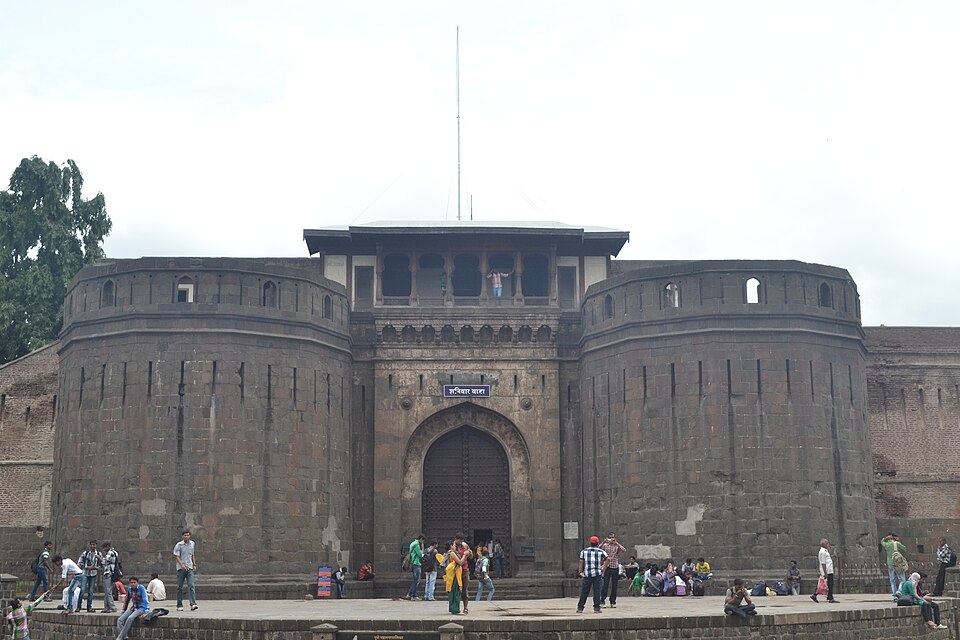
- Narayan Rao, Peshwa 1772–1773, was murdered in the Shaniwar Wada at Pune
- Raghunath Rao (Raghoba), Peshwa 1773–1774, was displaced by the Barbhai council under Nana Fadnavis and turned to the English — the Treaty of Surat (1775) opened the First Anglo-Maratha War
- Assuming the printed serial numbers are already in chronological order
- Placing Raghunath Rao early because of his Anglo-Maratha War fame — he is in fact the latest of the four
- Confusing Balaji Baji Rao (Nanasaheb, 1740–61) with Balaji Vishwanath (1713–20) because of the shared first name
UPPSC repeats this exact drill — it set the same 'arrange the Peshwas in chronological order' question in 2023 — while UPSC prefers to isolate one Peshwa at a time ('who streamlined the Maratha administration after Sambhaji?').
Who among the following streamlined the Maratha administration after Sambhaji?
- (a) Raja Ram
- (b) Balaji Viswanath
- (c) Ganga Bai
- (d) Nanaji Deshmukh
Answer(b) Balaji Viswanath
Same anchor point — Balaji Vishwanath, the first hereditary Peshwa (1713–1720), who is item 4 and the head of the sequence here.
Consider the reign of following Peshwas and arrange them in chronological order - (I) Balaji Viswanath (II) Bajirao I (III) Narayan Rao (IV) Madhav Rao I Select the correct answer using the code given below -
- (a) II, I, IV, III
- (b) I, II, IV, III
- (c) I, III, II, IV
- (d) I, II, III, IV
Answer(b) I, II, IV, III
UPPSC asked the identical drill a year earlier — order the Peshwas by tenure; three of the four names (Balaji Vishwanath, Narayan Rao and the Bhat succession) recur in 2024.
- practice — not a real PYQ
The Third Battle of Panipat (1761) was fought during the Peshwaship of :
- (a)Baji Rao I
- (b)Balaji Baji Rao (Nanasaheb)
- (c)Madhavrao I
- (d)Raghunath Rao
Answer(b) Balaji Baji Rao (Nanasaheb) — Peshwa 1740–1761; the defeat at Panipat came in the last year of his tenure.
- practice — not a real PYQ
The Treaty of Surat (1775), which led to the First Anglo-Maratha War, was signed by the English East India Company with :
- (a)Nana Fadnavis
- (b)Madhavrao I
- (c)Raghunath Rao (Raghoba)
- (d)Mahadji Scindia
Answer(c) Raghunath Rao (Raghoba) — displaced from the Peshwaship by the Barbhai council, he sought English help to regain it.