
Consider the following statements with reference to early trade : 1. There are references of numerous river-ports in ancient India. 2. There were large entrepots of goods and traffic. Which of the above statements is/are correct ?
- (a)Both 1 and 2
- (b)Neither 1 nor 2
- (c)Only 1
- (d)Only 2
Correct — A, Both 1 and 2. Statement 1 is true: before metalled roads, rivers were the cheap highways for bulk goods, and early Indian literature and archaeology name many settlements that worked as river ports — Pataliputra where the Son joins the Ganga, Kaushambi on the Yamuna, Champa and Varanasi on the Ganga, Tamralipti at the head of the Ganga delta and Bhrigukachchha (Bharuch) at the mouth of the Narmada. Statement 2 is also true: several of these were not merely local markets but entrepots — transhipment centres where goods from many regions were gathered, stored and re-exported. The Greek mariner's handbook Periplus of the Erythraean Sea (mid-first century CE) describes Barbaricum on the Indus, Barygaza (Bharuch), Muziris and Nelcynda as 'market-towns', and says Muziris 'abounds in ships sent there with cargoes from Arabia, and by the Greeks'. Both statements standing, the answer is (a).
- (b)Neither 1 nor 2 — Both propositions are standard, well-documented descriptions of early Indian commerce — attested in Sangam poetry, Buddhist and Jaina literature, the Arthashastra and Graeco-Roman accounts alike.
- (c)Only 1 — Rejects statement 2, but the entrepot function is exactly what the Periplus and the Roman coin hoards of south India record — goods were collected and redistributed at these towns, not just consumed there.
- (d)Only 2 — Rejects statement 1, yet river ports are among the best-attested features of the early Indian economy; a port in this period did not have to be on the sea.
Early Indian trade worked on two linked networks. Inland, goods moved along the great trunk routes — the Uttarapatha in the north and the Dakshinapatha in the peninsula — and, wherever possible, along navigable rivers; the settlements at usable landing points on the Ganga, Yamuna and Narmada functioned as river ports. Outward, coastal towns handled the Arabian Sea and Bay of Bengal trades. A town becomes an entrepot when it does more than serve its own hinterland: goods are gathered there, stored and re-exported, so it lives off traffic rather than off local demand.
This is a 'soft-statement' pair. Neither line carries an absolute word — no 'all', 'only', 'first' or 'never' — so there is nothing for the examiner to falsify, and the intended answer is 'Both'. UPPSC uses this format to reward a student who can recall the actual evidence rather than hunt for a trick that is not there.
- River ports of early India: Pataliputra (Ganga–Son confluence), Kaushambi (Yamuna), Champa and Varanasi (Ganga), Tamralipti (head of the Ganga delta, modern Tamluk in West Bengal), Bhrigukachchha/Bharuch (Narmada mouth)
- The Periplus of the Erythraean Sea, a Greek mariner's guide of the mid-first century CE, lists Barbaricum, Barygaza, Muziris and Nelcynda as 'market-towns' of Indian trade
- Uttarapatha (northern) and Dakshinapatha (southern) were the two great overland trunk routes feeding the ports
- The far-southern ports of the Sangam age — Korkai (Pandya), Puhar / Kaveripattinam (Chola) and Muchiri / Muziris (Chera) — appear both in Tamil poetry and in Graeco-Roman accounts
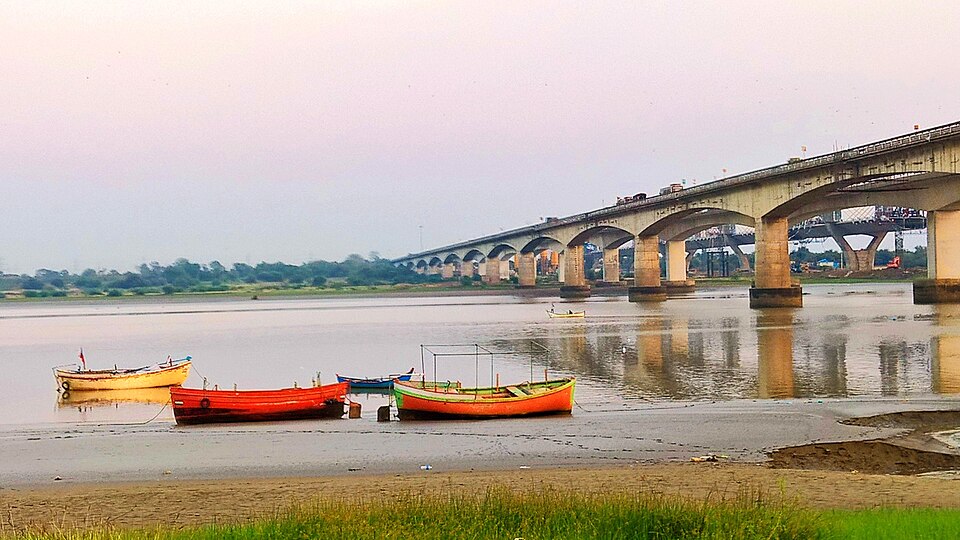
- Assuming 'port' must mean 'sea port' — early India's river ports are separately and well attested
- Over-reading a mild, general statement and inventing a falsifier that the examiner never put there
- Mixing up Tamralipti (Bengal) with Tamluk's modern district or with Tamil-country ports because of the similar name
UPSC prefers named sites ('Korkai, Poompuhar and Muchiri were well known as —'); UPPSC prefers soft two-statement pairs on the character of early trade, where both statements are usually true.
With reference to ancient South India, Korkai, Poompuhar and Muchiri were well known as
- (a) capital cities
- (b) ports
- (c) centres of iron-and-steel making
- (d) shrines of Jain Tirthankaras
Answer(b) ports
Same concept from the other side — UPSC names three early trading ports and asks what they were; UPPSC asks whether such ports and entrepots existed at all.
- practice — not a real PYQ
Which Greek text of the mid-first century CE describes Barygaza and Muziris as market-towns of Indian trade?
- (a)Indica of Megasthenes
- (b)Periplus of the Erythraean Sea
- (c)Geographia of Ptolemy
- (d)Naturalis Historia of Pliny
Answer(b) Periplus of the Erythraean Sea — a working mariner's handbook to the Red Sea and Indian Ocean routes.
- practice — not a real PYQ
Tamralipti, an important port of early eastern India, lay in the present-day State of :
- (a)Odisha
- (b)West Bengal
- (c)Andhra Pradesh
- (d)Bihar
Answer(b) West Bengal — modern Tamluk in Purba Medinipur district, at the head of the Ganga delta.