
Given below are two statements, one is labelled as Assertion (A) and the other as Reason (R). Assertion (A) : Rainfall occurs in the winter season in mediterranean climate. Reason (R) : In summer these regions remain under the influence of dry terrestrial winds. Select the correct answer from the code given below :
- (a)(A) is true but (R) is false
- (b)Both (A) and (R) are true and (R) is the correct explanation of (A)
- (c)(A) is false but (R) is true
- (d)Both (A) and (R) are true but (R) is not the correct explanation of (A)
Correct — B, Both (A) and (R) are true and (R) is the correct explanation of (A). Before anything else, read this paper's assertion-reason code, because every letter has been moved from the position candidates expect: here (a) is '(A) is true but (R) is false', (b) is 'Both (A) and (R) are true and (R) is the correct explanation of (A)', (c) is '(A) is false but (R) is true', and (d) is 'Both (A) and (R) are true but (R) is not the correct explanation of (A)'. Not one option carries its usual meaning, and the answer candidates normally look for at (a) sits at (b) throughout UPPSC 2022 Paper-I. On the substance: the Assertion is true, since a Mediterranean climate is defined by its winter maximum of rainfall and a summer drought lasting four to six months. The Reason is true as well, and it is the cause. These regions lie on the western margins of continents between roughly 30 and 45 degrees of latitude, which places them in the zone of shifting pressure belts. In summer the subtropical high pressure cell migrates poleward and settles over them, bringing subsiding air, clear skies and an offshore, land-derived airflow — the 'dry terrestrial winds' of the Reason. In winter the same cell retreats equatorward and the region passes into the westerly belt, where travelling frontal depressions deliver the rain. The summer dryness and the winter rain are two faces of one seasonal migration, so the Reason explains the Assertion rather than merely accompanying it.
- (a)(A) is true but (R) is false — The Reason is not false. In summer these west-coast margins do sit on the dry, subsiding, offshore side of the subtropical high, so the air reaching them has crossed land and carries no rain. The phrasing 'dry terrestrial winds' is the older Indian-textbook expression for that condition rather than a claim that a named continental wind blows across every Mediterranean region — read that way it is sound, and it is not the ground for rejecting R.
- (c)(A) is false but (R) is true — The Assertion is not false. Winter rainfall is the single defining trait of the Mediterranean type in the Köppen scheme, which is why it carries the 's' for a dry summer in Csa and Csb. UPSC once put the opposite proposition — that the Mediterranean region receives more rain in summer — into a statement set and marked it wrong.
- (d)Both (A) and (R) are true but (R) is not the correct explanation of (A) — This is the option that needs real thought, since both statements are indeed true. It would be correct only if the summer dryness and the winter rain had separate causes. They do not: both follow from the same seasonal shift of the subtropical high pressure belt, poleward in summer and equatorward in winter. Because the Reason names one half of a single mechanism whose other half is the Assertion, it explains it.
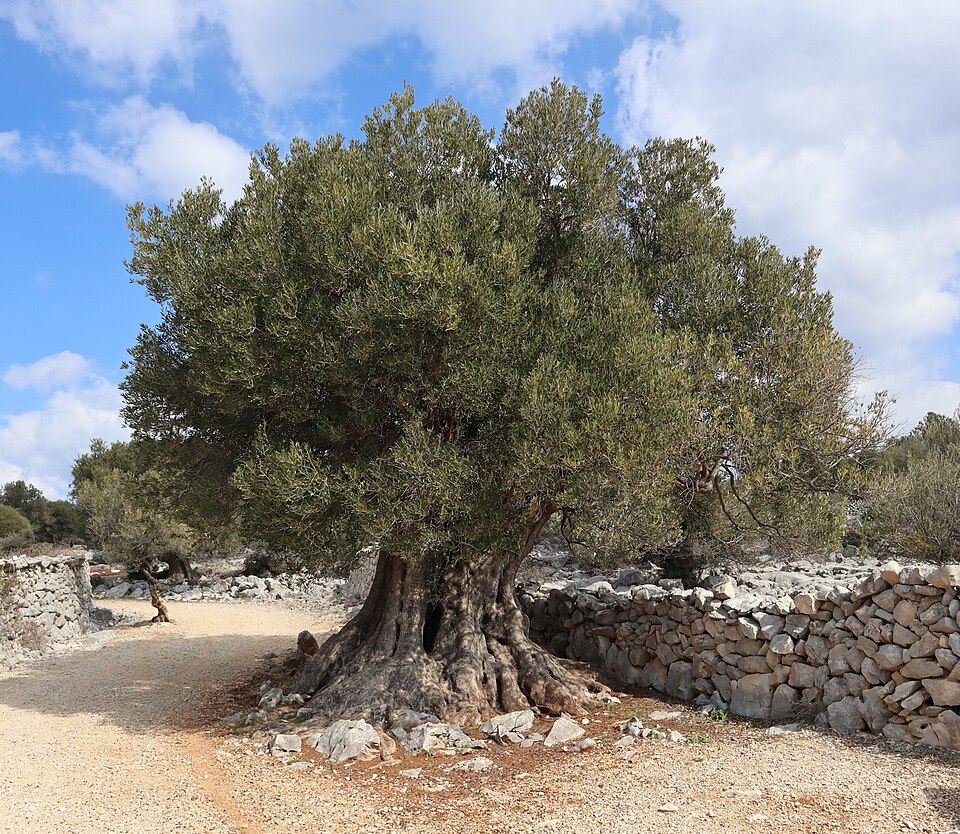
The Mediterranean or warm temperate western margin climate occupies the western coasts of continents between about 30 and 45 degrees north and south, and is classified Csa or Csb in the Köppen system, where the 's' marks a dry summer. Five regions have it: the Mediterranean basin itself, California, central Chile, the Cape region of South Africa, and southern and south-western Australia. The controlling mechanism is the seasonal migration of the global pressure belts with the overhead Sun. In summer the subtropical high pressure cell moves poleward over these coasts, and its subsiding, diverging air produces months of clear, rainless weather. In winter the cell withdraws equatorward and the westerly belt takes its place, bringing the temperate cyclones that deliver almost all the annual rainfall. The vegetation records the pattern — sclerophyllous evergreen scrub and trees such as olive, vine, cork oak and evergreen oak, with small, thick, waxy leaves built to survive the summer drought.
Assertion-reason items in physical geography usually turn on whether the Reason states the mechanism or merely a companion fact, and the test is to ask whether the Assertion would still hold if the Reason were removed. Here it would not: take away the summer dominance of the subtropical high and the rainfall regime is no longer Mediterranean. That is what makes (b) rather than (d) the answer. Fix the wider pattern once and several questions become routine. Because the pressure belts shift with the Sun, west coasts at 30 to 45 degrees get winter rain from the westerlies, west coasts nearer 40 to 60 degrees stay in the westerly belt all year and get rain in every month — the north-west European or British type — and west coasts in the trade-wind latitudes stay dry all year and hold the great deserts. One caution on wording: the Reason's 'dry terrestrial winds' should be understood as the offshore, subsiding, land-derived airflow of the summer anticyclone. It is the textbook shorthand for the mechanism, not a claim about a particular named wind.
- The Mediterranean climate is Köppen Csa or Csb, defined by winter rainfall and a summer drought of roughly four to six months.
- It occurs on western continental margins between about 30 and 45 degrees latitude: the Mediterranean basin, California, central Chile, the Cape region of South Africa, and southern and south-western Australia.
- In summer the subtropical high pressure belt shifts poleward over these regions, giving subsiding air, clear skies and offshore, land-derived winds; in winter it retreats equatorward and the westerlies bring frontal cyclones and rain.
- The vegetation is sclerophyllous — olive, vine, cork oak, evergreen oak and low aromatic scrub — with small, thick, waxy leaves adapted to summer drought.
- The whole pattern follows from the seasonal migration of the global pressure belts with the apparent movement of the Sun, which also explains why higher-latitude west coasts receive rain in every month.
- Reading the assertion-reason letters from habit — in this paper (a) is 'A true, R false', (b) is 'both true and R explains A', (c) is 'A false, R true' and (d) is 'both true but R does not explain A'
- Choosing 'both true but R does not explain A' when the two statements are in fact the summer and winter halves of one mechanism
- Confusing the Mediterranean type, with its dry summer, with the north-west European type, which receives rain in every month
UPPSC asks the Mediterranean climate repeatedly and in every format it uses — assertion-reason on the winter rain, two-statement items on the shifting pressure belts, and match questions on natural regions and their vegetation. UPSC prefers to describe a climate without naming it and ask the candidate to identify the region, or to plant a false statement about the season of maximum rainfall inside a longer set.
A geographic region has the following distinct characteristics: 1. Warm and dry climate 2. Mild and wet winter 3. Evergreen oak trees The above features are the distinct characteristics of which one of the following regions?
- (a) Mediterranean
- (b) Eastern China
- (c) Central Asia
- (d) Atlantic coast of North America
Answer(a) Mediterranean
The same climate, identified from its symptoms rather than named. 'Mild and wet winter' is the Assertion of this UPPSC item and 'warm and dry' summer is its Reason; the evergreen oak is the sclerophyllous vegetation that both conditions produce.
Consider the following statements: 1. In equatorial regions, the year is divided into four main seasons 2. In Mediterranean region, summer receives more rain 3. In China type climate, rainfall occurs throughout the year 4. Tropical highlands exhibit vertical zonation of different climates Which of these statements are correct?
- (a) 1, 2, 3 and 4
- (b) 1, 2 and 3
- (c) 1, 2 and 4
- (d) 3 and 4
Answer(d) 3 and 4
The Assertion tested in its negative form. UPSC plants 'in Mediterranean region, summer receives more rain' as statement 2 and marks it wrong — confirming from the other side that the rainfall maximum is in winter, and placing the Mediterranean type against the China type, which has rain all year.
Consider the following statements with reference to Mediterranean climate : 1. It receives rainfall in winter season. 2. Due to winter solstice, air pressure belts shift to the South. Which of the above statements is/are correct ?
- (a) Only 2
- (b) Neither 1 nor 2
- (c) Only 1
- (d) Both 1 and 2
Answer(d) Both 1 and 2
The same topic two years later, with the mechanism made explicit. UPPSC there accepts both the winter rainfall and the seasonal shift of the pressure belts — the migration that this card gives as the reason the Reason explains the Assertion. Note also that its code is ordered differently again, another warning against answering from a remembered letter.
Consider the following statements with respect to the climate of Western Europe : 1. Western Europe receives rainfall in all months. 2. Western Europe is located in the belt of Westerlies. Which of the above statements is/are correct ?
- (a) Both 1 and 2
- (b) Neither 1 nor 2
- (c) Only 1
- (d) Only 2
Answer(a) Both 1 and 2
The neighbouring climate type, and the contrast that fixes the Mediterranean one. Western Europe sits in the westerly belt all year and so receives rain in every month; Mediterranean lands sit in that belt only in winter, which is exactly why their rain is confined to it.
- practice — not a real PYQ
Which of the following regions does NOT experience a Mediterranean type of climate?
- (a)Central Chile
- (b)The Cape region of South Africa
- (c)The eastern coast of the United States around Florida
- (d)South-western Australia
Answer(c) The eastern coast of the United States around Florida — the Mediterranean type occurs on western continental margins between about 30 and 45 degrees; that eastern seaboard has a humid subtropical climate with rain in every month.
- practice — not a real PYQ
The summer drought characteristic of Mediterranean regions is caused chiefly by
- (a)the poleward shift of the subtropical high pressure belt, bringing subsiding air and offshore winds
- (b)the presence of a cold ocean current along the eastern margins of the continents
- (c)the withdrawal of the intertropical convergence zone toward the equator in summer
- (d)the blocking of moist air by high mountain ranges lying to the west of these regions
Answer(a) the poleward shift of the subtropical high pressure belt, bringing subsiding air and offshore winds — the same belt retreats equatorward in winter, letting the westerlies and their frontal cyclones bring the region's rain.