
Which of the following trees is dangerous for environment ?
- (a)Eucalyptus
- (b)Banana
- (c)Neem
- (d)Babool
Answer
Why
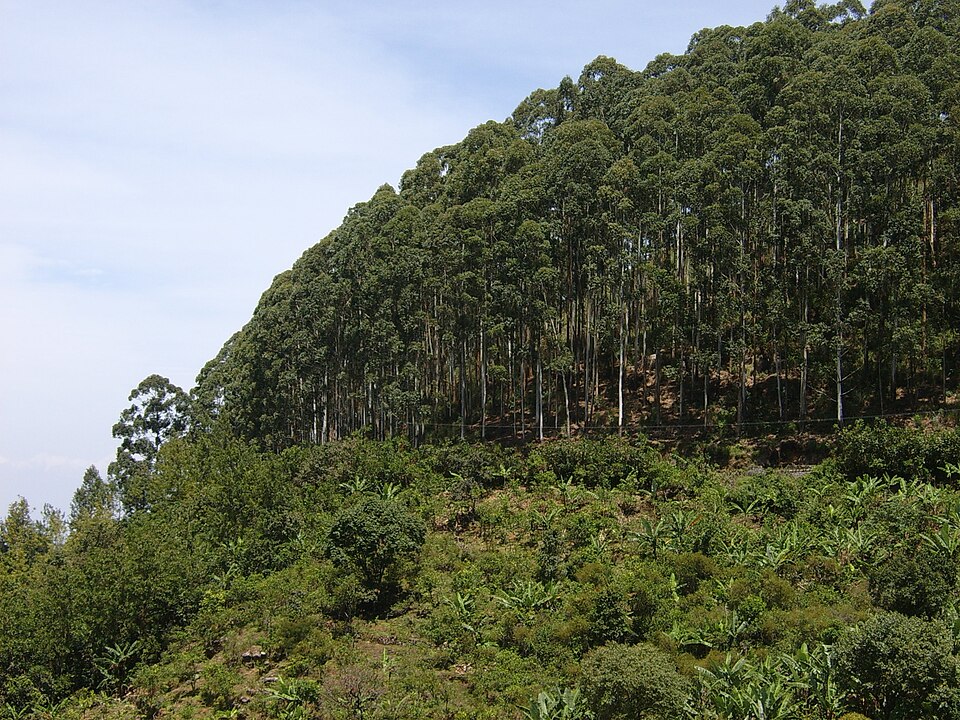
Correct — A, Eucalyptus. The case against eucalyptus rests on four well-documented properties. First, it transpires very heavily and draws a great deal of water out of the soil — so reliably that it has been planted on purpose to lower water tables and reduce soil salination, an intervention that can destroy ecologically productive wetland. Second, it is allelopathic: it releases compounds that inhibit other plant species from growing near it, which is why the ground under a eucalyptus stand is characteristically bare. Third, eucalyptus oil is highly flammable, and at high enough temperatures the oil expands and quickens the spread of wildfire; the Oakland Hills firestorm of 1991 in California is the standard case. Fourth, outside its native Australia the tree competes with native plants and typically does not support native animals, so a eucalyptus plantation adds tree cover without adding habitat. Critics of large-scale eucalyptus planting in India have argued the same points against social-forestry monocultures — falling water tables and the displacement of food crops — which is the argument this question is drawing on.
Why the others are wrong
- (b)Banana — A cultivated food crop with no comparable charge against it, and strictly not a tree at all: the banana is a giant herbaceous plant whose apparent trunk is a pseudostem of tightly rolled leaf bases. It is a thirsty crop, but it is grown as a crop on farmland rather than planted at scale as forestry, and nothing about it depletes water tables or suppresses neighbouring vegetation the way eucalyptus does.
- (c)Neem — Close to the opposite of the answer. Neem, Azadirachta indica, is the classic drought-hardy indigenous tree of the Indian plains, valued for shade, for its timber and above all for the bio-pesticidal compounds in its seed and leaf. It is planted precisely because it thrives on poor soils and little water and coexists with everything around it.
- (d)Babool — Babool, Acacia nilotica, is a thorny leguminous tree long naturalised in India's dry tracts and used in afforesting degraded and saline land, as well as for gum, fodder and fuelwood. The name is the source of a genuine confusion worth clearing up: 'vilayati babool', Prosopis juliflora, is a DIFFERENT and introduced species that is widely criticised for forming dense thickets and reducing local biodiversity. Desi babool is not that tree, and it is not what this question is pointing at.
Concept
Eucalyptus is a genus of some hundreds of species native to Australia, brought into India and much of the tropical world for plantation forestry because it grows fast, grows straight and yields pulpwood and poles within a few years. Those same qualities carry ecological costs, and they are worth learning as mechanisms rather than as a slogan: heavy transpiration lowering the local water table; allelopathy suppressing the understorey; volatile, flammable oils raising fire risk; and monoculture stands that count as tree cover in statistics while offering almost nothing to native insects, birds and mammals. This is the general problem with exotic plantation species — Prosopis juliflora and Lantana camara are the other names that recur in Indian environmental writing — and it is the reason forest policy distinguishes between raising tree cover and restoring a forest ecosystem.
Read 'dangerous for environment' as asking which species does harm beyond its own footprint. Three of the options fail that test straight away: banana is a food crop, and neem and babool are hardy trees long established in Indian conditions and planted to improve degraded land rather than to degrade it. Only eucalyptus carries a standing, documented environmental case against it. The wider habit to build is to keep two questions apart — is a species useful, and is it ecologically safe. Eucalyptus is commercially very useful, which is exactly why it was planted so widely; usefulness is not the issue. And do not let the arithmetic of forest statistics mislead you: a plantation monoculture raises recorded tree cover while supporting a fraction of the biodiversity of the natural forest it replaced.
Key facts
- Eucalyptus draws a great deal of water from the soil by transpiration, and has been planted deliberately to lower water tables and reduce soil salination — an effect that can destroy ecologically productive areas
- It is allelopathic: it releases compounds that inhibit other plant species from growing nearby
- Eucalyptus oil is highly flammable and at high temperatures expands and quickens the spread of wildfires; the 1991 Oakland Hills firestorm is the standard example
- Outside its native Australia, eucalyptus competes with native plants and typically does not support native animals
- Neem is an indigenous drought-hardy tree valued for shade and bio-pesticide; babool (Acacia nilotica) is used to afforest degraded and saline land; banana is a food crop and botanically a giant herb, not a tree
- Do not confuse desi babool (Acacia nilotica) with vilayati babool (Prosopis juliflora), an introduced species criticised for reducing local biodiversity
Study next
Common traps
- Confusing desi babool (Acacia nilotica) with vilayati babool (Prosopis juliflora) — it is the second, introduced species that is criticised for reducing biodiversity
- Treating banana as a tree; it is a giant herbaceous plant with a pseudostem, and it is a crop rather than a forestry species
- Reading rising tree-cover statistics as ecological gain when the increase is plantation monoculture
UPPSC asks it bluntly, as here — which tree is dangerous, which species is harmful — and expects one name. UPSC asks the same idea through a mechanism instead: why a named species is in the news, with the correct option describing what it actually does to the ecosystem. Prepare a short list of problem species with one sentence of mechanism each, and both formats are covered.
Related PYQs
Why is a plant called Prosopis juliflora often mentioned in news?
- (a) Its extract is widely used in cosmetics.
- (b) It tends to reduce the biodiversity in the area in which it grows.
- (c) Its extract is used in the synthesis of pesticides.
- (d) None of the above
Answer(b) It tends to reduce the biodiversity in the area in which it grows.
The same idea with a different species and a better-framed stem. UPPSC asks which tree is dangerous and expects a name; UPSC asks why a particular introduced species is in the news and expects the mechanism — that it reduces biodiversity where it spreads. Prosopis juliflora is also the 'vilayati babool' that candidates confuse with the desi babool printed as option (d) here, which makes the pair doubly worth attempting together.
Practice
- practice — not a real PYQ
Large-scale eucalyptus plantation is criticised on environmental grounds mainly because the tree
- (a)fixes excessive nitrogen and makes the soil toxic to other crops
- (b)transpires heavily enough to lower the local water table and releases compounds that inhibit other plants growing nearby
- (c)cannot survive without heavy irrigation and so fails on degraded land
- (d)harbours pests that attack neighbouring food crops
Answer(b) transpires heavily enough to lower the local water table and releases compounds that inhibit other plants growing nearby — its flammable oil and its poor value as habitat outside Australia complete the case against it. - practice — not a real PYQ
Which one of the following is a species introduced into India that is frequently criticised for forming dense thickets and reducing local biodiversity?
- (a)Azadirachta indica (neem)
- (b)Prosopis juliflora (vilayati babool)
- (c)Acacia nilotica (desi babool)
- (d)Ficus religiosa (peepal)
Answer(b) Prosopis juliflora — introduced and now spread aggressively across dry tracts and grasslands, where it crowds out native flora; it should not be confused with the indigenous desi babool, Acacia nilotica.