
Match List – I with List – II and select the correct answer from the code given below the lists. List – I (Centre) A. Osaka B. Detroit C. Cuba D. St. Pittsberg List – II (Industry) 1. Cigar 2. Ship building 3. Cotton textile 4. Automobile Code :
- (a)A-4, B-3, C-2, D-1
- (b)A-3, B-4, C-1, D-2
- (c)A-2, B-1, C-4, D-3
- (d)A-1, B-2, C-3, D-4
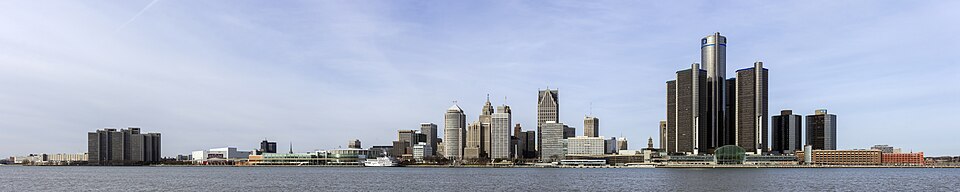
Correct — B, A-3, B-4, C-1, D-2. One pairing decides this question on its own, and it is the best-attested of the four: Detroit is the centre of the United States automobile industry, the home city of the 'Big Three' — Ford, General Motors and Chrysler — and the source of its nicknames Motor City and Motown. So B must go with 4, Automobile. Check the four codes against that single test: (a) gives Detroit cotton textile, (c) gives it cigars, (d) gives it shipbuilding, and only (b) gives it automobiles. The answer is settled before the other three pairings are even considered. Those three follow the standard economic geography the paper is drawing on, and are worth stating without inflating them: Osaka is Japan's historic cotton-textile city, long nicknamed 'the Manchester of Japan' (A-3); Cuba is synonymous with cigars, the Havana tobacco trade being its best-known manufacture (C-1); and St Petersburg, founded by Peter the Great as Russia's naval capital on the Baltic, is the country's shipbuilding centre (D-2). Treat those three as textbook associations rather than as figures you can defend to a number — the Detroit anchor is what makes the answer safe.
- (a)A-4, B-3, C-2, D-1 — It rotates the list one place and puts the automobile industry in Osaka and cotton textiles in Detroit, which reverses the one pairing in the question that is beyond argument. It also asks you to believe that Cuba is a shipbuilding centre and St Petersburg a cigar centre.
- (c)A-2, B-1, C-4, D-3 — Detroit is given cigars and Cuba is given automobiles — a straight swap of the two most recognisable pairings in the set. Osaka becomes a shipbuilding centre and St Petersburg a cotton-textile centre, neither of which is the association either place carries.
- (d)A-1, B-2, C-3, D-4 — The lazy sequential code — A-1, B-2, C-3, D-4 in order — which examiners include precisely because it looks tidy. It makes Osaka a cigar centre, Detroit a shipbuilding centre, Cuba a cotton-textile centre and St Petersburg an automobile centre; every pairing is wrong.
World economic geography is taught partly as a set of place-to-product associations, each of which has a reason behind it. Detroit grew into the American automobile capital in the early twentieth century around Ford's assembly-line production, and its population rose to fourth largest in the country by 1920 as the industry expanded. Osaka became Japan's great cotton-textile city during the Meiji industrialisation, which is why it acquired the label 'the Manchester of Japan'. Cuba's cigars rest on the tobacco of its western provinces and on Havana's long-established cigar houses. St Petersburg was founded by Peter the Great as a naval city on the Baltic and has built ships — naval and commercial — ever since. Locating an industry usually means locating its input, its port, or its founding entrepreneur.
Note first that the item is untidy: three entries in List-I are cities and one, Cuba, is a country, and 'St. Pittsberg' is the paper's spelling of St Petersburg — neither slip changes what is being asked, but both can unsettle a candidate mid-paper. The technique that beats a four-item match is anchoring: find the single pairing you are certain of and eliminate on it, rather than trying to adjudicate all four. Here Detroit-Automobile is that anchor and it eliminates three options at one stroke. If you did not know Detroit, Cuba-Cigar would do the same job — only (b) offers it. Build the habit of scanning a match list for the pairing you would bet money on before you read the codes at all.
- Detroit, Michigan, is the centre of the United States automobile industry — the base of Ford, General Motors and Chrysler, and the origin of the nicknames Motor City and Motown.
- Detroit's population grew to the fourth largest in the United States by 1920 as the motor industry expanded there.
- Osaka is Japan's historic cotton-textile centre and was long called 'the Manchester of Japan'; the paper uses that standard association for pair A-3.
- Cuba's best-known manufacture is the cigar, built on the tobacco of its western provinces and the Havana cigar trade — the association behind pair C-1.
- St Petersburg was founded by Peter the Great as Russia's Baltic naval capital and is its shipbuilding centre, which gives pair D-2; the paper prints the name as 'St. Pittsberg'.
- Trying to settle all four pairings before choosing. Anchor on the one you are certain of — Detroit here — and eliminate; three of the four codes fall away immediately.
- Being thrown by the item's own untidiness — 'Cuba' among three cities, and 'St. Pittsberg' for St Petersburg. Neither affects the matching.
- Confusing St Petersburg (Russia, on the Baltic) with St Petersburg, Florida, or with Pittsburgh, Pennsylvania — the American steel city that the spelling in this paper half-suggests.
UPPSC leans heavily on world-geography match lists — centre to industry, coal field to country, port to country, mine to state — usually four items and a code. UPSC asks the same knowledge more obliquely, inside statement sets on trade, industrial location or resource distribution, so learn the associations with the reason attached rather than as a list.
Match List - I with List - II and choose the correct answer by using the code given below the lists. List - I (Coal Field) A. Appalachian B. Lancashire C. Ruhr D. Kuzbass List - II (Country) 1. England 2. Germany 3. Russia 4. United States of America
- (a) A-4, B-1, C-2, D-3
- (b) A-1, B-4, C-2, D-3
- (c) A-1, B-4, C-3, D-2
- (d) A-4, B-1, C-3, D-2
Answer(a) A-4, B-1, C-2, D-3
The same question type on the same ground three years later — a four-item world economic-geography match solved by anchoring on the one or two pairings you are sure of and eliminating the rest of the codes.
- practice — not a real PYQ
Which one of the following cities is known as 'the Manchester of Japan'?
- (a)Nagoya
- (b)Osaka
- (c)Yokohama
- (d)Kobe
Answer(b) Osaka — the historic centre of Japan's cotton-textile industry, which earned it the comparison with Lancashire's Manchester.
- practice — not a real PYQ
Detroit in the United States is best known as a centre of which industry?
- (a)Aircraft manufacture
- (b)Iron and steel
- (c)Automobiles
- (d)Electronics
Answer(c) Automobiles — the base of Ford, General Motors and Chrysler, and the reason it is called Motor City.