
Which of the following is NOT correctly matched ? (Tribe) — (Place)
- (a)Pygmy — Congo basin
- (b)Angami — Nagaland
- (c)Ainu — Japan
- (d)Khirghiz — Sudan
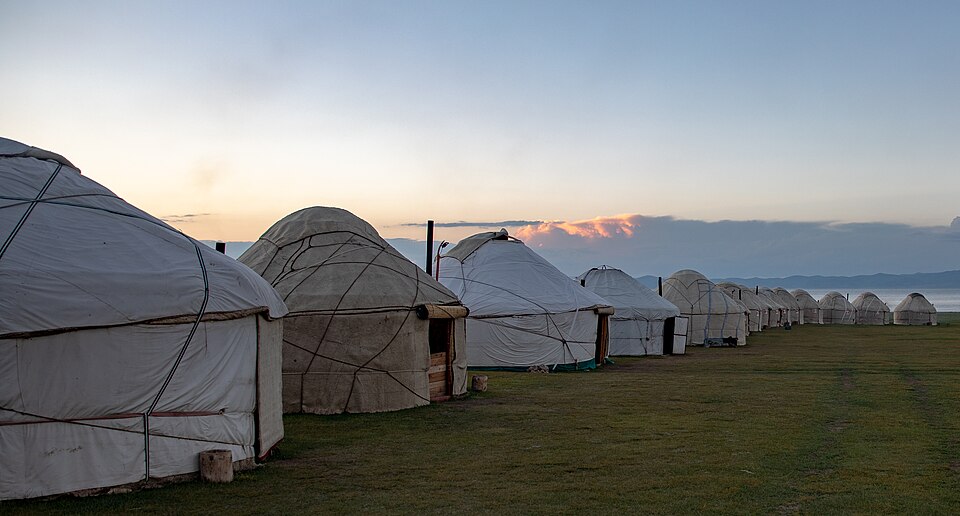
Correct — D, 'Khirghiz — Sudan' is the pair that is NOT correctly matched. Khirghiz is simply an older spelling of Kyrgyz, a Turkic people of Central Asia. Their homeland is Kyrgyzstan and the surrounding high country of the Tien Shan and the Pamir–Alay, with communities also in China's Xinjiang, the Wakhan corridor of Afghanistan and eastern Tajikistan. They are the classic textbook example of high-altitude pastoral nomadism — felt yurts, herds of sheep, horses and yaks, and a seasonal move up to the summer pastures called jailoo. Nothing about them belongs to Sudan, whose own peoples are the Beja, Nubians, Nuba, Fur and Baggara. The other three pairs are all correct, so (d) is the mismatch the question is asking for.
- (a)Pygmy — Congo basin — This pair IS correct, so it cannot be the answer. The Pygmy peoples — Mbuti of the Ituri forest, Aka and Twa among them — are hunter-gatherers of the equatorial rainforest of the Congo basin, the standard example of forest-dwelling adaptation.
- (b)Angami — Nagaland — This pair IS correct. The Angami are one of the major Naga tribes, concentrated in and around Kohima in Nagaland, and are well known for terraced wet-rice cultivation on steep hill slopes.
- (c)Ainu — Japan — This pair IS correct. The Ainu are the indigenous people of Hokkaido in northern Japan, historically also of Sakhalin and the Kuril Islands; Japan enacted a law recognising them as an indigenous people in 2019.
'Tribe and place' questions test whether you can put a named people into the right physical environment, because each of these groups is a textbook case of adaptation to one biome. Pygmies stand for the equatorial rainforest, where short stature, hunting and gathering suit a dense, closed forest. The Kirghiz stand for the Central Asian high steppe and mountain pasture, where nothing but herding is possible and the household must be portable. The Ainu stand for the cool northern forests and coasts of Hokkaido, historically living by hunting, fishing and gathering. The Angami stand for the terraced hill agriculture of the Naga uplands. Once you attach each name to a biome, the geography follows.
Solve this one by elimination. Three of the four pairs are staples of the school atlas, and the odd one out is deliberately placed in the wrong continent: the Kirghiz are Central Asian, not African. If a paper had wanted a genuine Sudanese entry it would have used the Beja, the Nuba or the Baggara — and note that the Nilotic Dinka and Nuer, once listed under Sudan in older books, have been in South Sudan since it became independent in 2011. Beware also of the spelling: 'Khirghiz', 'Kirghiz' and 'Kyrgyz' are the same people, and candidates who do not recognise the old transliteration sometimes assume it must be an unfamiliar African group.
- The Kirghiz (Kyrgyz) are a Turkic pastoral-nomadic people of Central Asia — Kyrgyzstan and the Tien Shan and Pamir ranges, with communities in Xinjiang, the Afghan Wakhan corridor and Tajikistan; the felt yurt and the summer move to the jailoo are their signature.
- Pygmy peoples such as the Mbuti, Aka and Twa are hunter-gatherers of the Congo basin's equatorial rainforest.
- The Angami are one of the major Naga tribes of Nagaland, centred on the Kohima area and known for terraced wet-rice cultivation.
- The Ainu are the indigenous people of Hokkaido in northern Japan, historically also of Sakhalin and the Kurils; Japan legally recognised them as an indigenous people in 2019.
- Sudan's own peoples include the Beja, Nubians, Nuba, Fur and Baggara; the Dinka and Nuer belong to South Sudan, independent since 2011.
- Not recognising that 'Khirghiz' and 'Kirghiz' are only older spellings of Kyrgyz, and treating the word as an unfamiliar African group.
- Confusing the Ainu of Japan with the Aeta of the Philippines, or assuming Japan has no indigenous minority at all.
- Mixing up Naga tribes — Angami, Ao, Konyak, Sema and Lotha are all of Nagaland, and UPSC has already used the Konyak–Nagaland pairing in this same format.
Both exams ask this as a single-line 'which pair is NOT correctly matched' item that mixes three world tribes with one Indian tribe, so a memorised list of about a dozen classic tribe–habitat pairs covers nearly every version of the question.
Which one of the following pairs of primitive tribes and places of their inhabitation is not correctly matched?
- (a) Buksa: Pauri-Garhwal
- (b) Kol: Jabalpur
- (c) Munda: Chhotanagpur
- (d) Korba: Kodagu
Answer(d) Korba: Kodagu
The identical question design — three sound tribe-and-place pairs with one deliberately shifted to the wrong region, to be found by elimination.
“Climate is extreme, rainfall is scanty and the people used to be nomadic herders.” The above statement best describes which of the following regions?
- (a) African Savannah
- (b) Central Asian Steppe
- (c) North American Prairie
- (d) Siberian Tundra
Answer(b) Central Asian Steppe
This is the Kirghiz answer stated positively — the extreme, dry, nomadic-herding belt described here is Central Asia, which is precisely where the Kirghiz belong and Sudan does not.
Which of the following is NOT correctly matched ? (Tribes) (Location)
- (a) Angamis – Nagaland
- (b) Birhors – Jharkhand
- (c) Khas – Arunachal Pradesh
- (d) Todas – Tamil Nadu
Answer(c) Khas – Arunachal Pradesh
UPPSC repeated the format the very next year and even reused the Angami–Nagaland pair as a correct option, which shows how narrow the pool of tribes it draws on really is.
Which of the following pair is NOT correctly matched? (Place) - (Tribe)
- (a) Alaska - Koryak
- (b) Borneo - Punan
- (c) Arab Desert - Ruwala
- (d) Sweden and Finland - Lapps
Answer(a) Alaska - Koryak
The same question two years later with world tribes only, and the same trick — the wrong pair is the one moved to the wrong continent, here the Siberian Koryak sent to Alaska.
- practice — not a real PYQ
The Kirghiz are traditionally associated with which one of the following ways of life?
- (a)Nomadic herding on the high pastures of Central Asia
- (b)Shifting cultivation in the Congo basin
- (c)Sealing and fishing on the Arctic coast
- (d)Date-palm cultivation in Saharan oases
Answer(a) Nomadic herding on the high pastures of Central Asia — the Kirghiz move with sheep, horses and yaks between winter settlements and summer jailoo pastures in the Tien Shan and Pamirs.
- practice — not a real PYQ
Which one of the following pairs is NOT correctly matched? (Tribe) — (Region)
- (a)Bushmen (San) — Kalahari
- (b)Bedouin — Arabian desert
- (c)Masai — East African savanna
- (d)Ainu — Philippines
Answer(d) Ainu — Philippines — the Ainu are the indigenous people of Hokkaido in Japan; the indigenous groups of the Philippines are the Aeta and Ati.