
Match List - I with List - II and select the correct answer using the codes given below the lists : List - I (Natural Vegetation) A. Epiphytes B. Acacia C. Baobab D. Cedars List - II (Region) 1. Mediterranean 2. Equatorial 3. Sahara 4. Savanna Codes :
- (a)A-2, B-3, C-4, D-1
- (b)A-2, B-3, C-1, D-4
- (c)A-2, B-4, C-3, D-1
- (d)A-2, B-4, C-1, D-3
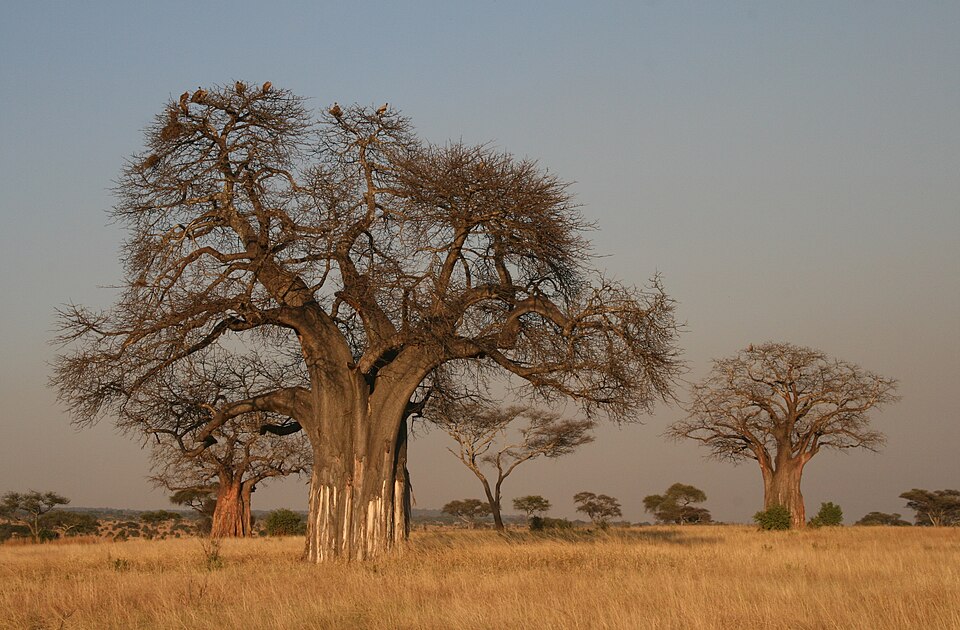
Correct — A, A-2, B-3, C-4, D-1. Epiphytes — orchids, ferns and bromeliads perched on trunks and branches — are the signature of the multi-storeyed equatorial rainforest, where light near the ground is scarce, so A goes to 2. Acacia, the thorny, tiny-leaved, deep-rooted tree, is taken here as the desert entry: in the Sahara it is the characteristic tree of the wadis and depressions, so B goes to 3. The baobab (Adansonia digitata), the 'upside-down tree' with a hugely swollen water-storing trunk, is the emblem of the African savanna, so C goes to 4. Cedars — the cedar of Lebanon and the Atlas cedar of Morocco and Algeria — are Mediterranean trees, so D goes to 1. That gives A-2, B-3, C-4, D-1, which is option (a).
- (b)A-2, B-3, C-1, D-4 — It places the baobab in the Mediterranean and the cedars in the savanna — an exact swap of the last two rows. The baobab is an African dry-tropical tree and does not grow wild around the Mediterranean, while cedar is a cool-hill conifer of the Mediterranean mountains, not a savanna tree.
- (c)A-2, B-4, C-3, D-1 — This is the tempting one, because acacias genuinely are the umbrella trees of the African savanna. But in this four-way set the savanna slot is claimed by the baobab, and no other listed plant can occupy the Sahara. Placing the baobab in the Sahara is the clear error — it needs a wet season the Sahara does not have.
- (d)A-2, B-4, C-1, D-3 — Three rows are wrong at once: acacia to the savanna, baobab to the Mediterranean and cedars to the Sahara. Cedar forests need the cool, moist mountain slopes of Lebanon or the Atlas — the Sahara supports date palms at oases and thorny scrub in wadis, not conifer forest.
World natural vegetation follows the moisture regime. The equatorial belt has rain all year, producing a tall, layered rainforest with lianas and abundant epiphytes. The savanna has a sharply seasonal rainfall, producing tall grass with scattered fire- and drought-resistant trees such as the baobab and acacia. The hot desert has almost no rain, so vegetation retreats to xerophytes — thorny acacias in the wadis, date palms at oases. The Mediterranean belt gets its rain in winter, producing sclerophyllous evergreens: olive, cork oak, and on the higher slopes the cedars. Match the plant to the water supply it needs and the pairing usually falls out.
Every option gives A-2, so epiphytes-equatorial is free and the question is decided by the baobab and the cedar. The baobab, with its bloated trunk that stores water through a long dry season, is a savanna specialist; it also grows in western India, where it is called gorakh imli. The cedar row is where careless candidates slip: Cedrus libani appears on the flag of Lebanon and Cedrus atlantica clothes the Atlas Mountains, both squarely Mediterranean, but the Himalayan deodar (Cedrus deodara) is also a cedar, and thinking of it pulls candidates towards a temperate-mountain answer that is not even on the list. Acacia is the honest ambiguity of the set — it grows in both the savanna and the desert margins — so treat it by elimination rather than by instinct.
- Epiphytes such as orchids, ferns and bromeliads use the host tree only for mechanical support, drawing moisture from the humid air — they are not parasites, and they are most abundant in equatorial rainforest.
- The baobab (Adansonia digitata), with its swollen water-storing trunk, is the signature tree of the African savanna; it also grows in western India, where it is known as gorakh imli.
- Acacia (much of the genus now reclassified as Vachellia and Senegalia) is the thorny, small-leaved, deep-rooted tree of hot arid lands — Saharan wadis, the Thar, and the drier African savanna.
- Cedars of the Mediterranean are Cedrus libani of Lebanon (the tree on the Lebanese flag) and Cedrus atlantica of the Atlas Mountains; the Himalayan deodar, Cedrus deodara, is their temperate-mountain cousin.
- The four regions in List - II line up along a rainfall gradient: equatorial (rain all year), savanna (seasonal rain), Sahara (no reliable rain), Mediterranean (winter rain).
- Pulling acacia into the savanna: it does grow there, but with the baobab holding the savanna slot the Sahara has no other candidate in this set.
- Reading 'Cedar' as the Himalayan deodar and hunting for a temperate-mountain region that is not among the options.
- Believing epiphytes are parasites — they take support from the host, not food or sap.
Both exams test natural vegetation as region-signature pairs — one flagship plant per belt — so store a compact list (epiphyte and liana for equatorial, baobab and elephant grass for savanna, acacia and date palm for hot desert, olive and cedar for Mediterranean, lichen and moss for tundra) and answer by elimination.
Which of the following is/are unique characteristic/characteristics of equatorial forests? 1. Presence of tall, closely set trees with crowns forming a continuous canopy 2. Coexistence of a large number of species 3. Presence of numerous varieties of epiphytes Select the correct answer using the codes given below.
- (a) 1 only
- (b) 2 and 3 only
- (c) 1 and 3 only
- (d) 1, 2 and 3
Answer(d) 1, 2 and 3
UPSC ties epiphytes to the equatorial forest explicitly — the same A-2 pairing this UPPSC question hands you for free, but asked as a statement-based question.
The vegetation of savannah consists of grassland with scattered small trees, but extensive areas have no trees. The forest development in such areas is generally kept in check by one or more or a combination of some conditions. Which of the following are such conditions? 1. Burrowing animals and termites 2. Fire 3. Grazing herbivores 4. Seasonal rainfall 5. Soil properties Select the correct answer using the code given below.
- (a) 1 and 2
- (b) 4 and 5
- (c) 2, 3 and 4
- (d) 1, 3 and 5
Answer(c) 2, 3 and 4
The savanna row of this matching set, taken one level deeper — why only scattered fire-hardy trees such as the baobab and acacia survive in savanna grassland.
In which of the following regions of the world, the production of citrus fruits is well developed ?
- (a) Monsoon regions
- (b) Tropical high lands regions
- (c) Mediterranean regions
- (d) Equatorial regions
Answer(c) Mediterranean regions
UPPSC tested the same Mediterranean belt a year later through its crops — the winter-rain climate that carries the cedars of List - I is the one that grows the world's citrus.
- practice — not a real PYQ
The baobab tree, with its greatly swollen water-storing trunk, is a characteristic tree of which natural vegetation belt?
- (a)Equatorial rainforest
- (b)Tropical savanna
- (c)Mediterranean scrub
- (d)Coniferous taiga
Answer(b) Tropical savanna — the swollen trunk stores water through the savanna's long dry season; equatorial forests need no such store and the Mediterranean and taiga are far too cool and wet in the wrong season.
- practice — not a real PYQ
Which one of the following trees is naturally associated with the Mediterranean region?
- (a)Deodar
- (b)Cedar of Lebanon
- (c)Sal
- (d)Rubber
Answer(b) Cedar of Lebanon — Cedrus libani belongs to the eastern Mediterranean mountains; deodar is Himalayan, sal is an Indian tropical deciduous tree and rubber is equatorial.