
Given below are two statements, one is labelled as Assertion (A) and the other as Reason (R). Assertion (A) : Indian Ocean has become the Military bases of many big powers. Reason (R) : There is strong geo-political benefits in Indian Ocean and adjacent countries. Select the correct answer from the codes given below : Codes :
- (a)Both (A) and (R) are true and (R) is the correct explanation of (A)
- (b)Both (A) and (R) are true, but (R) is not the correct explanation of (A)
- (c)(A) is true, but (R) is false
- (d)(A) is false, but (R) is true
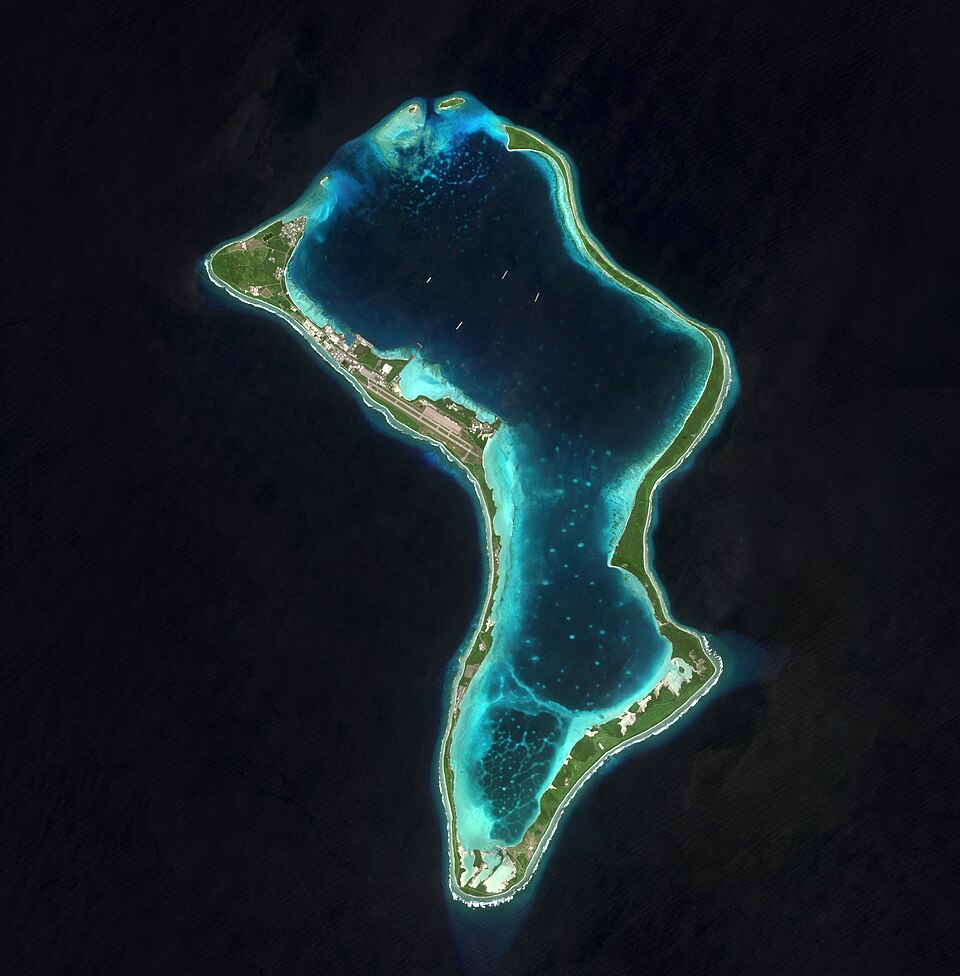
Correct — B, both (A) and (R) are true, but (R) is not the correct explanation of (A). Assertion (A) is a matter of record: Diego Garcia in the Chagos Archipelago is a major United States facility on British-administered territory in the middle of the ocean; Djibouti, at the mouth of the Red Sea, hosts American (Camp Lemonnier), French and Japanese bases and China's first overseas military support base, opened in 2017; France maintains forces on Reunion and Mayotte; and the US Fifth Fleet works out of Bahrain in the Gulf. Reason (R) is also true — the Indian Ocean carries the world's busiest energy sea lanes through the Straits of Hormuz, Bab-el-Mandeb and Malacca, and its rim holds West Asian oil, African minerals and fast-growing markets. Be honest about the difficulty here: many candidates read (R) as exactly why the bases exist and mark (a), and the causal link is arguable. The commission's key marks (b), treating (R) as a general statement of regional value rather than the specific cause of base-building — the direct reasons being the need of distant powers for forward logistics, refuelling and sea-lane protection far from their home waters, and the absence of any single dominant resident navy. Since the key is what awards the mark, (b) is the answer to reproduce.
- (a)Both (A) and (R) are true and (R) is the correct explanation of (A) — The natural reading for most candidates, and the reason this item is disputed — but the official key rejects it. The assertion-reason discipline is that (R) must supply the mechanism behind (A), not merely be a true sentence standing next to it, and the key holds that 'strong geo-political benefits in the Indian Ocean and adjacent countries' names a value, not a cause.
- (c)(A) is true, but (R) is false — (R) is not false. The geopolitical importance of the Indian Ocean and its rim is beyond dispute — a very large share of the world's seaborne oil and container traffic passes through its narrow chokepoints, and its littoral includes the Gulf's energy exporters.
- (d)(A) is false, but (R) is true — (A) is not false either. Foreign military facilities in and around the Indian Ocean are openly documented — Diego Garcia, the cluster of bases in Djibouti and the French presence on Reunion are the standard examples.
The Indian Ocean is the world's principal energy highway, and it is unusual in being almost closed: traffic must funnel through a handful of narrow chokepoints — the Strait of Hormuz, the Bab-el-Mandeb, the Strait of Malacca and, going the long way round, the Mozambique Channel and the Cape route. Because most of its rim states are developing countries and none of them can police the whole basin, powers from outside the region have long maintained bases and access agreements there. India's own answers to this reality are institutional rather than territorial: the Indian Ocean Naval Symposium (2008), the Indian Ocean Rim Association, the SAGAR vision of 2015, the Information Fusion Centre for the Indian Ocean Region at Gurugram (2018), and logistics or access arrangements with partners.
Work assertion-reason items in three steps: test (A) alone, test (R) alone, and only then ask whether (R) is the cause of (A). Here both statements survive on their own, which kills (c) and (d) at once, so the entire question turns on the causal link — and that is where the key takes the strict view, giving (b). Anchor the picture to the exam date as well: in February 2019 the International Court of Justice gave an advisory opinion that the United Kingdom should end its administration of the Chagos Archipelago, home of Diego Garcia, and the UN General Assembly followed with a resolution to the same effect later that year. The sovereignty question was under UK–Mauritius negotiation for years; on 22 May 2025 the two signed a treaty transferring sovereignty over the Chagos Archipelago to Mauritius with the UK retaining Diego Garcia on a 99-year leaseback (not yet ratified as of 2026). The base itself has operated throughout, which is why the assertion stands whichever year you read it in.
- The strategic chokepoints of the Indian Ocean are the Strait of Hormuz, the Bab-el-Mandeb, the Strait of Malacca and the Mozambique Channel/Cape route; most West Asian oil bound for Asia crosses them.
- Diego Garcia, in the Chagos Archipelago, is the largest United States military facility in the Indian Ocean and lies on the British Indian Ocean Territory; the ICJ gave an advisory opinion against continued British administration of the archipelago in February 2019.
- Djibouti, at the southern mouth of the Red Sea, hosts American, French and Japanese bases and China's first overseas military support base, which opened in 2017.
- India's regional architecture includes the Indian Ocean Naval Symposium (first held in 2008), the Indian Ocean Rim Association, the SAGAR vision announced in 2015 and the Information Fusion Centre-Indian Ocean Region at Gurugram (2018).
- Marking (a) reflexively because both statements sound right — in an assertion-reason item the second test is causality, not truth.
- Assuming (A) must be false because India is the largest resident navy in the region; extra-regional bases exist regardless of that.
- Reading 'Indian Ocean' as implying Indian control — the name is historical and geographical, and confers no legal or strategic ownership.
UPPSC runs several assertion-reason items in every paper and often marks 'both true but R does not explain A' when the reason is a broad generality, so before choosing (a) ask whether the Reason actually names a mechanism.
Southeast Asia has captivated the attention of global community over space and time as a geostrategically significant region. Which among the following is the most convincing explanation for this global perspective?
- (a) It was the hot theatre during the Second World War
- (b) Its location between the Asian powers of China and India
- (c) It was the arena of superpower confrontation during the Cold War period
- (d) Its location between the Pacific and Indian oceans and its pre-eminent maritime character
Answer(d) Its location between the Pacific and Indian oceans and its pre-eminent maritime character
The same reasoning, and a useful contrast: UPSC there accepted maritime location as the explanation of great-power interest, which is exactly the causal step UPPSC's key declines to grant here.
Consider the following in respect of Indian Ocean Naval Symposium (IONS): 1. Inaugural IONS was held in India in 2015 under the chairmanship of the Indian Navy. 2. IONS is a voluntary initiative that seeks to increase maritime co-operation among navies of the littoral states of the Indian Ocean Region. Which of the above statements is/are correct?
- (a) 1 only
- (b) 2 only
- (c) Both 1 and 2
- (d) Neither 1 nor 2
Answer(b) 2 only
The other half of the Indian Ocean story — how the littoral states themselves have organised, which is India's answer to the outside bases the Assertion describes.
Which Indian Naval Ship participated in Exercise Cutlass Express, 2021 ?
- (a) INS Vikrant
- (b) INS Magar
- (c) INS Talwar
- (d) INS Vikramaditya
Answer(c) INS Talwar
The same theme in current-affairs form — multinational maritime-security exercises off East Africa are precisely the crowded western Indian Ocean this assertion is about.
- practice — not a real PYQ
Which one of the following is NOT a chokepoint of the Indian Ocean region?
- (a)Strait of Hormuz
- (b)Bab-el-Mandeb
- (c)Strait of Malacca
- (d)Strait of Gibraltar
Answer(d) Strait of Gibraltar — it links the Mediterranean with the Atlantic; the other three control the entrances to the Indian Ocean from the Gulf, the Red Sea and the Pacific.
- practice — not a real PYQ
India's 'SAGAR' vision, articulated in 2015, refers to
- (a)A programme for inland waterways development
- (b)Security and Growth for All in the Region — India's approach to the Indian Ocean
- (c)An indigenous satellite navigation system
- (d)A national desalination and coastal water mission
Answer(b) Security and Growth for All in the Region — India's maritime cooperation doctrine for the Indian Ocean neighbourhood.