
Which of the following pair is NOT correctly matched ? (Place) – (Tribe)
- (a)Alaska – Koryak
- (b)Borneo – Punan
- (c)Arab Desert – Ruwala
- (d)Sweden and Finland – Lapps
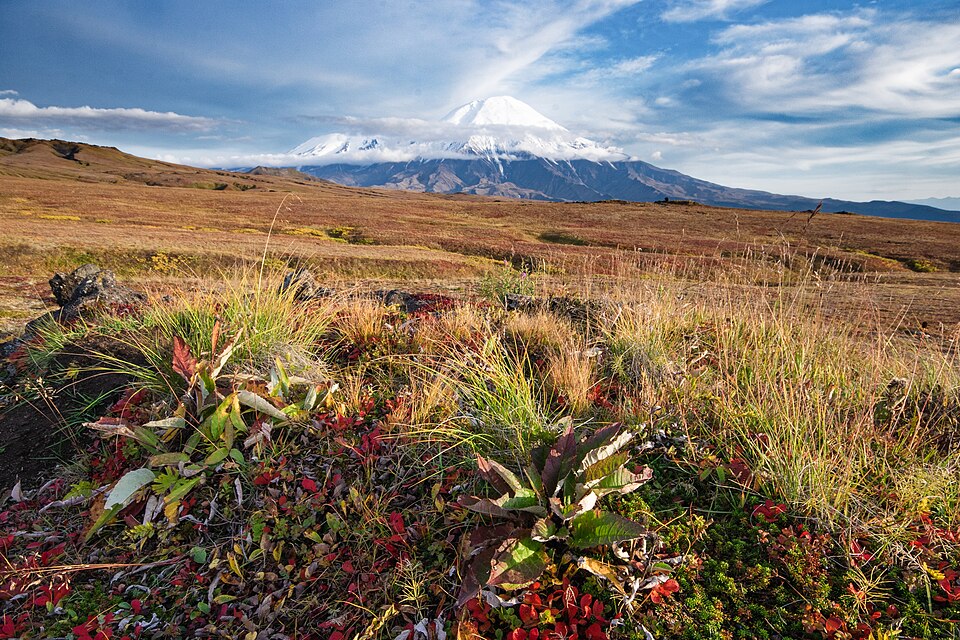
Correct — A, Alaska – Koryak is the pair that is NOT correctly matched. The Koryak are an indigenous people of the Kamchatka Peninsula in the Russian Far East (Siberia), living around the northern Kamchatka coastlands of the Bering Sea — not Alaska. Alaska's own native peoples are groups such as the Inuit/Eskimo, Aleut and Athabaskans. Since the question asks for the wrongly matched pair, this is the answer.
- (b)Borneo – Punan — Correctly matched — the Punan (Penan) are a forest-dwelling indigenous people of Borneo (Malaysia/Indonesia/Brunei), so this pair is right and cannot be the answer.
- (c)Arab Desert – Ruwala — Correctly matched — the Ruwala (Rwala) are a large Bedouin tribe of the Syrian/Arabian desert, so this pairing is correct.
- (d)Sweden and Finland – Lapps — Correctly matched — the Lapps (Sami) are the indigenous reindeer-herding people of northern Scandinavia, including Sweden and Finland; this pairing is correct.
This tests the world-tribes-to-region link — placing each indigenous group in its home environment. Punan (Borneo rainforest), Ruwala (Arabian desert Bedouin) and Lapps/Sami (Scandinavian Arctic) are correctly located; the error is Koryak, who belong to Kamchatka in Siberia, not to Alaska.
Alaska and Kamchatka face each other across the Bering Sea and share Arctic reindeer-herding cultures, which is why 'Alaska – Koryak' looks plausible — that is the trap. The Koryak are a Russian (Siberian) people; Alaska's natives are the Inuit/Eskimo, Aleut and Athabaskan groups.
- Koryak — indigenous people of the Kamchatka Peninsula, Russian Far East (Siberia), NOT Alaska.
- Punan (Penan) — forest people of Borneo.
- Ruwala (Rwala) — Bedouin tribe of the Syrian/Arabian desert.
- Lapps (Sami) — reindeer-herding people of northern Scandinavia (Sweden, Finland, Norway).
- Answering a correctly matched pair — the question asks for the NOT correctly matched one
- Confusing the Koryak (Kamchatka, Siberia) with Alaskan natives (Inuit/Aleut) because both are Bering-Sea Arctic peoples
UPSC/UPPSC pair a tribe with its place/region and ask which is not correctly matched, or match world tribes to continents/deserts/forests.
Which one of the following pairs of primitive tribes and places of their inhabitation is not correctly matched?
- (a) Buksa: Pauri-Garhwal
- (b) Kol: Jabalpur
- (c) Munda: Chhotanagpur
- (d) Korba: Kodagu
Answer(d) Korba: Kodagu
Same format and skill — spotting the wrongly matched tribe–place pair (here the Korba are not native to Kodagu), exactly the reasoning used to catch Alaska–Koryak.
Which one of the following pairs of states and tribes is not correctly matched?
- (a) Assam : Miri
- (b) Nagaland : Konyak
- (c) Arunachal Pradesh : Apatani
- (d) Madhya Pradesh : Lambada
Answer(d) Madhya Pradesh : Lambada
Same 'tribe–place not correctly matched' skill (Lambada/Banjara are not of Madhya Pradesh), reinforcing the place-to-tribe matching this question tests.
- practice — not a real PYQ
The Bushmen (San) are the indigenous people of which region?
- (a)Kalahari Desert, Southern Africa
- (b)Amazon Basin
- (c)Siberian tundra
- (d)Central Australia
Answer(a) The Kalahari Desert of Southern Africa. - practice — not a real PYQ
The Lapps (Sami) are traditionally associated with reindeer herding in which region?
- (a)Northern Scandinavia
- (b)Central Asian steppe
- (c)The Andes
- (d)The Arabian Desert
Answer(a) Northern Scandinavia (Sweden, Finland, Norway).