
Which of the following statements about Srimanta Shankardeva is/are correct? 1. In the late fifteenth century Shankardeva emerged as one of the leading proponents of Vaishnavism in Assam. 2. He was the founder of Gaudiya Vaishnavism. 3. His teachings are known as Bhagavati Dharma. 4. He encouraged the establishment of satra and naam ghar.
- (a)1 and 2 only
- (b)2 and 3 only
- (c)1, 3 and 4 only
- (d)1, 2, 3 and 4
Answer
Why
Correct — C, 1, 3 and 4 only. Srimanta Shankardeva (traditionally born 1449) emerged in the late fifteenth century as a leading proponent of Vaishnavism in Assam (statement 1 true); his teaching is the Ekasarana / Bhagavati Dharma, a devotional Vaishnava path (statement 3 true); and he encouraged the founding of satras (monasteries) and naam ghars/namghars (village prayer houses) that still anchor Assamese religious life (statement 4 true). Statement 2 is false — Gaudiya Vaishnavism was founded by Chaitanya Mahaprabhu in Bengal, not by Shankardeva — so the correct combination is 1, 3 and 4 only.
Why the others are wrong
- (a)1 and 2 only — Wrong because it keeps the false statement 2 (Shankardeva as founder of Gaudiya Vaishnavism) and drops the true statements 3 and 4.
- (b)2 and 3 only — Wrong — it includes the false statement 2 and omits the true statements 1 and 4.
- (d)1, 2, 3 and 4 — Wrong — it wrongly counts statement 2 as correct; Shankardeva did not found Gaudiya Vaishnavism (that was Chaitanya Mahaprabhu).
Concept
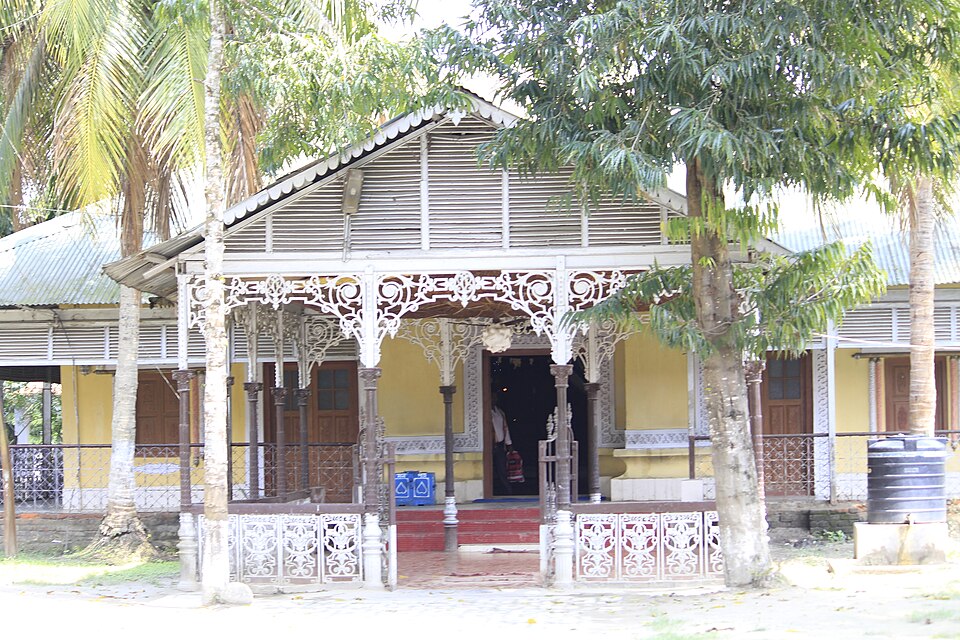
Shankardeva led the neo-Vaishnava Bhakti movement in Assam, preaching single-minded devotion (eka-sarana) to Krishna/Vishnu. He was also a poet, playwright and artist — creator of Borgeet songs, Ankia Naat plays and the Sattriya dance — and his institutions, the satra and the naam ghar, spread his faith and culture across the Brahmaputra valley.
Three statements describe Shankardeva accurately; the single false one transplants Bengal's Gaudiya Vaishnavism (Chaitanya's movement) onto him. Spotting that mismatch leaves 1, 3 and 4 as the correct set.
Key facts
- Shankardeva (traditionally b. 1449) founded the Ekasarana/Bhagavati Dharma, Assam's neo-Vaishnava tradition.
- He established satras (monasteries) and naam ghars (prayer houses).
- Gaudiya Vaishnavism was founded separately by Chaitanya Mahaprabhu in Bengal.
- Shankardeva also created the Sattriya dance, Borgeet songs and Ankia Naat drama.
Study next
Common traps
- Attributing Gaudiya Vaishnavism to Shankardeva — that was Chaitanya of Bengal.
- Forgetting Shankardeva's cultural creations (the Sattriya dance and Borgeet songs).
Asked as a statement-set on Shankardeva, or by linking Sattriya/satra/naam ghar to their founder.
Related PYQs
With reference to Sattriya, consider the following statements: 1. It is a combination of music, dance and drama. 2. It is a centuries-old living tradition of the Vaishnavites of Assam. 3. It is based on classical Ragas and Talas of devotional songs composed by Tulsidas, Kabir and Mirabai. Which of the statements given above is/are correct?
- (a) 1 only
- (b) 1 and 2 only
- (c) 2 and 3 only
- (d) 1, 2 and 3
Answer(b) 1 and 2 only
Same concept — the Assam Vaishnava tradition of Shankardeva. UPSC tests his Sattriya dance (a living Vaishnavite tradition of Assam); this NDA item tests his movement, teachings and institutions (satra, naam ghar).
Practice
- practice — not a real PYQ
The satra and naam ghar institutions of Assam are associated with
- (a)Chaitanya Mahaprabhu
- (b)Srimanta Shankardeva
- (c)Ramanuja
- (d)Basavanna
Answer(b) Srimanta Shankardeva — founder of Assam's neo-Vaishnava movement. - practice — not a real PYQ
Gaudiya Vaishnavism was founded by
- (a)Shankardeva
- (b)Chaitanya Mahaprabhu
- (c)Vallabhacharya
- (d)Nimbarka
Answer(b) Chaitanya Mahaprabhu — in Bengal.