
Which one of the following is a non-conventional source of energy?
- (a)Petroleum
- (b)Natural Gas
- (c)Tidal energy
- (d)Coal
Answer
Why
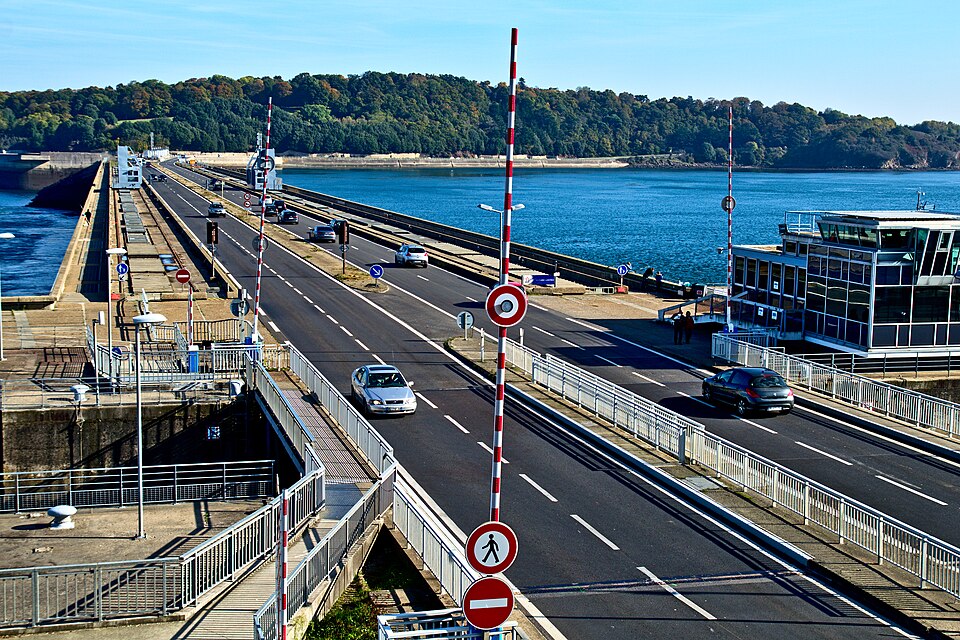
Correct — C, Tidal energy. Non-conventional (renewable) sources are those that are naturally replenished and not based on fossil fuels — solar, wind, tidal, geothermal, biomass and small-hydro. Tidal energy harnesses the rise and fall of sea levels driven by the Moon's and Sun's gravity, so it is a non-conventional source. The other three options are all fossil fuels.
Why the others are wrong
- (a)Petroleum — Petroleum (crude oil) is a fossil fuel formed over millions of years — a conventional, non-renewable source.
- (b)Natural Gas — Natural gas is a fossil fuel found with petroleum and coal deposits; it is a conventional, exhaustible source.
- (d)Coal — Coal is the classic conventional fossil fuel — abundant but non-renewable and highly polluting.
Concept
Energy sources are grouped into conventional (traditional, mostly exhaustible fossil fuels — coal, petroleum, natural gas — plus firewood and large hydro) and non-conventional or renewable sources (solar, wind, tidal, geothermal, biomass, ocean-thermal). Non-conventional sources are naturally replenished and generally cleaner. In India these are promoted by the Ministry of New and Renewable Energy (MNRE).
Three of the four options are fossil fuels; only tidal energy is renewable. The trap is to look for a specific 'fuel', but the odd one out is the naturally replenished source powered by ocean tides.
Key facts
- Non-conventional (renewable) sources include solar, wind, tidal, geothermal, biomass and small-hydro.
- Conventional sources are coal, petroleum, natural gas (fossil fuels), firewood and large hydropower.
- Tidal energy uses the gravitational rise and fall of sea levels; India's greatest tidal potential is in the Gulf of Khambhat and Gulf of Kutch (Gujarat).
- India's renewable-energy programmes are coordinated by the Ministry of New and Renewable Energy (MNRE).
Study next
Common traps
- Assuming natural gas is 'clean' and therefore non-conventional — it is still a fossil fuel.
- Confusing large hydropower (conventional) with small-hydro/renewable classification.
Asked by picking the renewable/non-conventional source from a list, or by matching sources to the conventional/non-conventional category.
Related PYQs
In the context of alternative sources of energy, ethanol as a viable bio-fuel can be obtained from
- (a) Potato
- (b) Rice
- (c) Sugarcane
- (d) Wheat
Answer(c) Sugarcane
Same theme — alternative / non-conventional sources of energy. That UPSC item is on bio-fuel (ethanol from sugarcane); this NDA one asks you to spot the renewable source (tidal) among fossil fuels.
Practice
- practice — not a real PYQ
Which one of the following is NOT a renewable source of energy?
- (a)Solar energy
- (b)Wind energy
- (c)Coal
- (d)Geothermal energy
Answer(c) Coal — a conventional, exhaustible fossil fuel, unlike the renewable sources listed. - practice — not a real PYQ
In India, the greatest potential for tidal energy lies in the
- (a)Gulf of Mannar
- (b)Gulf of Khambhat and Gulf of Kutch
- (c)Bay of Bengal off Chennai
- (d)Kerala backwaters
Answer(b) Gulf of Khambhat and Gulf of Kutch — their funnel shape gives Gujarat the largest tidal range in India.