
A system that does NOT allow exchange of heat with its surrounding is called
- (a)Adiabatic system
- (b)Non-adiabatic system
- (c)Equilibrium system
- (d)Non-equilibrium system
Answer
Why
Correct — A, Adiabatic system. In thermodynamics an adiabatic process or system is one in which no heat (Q = 0) crosses the boundary between the system and its surroundings. It is achieved either by perfect insulation or by making the change so rapid that heat has no time to flow; any work done then changes the system's internal energy and temperature directly.
Why the others are wrong
- (b)Non-adiabatic system — 'Non-adiabatic' is the opposite — it describes a system that does exchange heat with its surroundings.
- (c)Equilibrium system — Equilibrium refers to a state with no net change (thermal, mechanical, chemical balance), not to whether heat can cross the boundary.
- (d)Non-equilibrium system — A non-equilibrium system is simply one undergoing net change; the term says nothing about heat exchange being blocked.
Concept
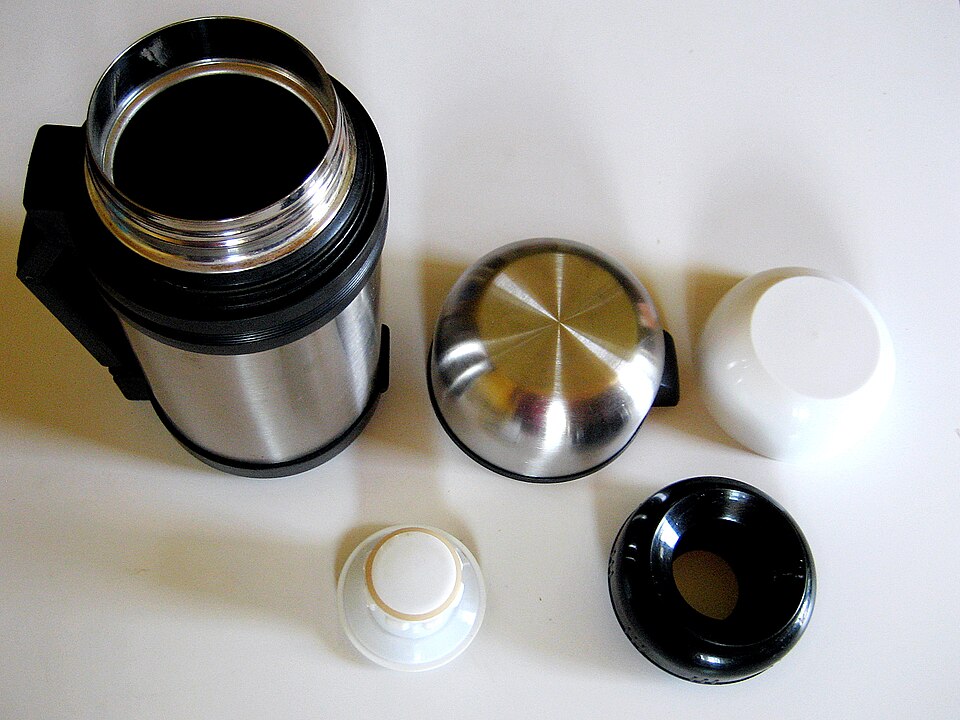
Thermodynamic systems are classified by what can cross their boundary. An adiabatic boundary allows no heat exchange (Q = 0), so any energy transfer happens only as work. This contrasts with a diathermic (heat-conducting) boundary. Insulated flasks approximate adiabatic behaviour, as do fast compressions and expansions of a gas.
The options mix a heat-exchange term (adiabatic) with equilibrium terms. The question asks specifically about heat crossing the boundary, so the equilibrium options are distractors — only 'adiabatic' answers the 'no heat exchange' condition.
Key facts
- In an adiabatic process Q = 0; the first law then gives ΔU = −W (work changes the internal energy).
- Adiabatic conditions are met by perfect insulation or by very rapid changes that leave no time for heat flow.
- A rapidly compressed gas heats up and a rapidly expanding gas cools, because no heat escapes or enters.
- A diathermic (non-adiabatic) wall, by contrast, freely conducts heat between system and surroundings.
Study next
Common traps
- Confusing 'adiabatic' (no heat exchange) with 'isothermal' (constant temperature, heat allowed to flow).
- Reading the equilibrium options as if they described heat transfer.
Asked by defining a process (no heat exchange, constant temperature, etc.) and asking its name, or by comparing adiabatic and isothermal changes.
Related PYQs
No directly related past PYQ was found.
Practice
- practice — not a real PYQ
A process that takes place at constant temperature, with heat free to enter or leave the system, is called
- (a)Adiabatic
- (b)Isothermal
- (c)Isochoric
- (d)Isobaric
Answer(b) Isothermal — temperature is held constant while heat is exchanged, the opposite condition to adiabatic. - practice — not a real PYQ
When a gas is compressed suddenly (adiabatically), its temperature
- (a)rises
- (b)falls
- (c)stays the same
- (d)first rises then falls
Answer(a) rises — with no heat escaping, the work done on the gas increases its internal energy and temperature.