
If the length of a copper wire is increased by twice, then its resistivity will be
- (a)Doubled
- (b)Halved
- (c)Same
- (d)One-fourth
Answer
Why
Correct — C, Same. Resistivity is a property of the material itself, not of a particular piece of wire, so stretching a copper wire to twice its length leaves its resistivity unchanged — the metal is still copper. What changes is the resistance: from R = ρL/A, doubling the length at constant volume halves the cross-section, so the resistance rises fourfold, but ρ (resistivity) stays exactly the same.
Why the others are wrong
- (a)Doubled — Doubling the length raises the resistance (fourfold, since the area also halves), but resistivity is length-independent, so it is not doubled.
- (b)Halved — The material is unchanged, so its resistivity cannot fall; only the geometry — and therefore the resistance — changes.
- (d)One-fourth — This confuses resistivity with the geometry factor; resistivity is an intrinsic constant of the material and does not scale with the wire's dimensions.
Concept
Resistance and resistivity are different quantities. Resistance R measures how strongly a particular object opposes current and depends on its size through R = ρL/A. Resistivity ρ is an intrinsic property of the material (SI unit ohm-metre) that is the same however the sample is cut or stretched; it varies only with the material and its temperature.
The trap is to read 'resistivity' as if it meant 'resistance'. Change the geometry and the resistance changes, but the material's resistivity is fixed — the question rewards knowing which quantity is intrinsic and which is geometry-dependent.
Key facts
- Resistivity ρ depends on the material and its temperature, not on the length or thickness of the sample.
- Resistance follows R = ρL/A; the SI unit of resistivity is the ohm-metre (Ω·m).
- Stretching a wire to twice its length at constant volume quarters its area, so R becomes four times larger while ρ is unchanged.
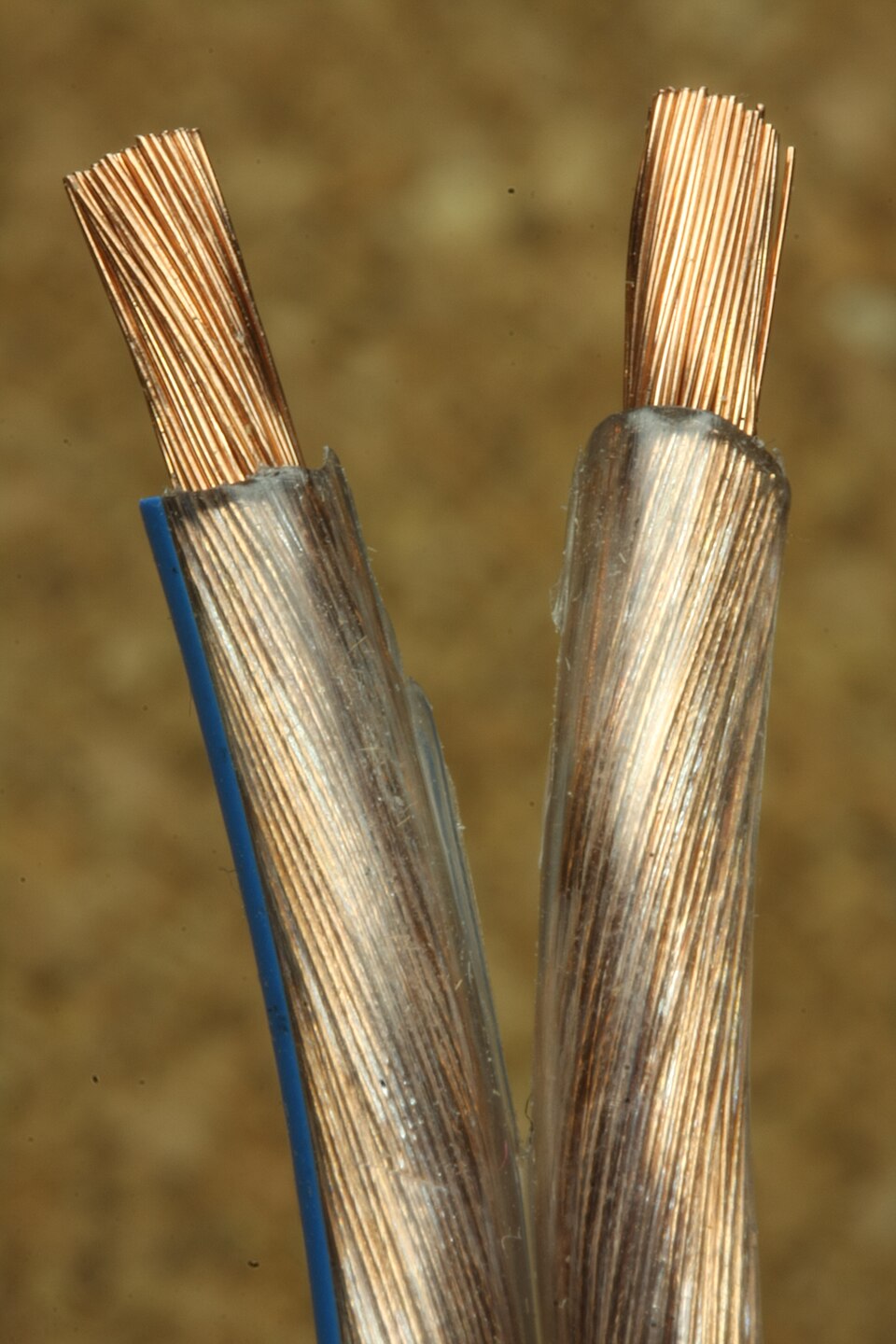
- Copper's low resistivity (about 1.7 × 10⁻⁸ Ω·m) is why it is a preferred material for electrical wiring.
Study next
Common traps
- Confusing resistivity (an intrinsic material property) with resistance (which depends on geometry).
- Forgetting that stretching a wire at constant volume also reduces its cross-sectional area.
Asked as how the resistance or resistivity of a wire changes when it is stretched, folded or cut, or by asking which quantity is a material property.
Related PYQs
Two wires have their lengths, diameters and resistivities, all in the ratio of 1 : 2. If the resistance of the thinner wire is 10 ohms, the resistance of the thicker wire is
- (a) 10 ohms
- (b) 5 ohms
- (c) 20 ohms
- (d) 40 ohms
Answer(a) 10 ohms
Same concept — how resistance depends on resistivity, length and area through R = ρL/A. That UPSC item makes you apply the formula; this NDA one tests the key idea behind it — that resistivity itself is a fixed material property.
Practice
- practice — not a real PYQ
A copper wire is stretched so that its length doubles while its volume stays constant. Its resistance becomes
- (a)unchanged
- (b)2 times
- (c)4 times
- (d)half
Answer(c) 4 times — length doubles and area halves, so R = ρL/A rises by 2 × 2 = 4, while the resistivity stays the same. - practice — not a real PYQ
Which one of the following is an intrinsic property of a material, independent of the object's dimensions?
- (a)Resistance
- (b)Resistivity
- (c)Conductance
- (d)Length
Answer(b) Resistivity — it depends only on the material and its temperature, not on shape or size.