
The vector of malaria parasites is
- (a)Male Anopheles mosquito
- (b)Male Culex mosquito
- (c)Female Anopheles mosquito
- (d)Female Culex mosquito
Answer
Why
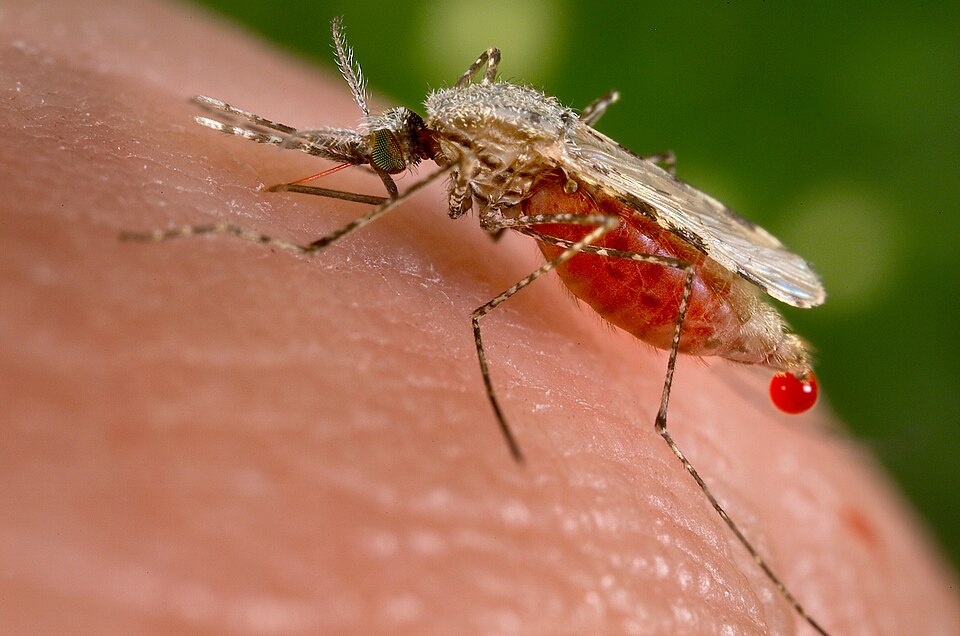
Correct — C, Female Anopheles mosquito. Malaria is caused by the protozoan parasite Plasmodium, and it is carried from person to person by the female Anopheles mosquito. Only the female mosquito bites and takes a blood meal (which she needs to develop her eggs), and it is during that bite that the parasite is passed on. The Anopheles genus is the specific vector of malaria, so the answer is the female Anopheles.
Why the others are wrong
- (a)Male Anopheles mosquito — Male mosquitoes do not bite or suck blood — they feed on plant nectar. Since they never take a blood meal, they cannot transmit the malaria parasite, even though they are the right genus.
- (b)Male Culex mosquito — Wrong on both counts: it is the wrong genus (Culex, not Anopheles) and males do not bite. Culex is linked to filariasis and Japanese encephalitis, not malaria.
- (d)Female Culex mosquito — The female Culex does bite, but it is not the malaria vector — it transmits filariasis (elephantiasis) and Japanese encephalitis. Malaria is spread specifically by Anopheles.
Concept
A vector is an organism that carries a disease-causing pathogen from one host to another. For malaria the pathogen is the protozoan Plasmodium and the vector is the female Anopheles mosquito. Because only females take blood meals, and only the Anopheles genus carries Plasmodium, the vector is precisely the female Anopheles.
Two things must both be right: the genus and the sex. Malaria is spread by Anopheles (Culex spreads filariasis and Japanese encephalitis, Aedes spreads dengue and chikungunya), and only the female mosquito bites. Combining both filters leaves the female Anopheles as the only correct option.
Key facts
- Malaria is caused by the protozoan parasite Plasmodium.
- Its vector is the female Anopheles mosquito; only females take blood meals.
- Culex mosquitoes transmit filariasis and Japanese encephalitis.
- Aedes mosquitoes transmit dengue, chikungunya and Zika.
Study next
Common traps
- Forgetting that male mosquitoes do not bite — the vector must be female.
- Mixing up mosquito genera — Anopheles (malaria) vs Culex (filariasis/JE) vs Aedes (dengue).
Vector questions pair a disease with its carrier — learn genus AND sex (female Anopheles for malaria).
Related PYQs
Match List I (Disease) with List II (Organism): I. Malaria, II. Poliomyelitis, III. Tuberculosis, IV. Ringworm; A. Fungi, B. Bacteria, C. Virus, D. Protozoan.
- (a) I-D, II-C, III-B, IV-A
- (b) I-D, II-C, III-A, IV-B
- (c) I-C, II-D, III-A, IV-B
- (d) I-C, II-D, III-B, IV-A
Answer(a) I-D, II-C, III-B, IV-A
Same disease — malaria. UPSC's item tests its causative organism (the protozoan Plasmodium, I-D); this NDA item tests its vector (the female Anopheles mosquito) — the two halves of malaria transmission.
Practice
- practice — not a real PYQ
Which mosquito is the vector of dengue and chikungunya?
- (a)Anopheles
- (b)Culex
- (c)Aedes
- (d)Mansonia
Answer(c) Aedes — the Aedes mosquito transmits dengue, chikungunya and Zika. - practice — not a real PYQ
The malaria parasite Plasmodium belongs to which group of organisms?
- (a)Bacteria
- (b)Virus
- (c)Protozoan
- (d)Fungus
Answer(c) Protozoan — malaria is caused by the protozoan parasite Plasmodium.