
Who among the following was the last Governor-General of India before the office was permanently abolished?
- (a)Lord Mountbatten
- (b)Chakravarti Rajagopalachari
- (c)Lord Wavell
- (d)Lord Linlithgow
Answer
Why
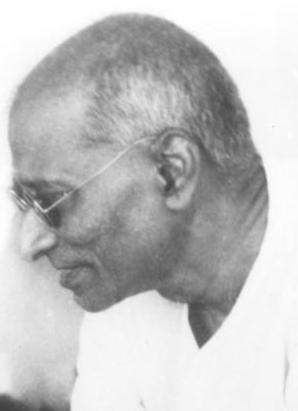
Correct — B, Chakravarti Rajagopalachari (Rajaji). After Lord Mountbatten stepped down as the first Governor-General of the Dominion of India, C. Rajagopalachari took over on 21 June 1948 and served until 26 January 1950. He was the only Indian, and the last, to hold the post: on that date India became a republic and the office of Governor-General was permanently abolished, replaced by the President (Dr Rajendra Prasad).
Why the others are wrong
- (a)Lord Mountbatten — Mountbatten was the FIRST Governor-General of independent (Dominion) India (15 August 1947 to 21 June 1948); he handed over to Rajagopalachari, so he was not the last.
- (c)Lord Wavell — Wavell was Viceroy and Governor-General of BRITISH India (1943-1947), before Mountbatten and before independence — nowhere near the abolition of the office in 1950.
- (d)Lord Linlithgow — Linlithgow was Viceroy from 1936 to 1943, even earlier than Wavell; he had no connection with the last, post-independence Governor-Generalship.
Concept
Between independence (15 August 1947) and the Constitution taking effect (26 January 1950), India was a Dominion headed by a Governor-General. Only two men held that post: Lord Mountbatten and then C. Rajagopalachari. When the republic was inaugurated in 1950, the office was abolished and its role passed to the President.
Separate the pre-independence Viceroys/Governors-General (Linlithgow, Wavell, Mountbatten as Viceroy) from the two Dominion Governors-General after 15 August 1947. Only Mountbatten and Rajagopalachari fall in the post-independence window, and since Mountbatten was first, Rajagopalachari must be the last. Linlithgow and Wavell are decoys from the colonial period.
Key facts
- C. Rajagopalachari was Governor-General of the Dominion of India, 21 June 1948 to 26 January 1950.
- He was the only Indian and the last person to hold the office.
- Lord Mountbatten was the first Governor-General of independent (Dominion) India (Aug 1947-Jun 1948).
- The office was abolished on 26 January 1950 when India became a republic; Dr Rajendra Prasad became the first President.
Study next
Common traps
- Naming Mountbatten as the last (he was the first) Governor-General of independent India.
- Confusing pre-independence Viceroys (Linlithgow, Wavell) with the two Dominion Governors-General.
- Forgetting that the office ended in 1950, not in 1947.
NDA/UPSC ask for the first or last Governor-General of independent India, or to order the Viceroys/Governors-General — fix the two post-1947 names (Mountbatten then Rajagopalachari) and the 1950 abolition date.
Related PYQs
Assertion (A): The British sovereignty continued to exist in free India. Reason (R): The British sovereign appointed the last Governor-General of free India. Which one of the following is correct?
- (a) Both A and R are true and R is the correct explanation of A
- (b) Both A and R are true but R is not a correct explanation of A
- (c) A is true but R is false
- (d) A is false but R is true
Answer(d) A is false but R is true
Same concept — the last Governor-General of free India (C. Rajagopalachari, appointed under the Crown while sovereignty had already passed to the Indian people). Tests the post-1947 Dominion Governor-Generalship that this NDA question names.
Practice
- practice — not a real PYQ
Who was the first Governor-General of independent (Dominion) India?
- (a)C. Rajagopalachari
- (b)Lord Mountbatten
- (c)Lord Wavell
- (d)Dr Rajendra Prasad
Answer(b) Lord Mountbatten — he served from 15 August 1947 to 21 June 1948, before Rajagopalachari. - practice — not a real PYQ
The office of Governor-General of India was abolished and replaced by the President when India became a republic in
- (a)1947
- (b)1948
- (c)1950
- (d)1952
Answer(c) 1950 — on 26 January 1950 the Constitution came into force and Dr Rajendra Prasad became the first President.