
Which one among the following tissues help to connect two bones?
- (a)Tendons
- (b)Ligaments
- (c)Areolar tissue
- (d)Cartilage
Correct — B, Ligaments. Ligaments are strong, slightly elastic bands of dense fibrous connective tissue that connect one bone to another across a joint, holding the skeleton together and stabilising the joint (e.g. the cruciate ligaments of the knee join the femur to the tibia). 'Bone-to-bone = ligament' is the rule to remember.
- (a)Tendons — Tendons connect MUSCLE to bone, not bone to bone — they transmit the pull of a contracting muscle to the skeleton. Easy to confuse with ligaments; the difference is exactly what is being tested.
- (c)Areolar tissue — Areolar (loose connective) tissue fills spaces between organs, supports internal organs and lies beneath the skin — it is a packing/support tissue, not a bone-to-bone connector.
- (d)Cartilage — Cartilage is a supportive connective tissue that cushions joints and shapes the ear, nose and windpipe. It caps the bone ends and absorbs shock, but the band that actually ties two bones together is the ligament.
Connective tissues bind, support and connect body structures. Two fibrous ones are often confused: ligaments join BONE to BONE, while tendons join MUSCLE to BONE. Areolar tissue is a loose packing tissue and cartilage is a firm, flexible support tissue at joints and in the nose/ear.
The single distinction being tested is 'what connects bone to bone'. Rule the options by their attachments: tendon = muscle-to-bone, ligament = bone-to-bone. That one line eliminates tendon immediately and leaves ligament, since areolar tissue and cartilage do not tie two bones together.
- Ligament = dense fibrous connective tissue connecting bone to bone (stabilises joints).
- Tendon = fibrous connective tissue connecting muscle to bone.
- Cartilage = flexible connective tissue cushioning joints and forming the nose, ear and rings of the trachea.
- Areolar tissue = loose connective tissue that fills spaces and supports organs and skin.
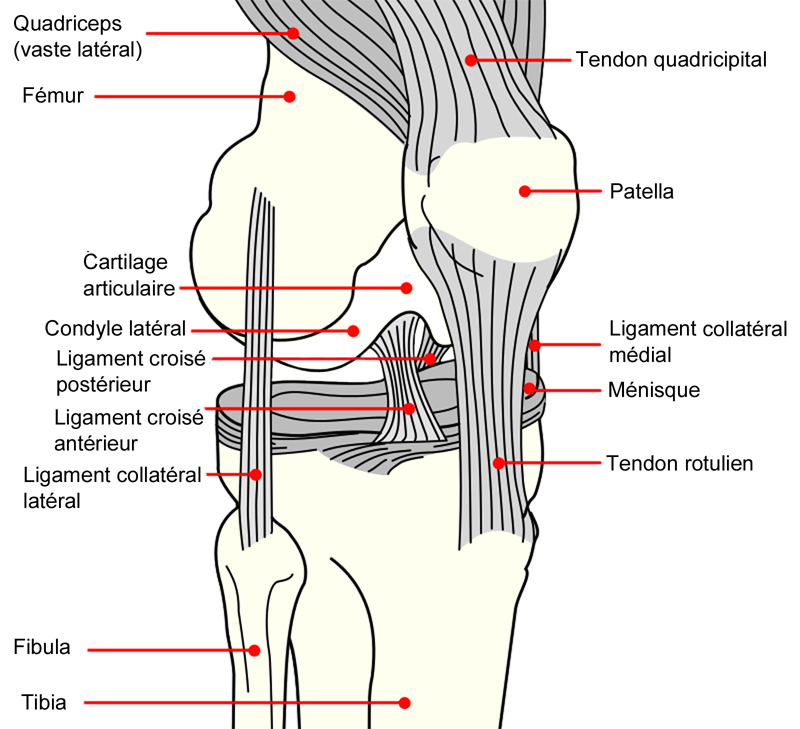
- Swapping tendon and ligament — tendon is muscle-to-bone, ligament is bone-to-bone.
- Picking cartilage because it sits at joints — it cushions, but does not tie two bones together.
Tissues are asked as 'which tissue connects X to Y' — memorise the attachment pair for tendon vs ligament.
No directly related past PYQ was found.
- practice — not a real PYQ
Which tissue connects a muscle to a bone?
- (a)Ligament
- (b)Tendon
- (c)Cartilage
- (d)Areolar tissue
Answer(b) Tendon — tendons transmit muscular force to bone (muscle-to-bone).
- practice — not a real PYQ
The tissue that forms the framework of the external ear and the tip of the nose is
- (a)Bone
- (b)Ligament
- (c)Cartilage
- (d)Tendon
Answer(c) Cartilage — a firm, flexible connective tissue.