
Maize (makka) was introduced into India via
- (a)America and England
- (b)Africa and Spain
- (c)France and Russia
- (d)Portugal and Italy
Answer
Why
Correct — B, Africa and Spain. Maize is a New World crop, and the usual textbook account of how it reached India traces a route through Spain — its first European foothold after Columbus's 1492 voyage — and across West Africa before it arrived by sea; on the 'by what route' reading of 'via', 'Africa and Spain' is the answer. Note, honestly, that this item is genuinely disputed: some published keys instead mark (d) Portugal and Italy, reading the question as 'which Europeans carried it', because the Portuguese ran the sixteenth-century Indian-Ocean trade. The one thing all accounts agree on is that maize is American in origin and reached the Old World only after 1492; the precise conduit into India is not firmly established.
Why the others are wrong
- (a)America and England — Maize is indeed American in origin, but England was not the conduit into sixteenth-century India — the crop spread out of Iberia and around the Indian Ocean, not via English hands, so the 'England' leg is wrong.
- (c)France and Russia — Neither France nor Russia lay on the route by which maize reached India; both are irrelevant to its introduction.
- (d)Portugal and Italy — This is the rival answer some keys choose, and it is not unreasonable — the Portuguese are credited with bringing several New World crops (tobacco, chilli, pineapple, guava) to India, and Italy was an early European home of maize. We favour (b) on the 'diffusion route' reading of 'via', but this option remains contested rather than plainly wrong.
Concept
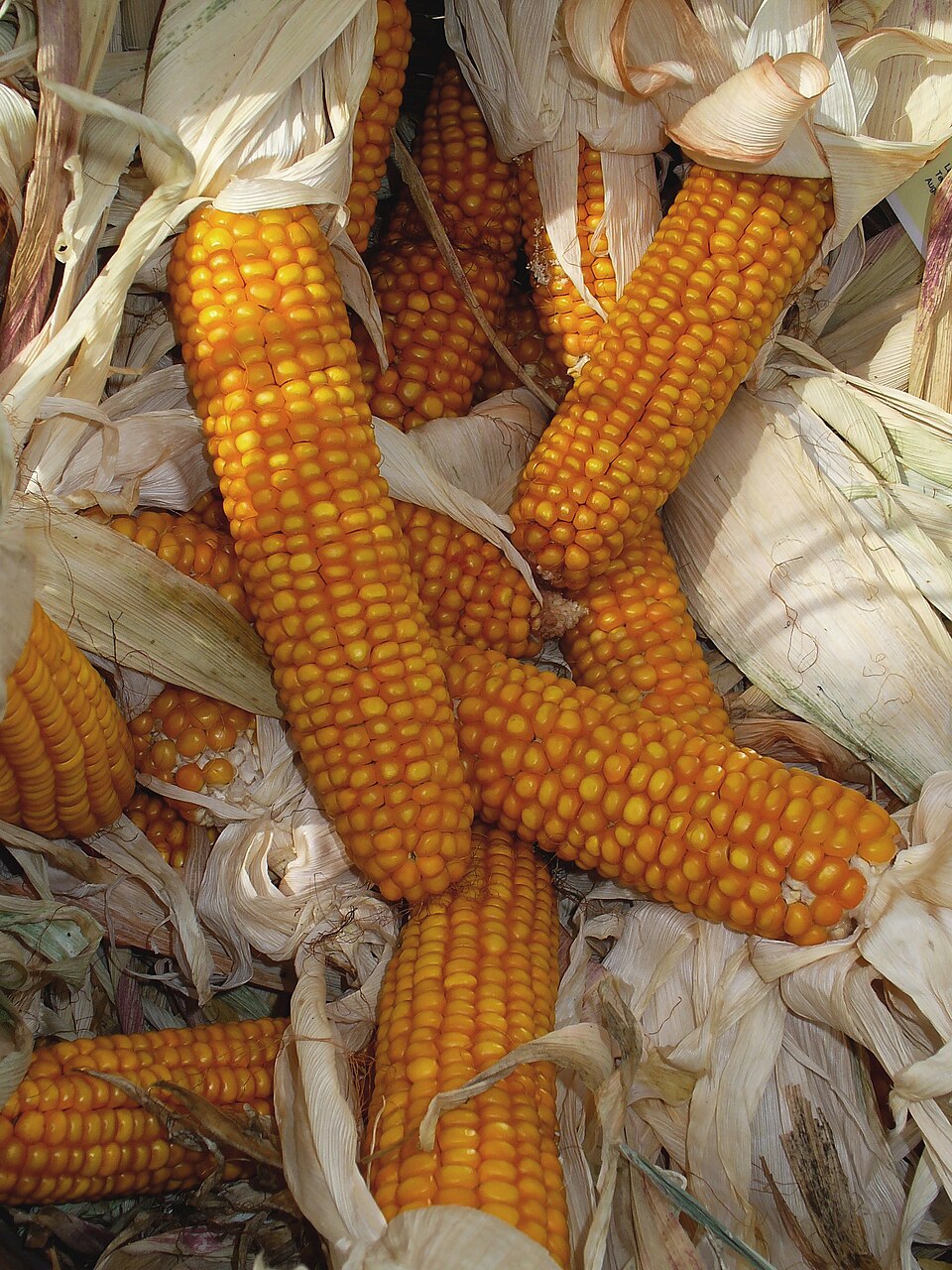
Maize (Zea mays; makka/makai) is a New World cereal, domesticated in the Balsas valley of southern Mexico roughly 9,000 years ago. It was unknown in the Old World until after Columbus reached the Americas in 1492; Spanish and Portuguese voyagers then carried it worldwide — into Spain and Italy, across West Africa, and around the Indian Ocean during the sixteenth century.
The item is tricky because 'via' invites two readings — the geographic diffusion route (Spain and Africa) versus the European carriers who brought it to India (the Portuguese). Historians agree maize is American and post-Columbian, but its exact pathway and date of arrival in India are debated, which is why different exam keys land on different options. The reliable takeaway is the origin and post-1492 spread, not the precise conduit.
Key facts
- Maize is a New World crop, domesticated in southern Mexico (Balsas valley) about 9,000 years ago.
- It reached the Old World only after Columbus's 1492 voyage; Spanish and Portuguese carried it out.
- In Europe it spread quickly through Spain and Italy; it also reached West Africa and Asia in the sixteenth century.
- The Portuguese are credited with introducing several New World crops to India (tobacco, chilli, pineapple, guava, cashew).
- The exact route and date of maize's introduction into India are not firmly settled — hence this exam item is disputed.
Study next
Common traps
- Assuming maize is native to India or Asia — it is American.
- Over-committing to a single 'route' on an item where the published keys themselves disagree.
Origin or introduction route of a New World crop — a topic where keys often differ.
Related PYQs
Consider the following fruits: I. Papaya, II. Pineapple, III. Guava. How many of the above were introduced in India by the Portuguese in the sixteenth and seventeenth centuries?
- (a) Only one
- (b) Only two
- (c) All the three
- (d) None
Answer(c) All the three
Same concept — New World crops carried to India by the Portuguese after 1492; the very 'Portuguese carrier' reading that makes this maize item disputed.
Consider the following: 1. Assessment of land revenue on the basis of nature of the soil and the quality of crops; 2. Use of mobile cannons in warfare; 3. Cultivation of tobacco and red chillies. Which of the above was/were introduced into India by the English?
- (a) 1 only
- (b) 1 and 2
- (c) 2 and 3
- (d) None
Answer(d) None — tobacco and red chilli came with the Portuguese from the New World, not the English
Tests the same diffusion fact: New World crops (tobacco, chilli) reached India through the Portuguese, underscoring how the 'who introduced it' framing works.
Practice
- practice — not a real PYQ
Which one of the following crops is of American (New World) origin rather than native to the Old World?
- (a)Wheat
- (b)Barley
- (c)Maize
- (d)Rice
Answer(c) Maize — domesticated in Mexico and unknown in the Old World before 1492. - practice — not a real PYQ
The Portuguese are commonly credited with introducing which of the following to India in the 16th-17th centuries?
- (a)Wheat and barley
- (b)Tobacco and chilli
- (c)Rice and sugarcane
- (d)Gram and millets
Answer(b) Tobacco and chilli — both New World crops brought by the Portuguese.