
Litmus, a well-known acid-base indicator, is derived from:
- (a)Fungi
- (b)Lichens
- (c)Bacteria
- (d)Termite
Answer
Why
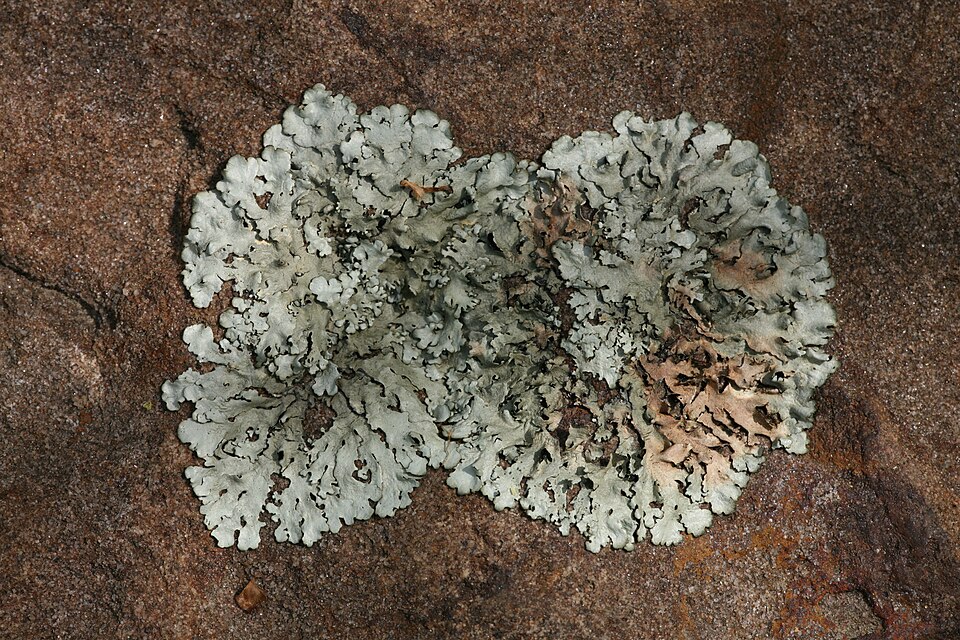
Correct — B, lichens. Litmus is a natural dye extracted from certain lichens, chiefly species of Roccella such as Roccella tinctoria. As an acid-base indicator it turns red in acidic solutions and blue in basic (alkaline) solutions, which is why litmus paper is the classic quick test for acids and bases. Because the source organism is the lichen, option B is correct.
Why the others are wrong
- (a)Fungi — A lichen is a partnership that includes a fungus, but litmus comes specifically from lichens, not from free-living fungi; 'fungi' alone is not the recognised source of the dye.
- (c)Bacteria — Bacteria are not the source of litmus; the dye is obtained from lichen thalli, not from bacterial cultures.
- (d)Termite — Termites are insects and have nothing to do with the dye; this is a distractor with no connection to litmus.
Concept
Litmus is a mixture of coloured compounds obtained from lichens and is the most familiar acid-base indicator. It is red in acidic conditions and blue in basic conditions, so blue litmus turning red signals an acid and red litmus turning blue signals a base. A lichen itself is a mutualism between a fungus and a photosynthetic partner (an alga or cyanobacterium).
The question tests both a chemistry fact (litmus is a natural plant-derived indicator) and a biology fact (its source is the lichen). Do not confuse the lichen with its fungal component alone: the fungus is only one half of the symbiosis, whereas the dye is credited to the whole lichen. Litmus cannot distinguish how strong an acid or base is, which is why the pH scale and universal indicator exist.
Key facts
- Litmus is extracted mainly from lichens of the genus Roccella.
- It turns red in acid and blue in base; the change is reversible.
- Litmus shows only whether a solution is acidic or basic, not its exact pH.
- Other natural indicators include red cabbage extract, turmeric and China-rose (hibiscus) petals.
Study next
Common traps
- Choosing 'fungi' because a lichen contains a fungus — the dye is credited to the whole lichen.
- Thinking litmus can measure exact pH; it only tells acid from base.
- Confusing litmus with synthetic indicators like methyl orange or phenolphthalein.
Exams ask for the source of litmus or its colour change in acids and bases — remember it comes from lichens and goes red in acid, blue in base.
Related PYQs
Lichens, which are capable of initiating ecological succession even on a bare rock, are actually a symbiotic association of
- (a) algae and bacteria
- (b) algae and fungi
- (c) bacteria and fungi
- (d) fungi and mosses
Answer(b) algae and fungi
Same organism — the lichen. Litmus is extracted from lichens, and this UPSC question tests what a lichen actually is: a symbiotic partnership of a fungus with a photosynthetic alga.
Practice
- practice — not a real PYQ
Blue litmus paper dipped in a solution turns red. The solution is
- (a)basic
- (b)acidic
- (c)neutral
- (d)a salt of a strong base
Answer(b) acidic — litmus turns red in acidic solutions and blue in basic ones. - practice — not a real PYQ
Which one of the following is a natural acid-base indicator like litmus?
- (a)Methyl orange
- (b)Phenolphthalein
- (c)Red cabbage extract
- (d)Bromothymol blue
Answer(c) Red cabbage extract — a natural indicator; methyl orange, phenolphthalein and bromothymol blue are synthetic.