
Identify the Iron and Steel Plant on the basis of the given characteristics: 1. It receives coal from Jharia and iron-ore from Sundargarh and Kendujhar. 2. Power for the electric furnaces is procured from Hirakund. 3. Water is obtained from Koel and Sankh rivers. Select the correct Iron and Steel Plant from the options given below:
- (a)Bhilai Steel Plant
- (b)Durgapur Steel Plant
- (c)Rourkela Steel Plant
- (d)Bokaro Steel Plant
Answer
Why
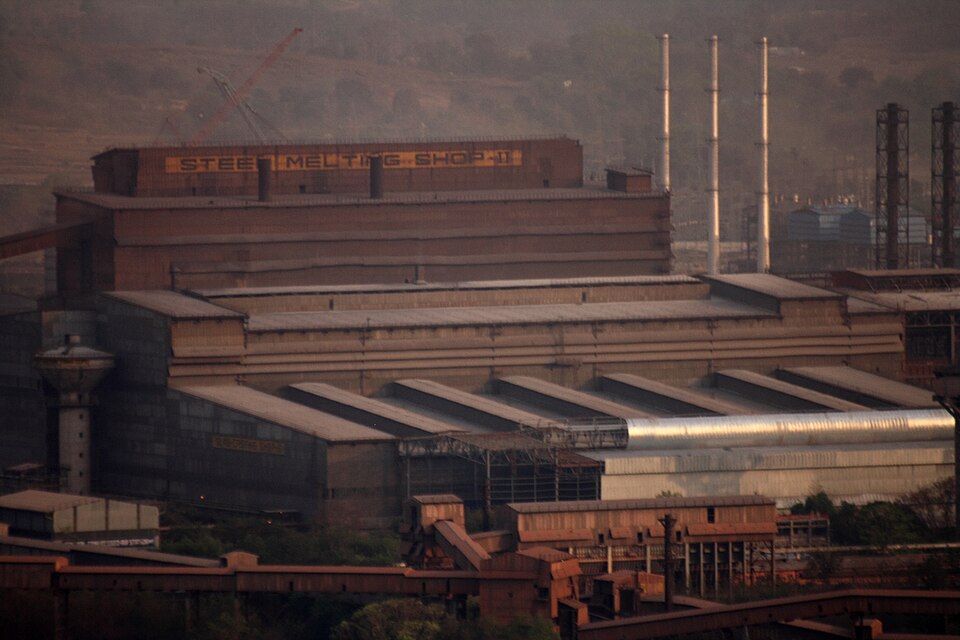
Correct — C, Rourkela Steel Plant. Rourkela, in Sundargarh district of Odisha, is India's first integrated public-sector steel plant, set up in the 1950s with West German collaboration. It receives coal from the Jharia coalfield and iron ore from the nearby Sundargarh and Kendujhar (Keonjhar) belt, matching clue 1; its electric furnaces draw power from the Hirakud project on the Mahanadi, matching clue 2; and it takes its water from the Koel and Sankh rivers, which join at Rourkela to form the Brahmani, matching clue 3. Because all three locational clues converge on Rourkela, the answer is (c).
Why the others are wrong
- (a)Bhilai Steel Plant — Bhilai, in Chhattisgarh, was built with Soviet help and draws iron ore from Dalli-Rajhara and water from the Tandula tank — not the Koel and Sankh rivers or Hirakud power described here.
- (b)Durgapur Steel Plant — Durgapur, in West Bengal, was built with British collaboration in the Damodar valley and uses Damodar (DVC) water and Raniganj-belt coal, so it does not fit the Koel-Sankh and Hirakud clues.
- (d)Bokaro Steel Plant — Bokaro, in Jharkhand, was built with Soviet help and takes its water from the Damodar and its power from DVC/its own captive supply; although it too uses Jharia coal, it is not on the Koel-Sankh rivers and does not draw power from Hirakud.
Concept
Rourkela Steel Plant is a Steel Authority of India (SAIL) unit at Rourkela in Sundargarh district, Odisha. Commissioned from the late 1950s with West German collaboration, it was located to sit close to its raw materials — Jharia coal, iron ore from the Sundargarh-Kendujhar belt, limestone from the region, Hirakud power and water from the Koel and Sankh rivers.
The identification hinges on the locational pull of an iron-and-steel plant toward coal, iron ore, power and water. The unique combination of Hirakud power and the Koel-and-Sankh water supply fixes the plant as Rourkela; the Jharia coal clue alone is shared with Bokaro, so it is the water and power clues that clinch it.
Key facts
- Rourkela Steel Plant is in Sundargarh district, Odisha, and is run by the Steel Authority of India (SAIL); it was set up in the late 1950s with West German collaboration.
- It draws coal from the Jharia coalfield and iron ore from the Sundargarh and Kendujhar (Keonjhar) belt.
- Its electric furnaces are powered from the Hirakud project on the Mahanadi.
- It takes water from the Koel and Sankh rivers, which meet at Rourkela to form the Brahmani; the Mandira dam on the Sankh supports its supply.
Study next
Common traps
- Choosing Bokaro because it also uses Jharia coal — the deciding clues are the Koel-Sankh water and Hirakud power, which belong to Rourkela.
- Mixing up the foreign collaborations — Rourkela (West Germany), Bhilai and Bokaro (USSR) and Durgapur (United Kingdom).
Asked as an 'identify the steel plant from its raw-material and resource sources' question — match coal, ore, power and water together to reach Rourkela.
Related PYQs
Local supply of coal is not available to
- (a) TISCO, Jamshedpur
- (b) VISL, Bhadravati
- (c) HSL, Durgapur
- (d) HSL, Bhilai
Answer(b) VISL, Bhadravati — the Bhadravati plant in Karnataka lies far from the coalfields and relies on distant coal and local hydro-power, unlike the coalfield-based plants.
Tests the same location logic of iron and steel plants — proximity to coal, ore and power — that this NDA question uses to pin the coal, ore, power and water sources to Rourkela.
Which one of the following pairs is NOT correctly matched? Project — Company: (a) Integrated Steel Plant at Jaipur (Orissa) — Steel Authority of India (b) Power Plant at Jamnagar (Gujarat) — Essar Power (c) Nabinagar Power Plant (Bihar) — Indian Railways (d) Kayamkulam Power Plant (Kerala) — National Thermal Power Corporation
- (a) Integrated Steel Plant at Jaipur (Orissa) — Steel Authority of India
- (b) Power Plant at Jamnagar (Gujarat) — Essar Power
- (c) Nabinagar Power Plant (Bihar) — Indian Railways
- (d) Kayamkulam Power Plant (Kerala) — National Thermal Power Corporation
Answer(a) Integrated Steel Plant at Jajpur (Orissa) — the mismatched pair; that steel project was promoted by the Jindal group, not SAIL.
Touches integrated steel plants in Odisha and the role of SAIL — the same public-sector iron and steel geography to which the SAIL-run Rourkela plant belongs.
Practice
- practice — not a real PYQ
The Rourkela Steel Plant was established with the technical collaboration of which country?
- (a)Soviet Union (USSR)
- (b)United Kingdom
- (c)West Germany
- (d)United States
Answer(c) West Germany — Rourkela was built with West German collaboration, while Bhilai and Bokaro had Soviet help and Durgapur British help. - practice — not a real PYQ
The Rourkela Steel Plant draws its water supply mainly from which pair of rivers?
- (a)Damodar and Barakar
- (b)Koel and Sankh
- (c)Mahanadi and Tel
- (d)Subarnarekha and Kharkai
Answer(b) Koel and Sankh — these two rivers meet at Rourkela to form the Brahmani and supply the plant.