
Which of the following statements regarding air temperature is/are correct? 1. Air temperature is measured at a standard height of 1·2 m (4·0 feet) above the ground surface. 2. The average rate of temperature decrease with height is termed as the environmental temperature lapse rate. Select the answer using the code given below:
- (a)1 only
- (b)2 only
- (c)Both 1 and 2
- (d)Neither 1 nor 2
Answer
Why
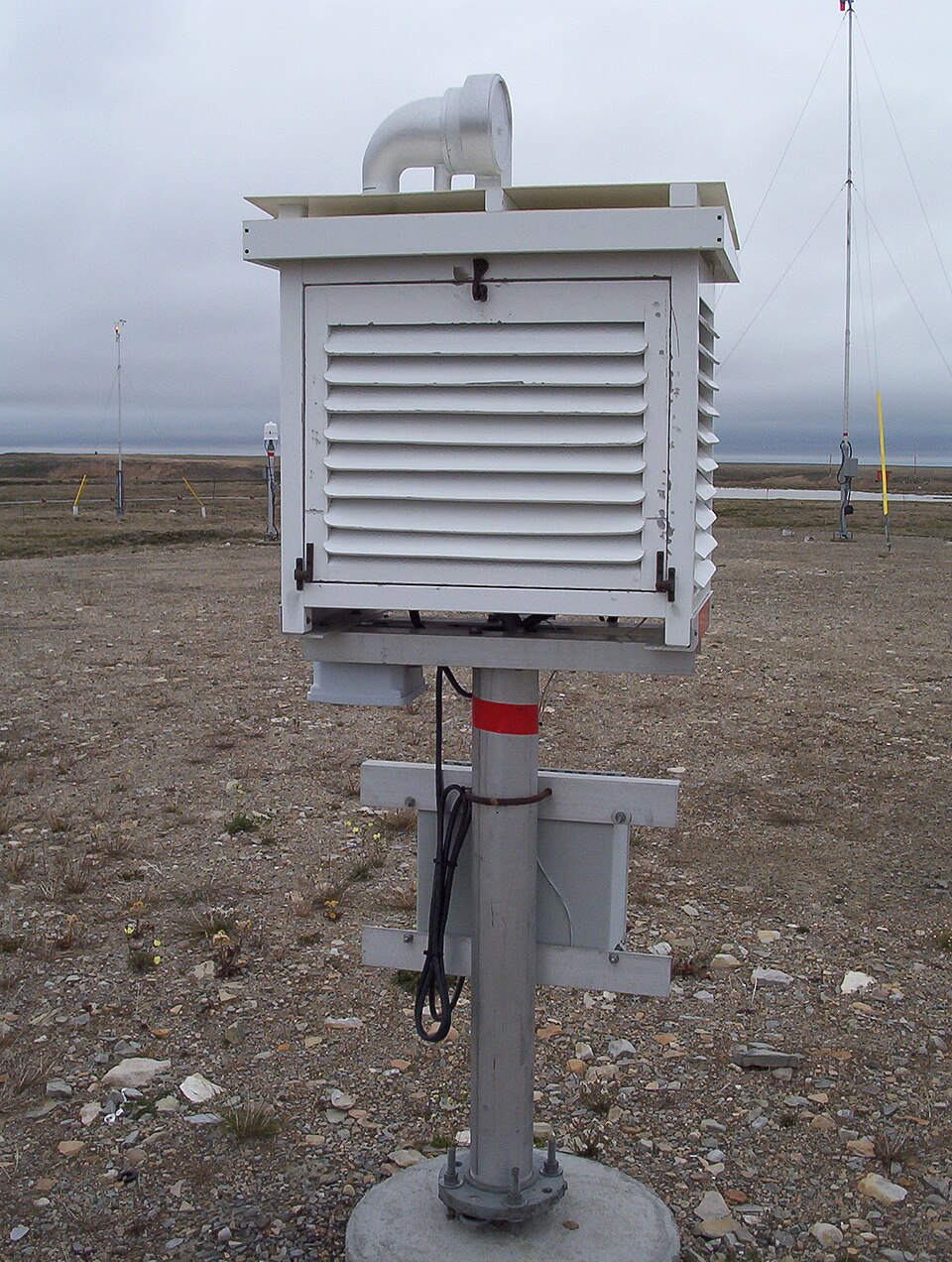
Correct — C, both statements 1 and 2. Surface air temperature is measured not at ground level but at a standard screen height of roughly 1·2 m (about 4 feet) above a grassed surface, with the thermometer shielded from direct sun and rain inside a ventilated shelter, so the reading is representative of the free air; statement 1 states this convention and is true. The average rate at which temperature falls as one goes up through the lower atmosphere is the environmental temperature lapse rate, about 6·5 degrees C per 1000 m in the troposphere; statement 2 gives this definition and is true. With both correct, the answer is (c).
Why the others are wrong
- (a)1 only — Rejects statement 2, but the average decrease of temperature with height is exactly what the environmental lapse rate means, so statement 2 is a correct definition.
- (b)2 only — Rejects statement 1, but standard air temperature is indeed read at about screen height (roughly 1·2 m) inside a shelter, not at the ground, so statement 1 is correct.
- (d)Neither 1 nor 2 — Both statements are correct — a standard measurement height near 1·2 m and the environmental lapse rate as the average fall of temperature with altitude are both accepted conventions.
Concept
Air temperature is a standardised measurement — taken at about screen height (roughly 1·2 m above a short grass surface) inside a louvred, white shelter so that the thermometer records the temperature of freely circulating air, shielded from direct radiation. In the troposphere temperature normally falls with height, and the average rate of that fall is the environmental (or normal) lapse rate.
The reasoning cue is that meteorology needs comparable readings worldwide, so both the height of measurement and the way temperature changes upward are defined by convention. Do not confuse the environmental lapse rate (the actual observed fall of temperature with height, about 6·5 degrees C per km) with the fixed adiabatic lapse rates that apply to a rising air parcel.
Key facts
- Standard surface air temperature is measured at about screen height, roughly 1·2 m (near 4 feet) above a grassed surface, inside a ventilated shelter such as a Stevenson screen.
- The environmental temperature lapse rate is the average decrease of temperature with height in the troposphere, about 6·5 degrees C per 1000 m.
- This is distinct from the dry adiabatic lapse rate (about 10 degrees C per km) and the moist adiabatic lapse rate (about 5-6 degrees C per km) that describe a rising air parcel.
- Where temperature rises with height instead of falling, the layer is said to show a temperature inversion, which traps pollutants and fog near the ground.
Study next
Common traps
- Mixing up the environmental lapse rate (observed fall of temperature with height) with the fixed adiabatic lapse rates of a moving air parcel.
- Thinking temperature always falls with height — in an inversion, and above the tropopause, it can rise instead.
Asked as a two-statement definition check — the standard height of measurement and the meaning of the environmental lapse rate.
Related PYQs
Consider the following statements: Statement-I: Thickness of the troposphere at the equator is much greater as compared to poles. Statement-II: At the equator, heat is transported to great heights by strong convectional currents. Which one of the following is correct in respect of the above statements?
- (a) Both Statement-I and Statement-II are correct and Statement-II explains Statement-I
- (b) Both Statement-I and Statement-II are correct, but Statement-II does not explain Statement-I
- (c) Statement-I is correct, but Statement-II is incorrect
- (d) Statement-I is incorrect, but Statement-II is correct
Answer(a) Both statements are correct and Statement-II explains Statement-I — strong equatorial convection carries heat higher, thickening the troposphere there.
Deals with the troposphere, the layer in which temperature falls with height at the environmental lapse rate — the same vertical thermal structure of the lower atmosphere tested here.
Practice
- practice — not a real PYQ
The average environmental lapse rate in the troposphere is about:
- (a)1 degree C per 1000 m
- (b)6·5 degrees C per 1000 m
- (c)10 degrees C per 100 m
- (d)0 degrees C (constant)
Answer(b) 6·5 degrees C per 1000 m — the normal (environmental) lapse rate is roughly 6·5 degrees C for every kilometre of ascent. - practice — not a real PYQ
A layer of the atmosphere in which temperature increases with height instead of decreasing is called a:
- (a)lapse layer
- (b)temperature inversion
- (c)adiabatic layer
- (d)tropopause
Answer(b) temperature inversion — here warmer air overlies cooler air, reversing the normal fall of temperature with height.