
Cartilage is NOT found in
- (a)larynx
- (b)nose
- (c)ear
- (d)urinary bladder
Answer
Why
Correct — D, urinary bladder. Cartilage is a firm but flexible connective tissue, and the first three sites all contain it — the larynx (hyaline thyroid and cricoid cartilages, elastic epiglottis), the tip of the nose (hyaline cartilage) and the external ear or pinna (elastic cartilage). The urinary bladder, by contrast, is a hollow muscular organ: its wall is built from layers of smooth (detrusor) muscle lined by stretchable transitional epithelium, with no cartilage at all. So the bladder is the odd one out.
Why the others are wrong
- (a)larynx — The larynx (voice box) is supported by cartilage — the hyaline thyroid and cricoid cartilages and the elastic epiglottis — so it does contain cartilage.
- (b)nose — The framework of the tip and sides of the nose is hyaline cartilage, which gives the nose its shape and flexibility, so cartilage is present here.
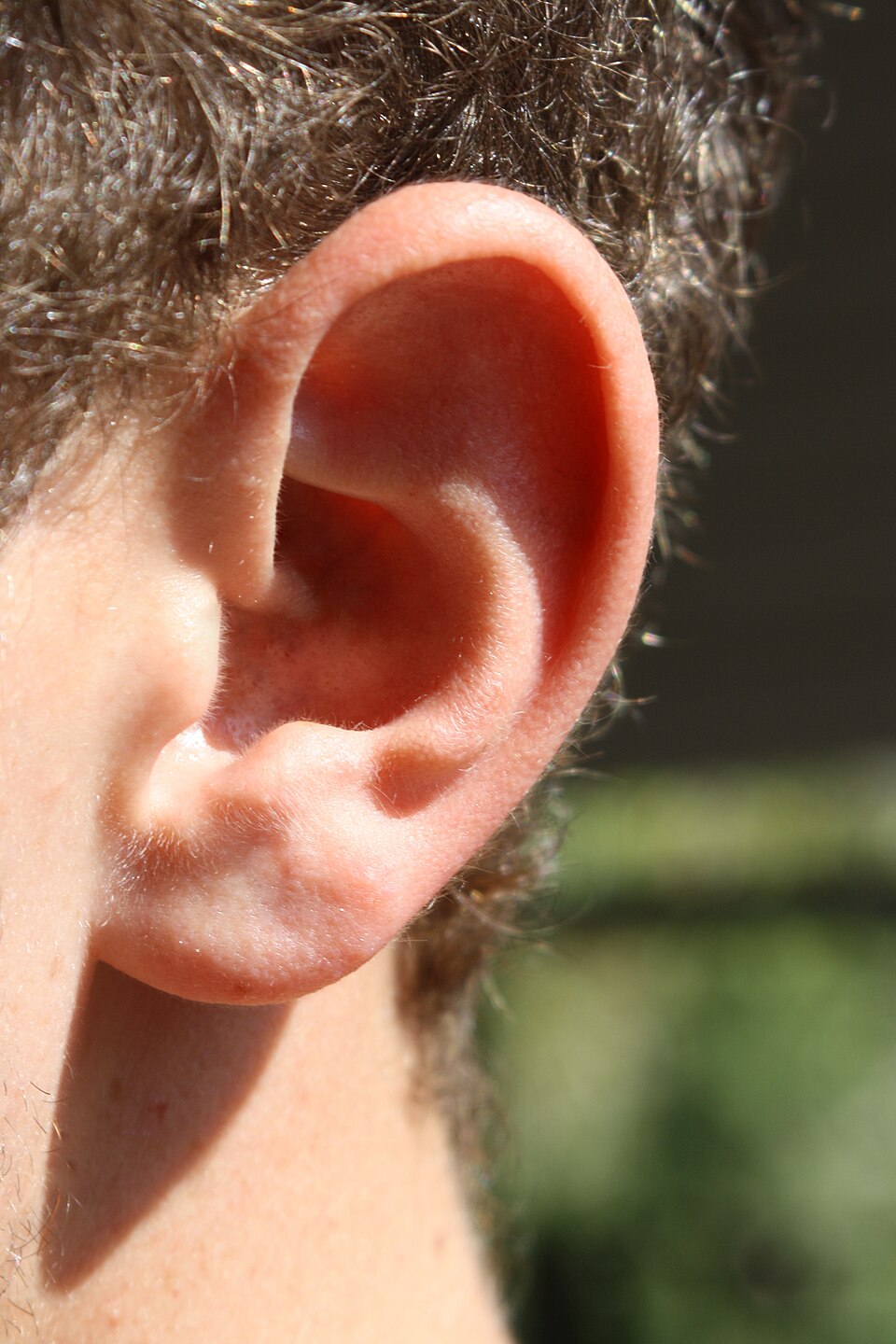
- (c)ear — The pinna (external ear) is made of elastic cartilage, which is why the ear is springy and returns to shape when bent; cartilage is present.
Concept
Cartilage is a specialised connective tissue made of chondrocytes embedded in a firm, gel-like matrix. It is classed as hyaline (nose, trachea, joint surfaces, larynx), elastic (external ear, epiglottis) or fibrocartilage (intervertebral discs, knee menisci). It gives support with flexibility and, unlike bone, has no blood vessels of its own.
The trap is that the bladder feels soft and stretchable, so it is easy to assume it is 'cartilage-like'. In fact its stretch comes from smooth muscle and transitional epithelium, not cartilage. Knowing the standard list of cartilage sites (ear, nose, larynx, trachea, joints, discs) settles it.
Key facts
- Cartilage types: hyaline, elastic and fibrocartilage.
- External ear (pinna) and epiglottis are elastic cartilage.
- The larynx contains hyaline thyroid and cricoid cartilages.
- The urinary bladder wall is smooth muscle lined by transitional epithelium — no cartilage.
Study next
Common traps
- Assuming the bladder contains cartilage because it is soft and stretchable — its flexibility comes from smooth muscle.
- Forgetting that the pinna and epiglottis are elastic, not hyaline, cartilage.
Asked as a 'NOT found' odd-one-out — recall the standard list of cartilage-bearing structures and spot the organ that is muscular instead.
Related PYQs
In which part or organ of human body cartilage is NOT found?
- (a) Nose
- (b) Trachea
- (c) Bronchiole
- (d) Knee joint
Answer(c) Bronchiole
Same concept, same 'NOT found' framing. There the odd one out is the bronchiole (its walls lose cartilage as airways narrow); here it is the urinary bladder. Both reward recall of the standard cartilage sites versus muscular/soft-tissue organs.
Practice
- practice — not a real PYQ
Which type of cartilage forms the external ear (pinna)?
- (a)Hyaline cartilage
- (b)Elastic cartilage
- (c)Fibrocartilage
- (d)Calcified cartilage
Answer(b) Elastic cartilage — it gives the pinna its springy, shape-retaining flexibility. - practice — not a real PYQ
The wall of the human urinary bladder is chiefly made of
- (a)hyaline cartilage
- (b)smooth muscle
- (c)striated (skeletal) muscle
- (d)cardiac muscle
Answer(b) smooth muscle — the detrusor muscle, lined by transitional epithelium.