
In an incandescent electric bulb, the filament of the bulb is made up of which metal?
- (a)Aluminium
- (b)Copper
- (c)Tungsten
- (d)Silver
Answer
Why
Correct — C, Tungsten. The filament of an incandescent bulb is made of tungsten because tungsten has the highest melting point of all metals (about 3,422 degrees C). This lets the filament be heated white-hot to emit light without melting; tungsten also has high resistivity and can be drawn into a fine, coiled wire.
Why the others are wrong
- (a)Aluminium — Aluminium melts at only about 660 degrees C — it would melt or vaporise instantly at the temperatures a glowing filament reaches.
- (b)Copper — Copper is an excellent conductor but melts near 1,085 degrees C and cannot survive the white-hot filament temperature; it is used for connecting wires, not the filament.
- (d)Silver — Silver is the best electrical conductor but has a low melting point (about 962 degrees C) and low resistivity, so it cannot glow as a filament.
Concept
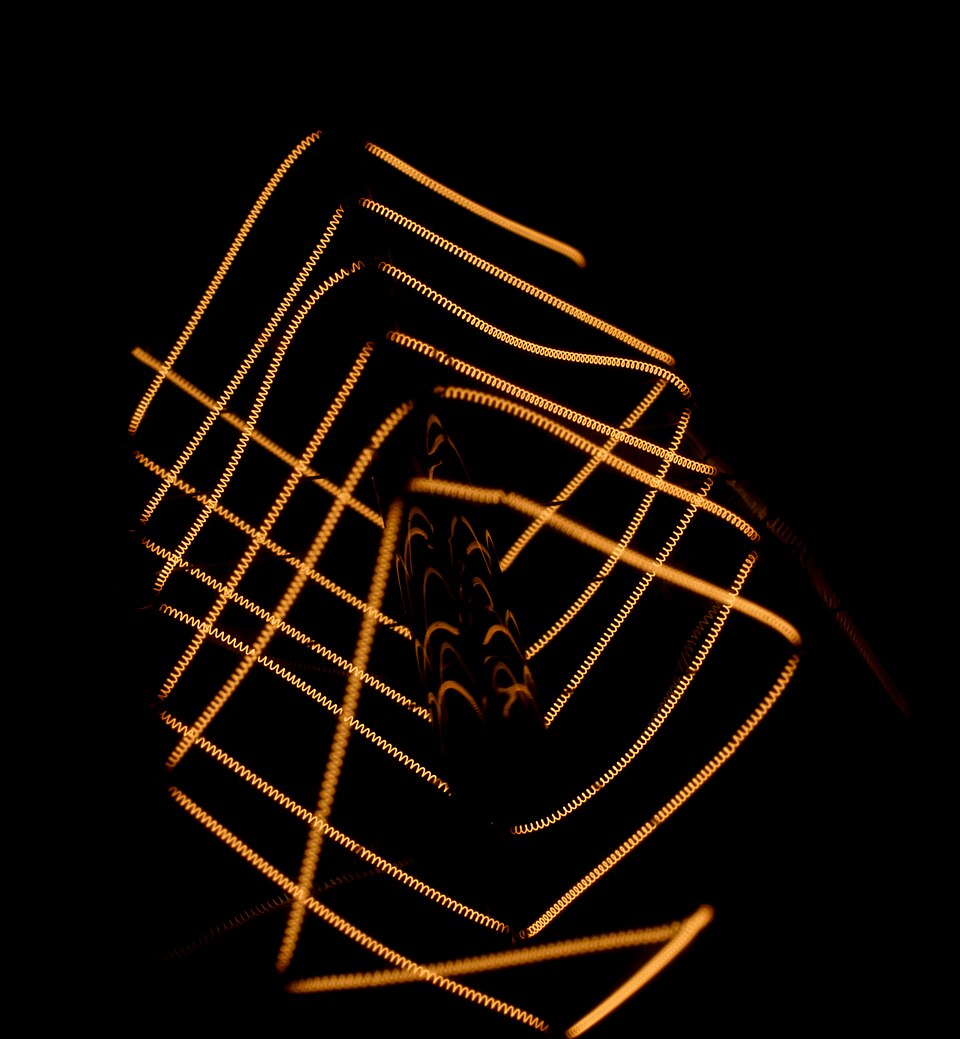
An incandescent bulb produces light by heating a thin wire until it glows. The filament must reach very high temperatures without melting, so it needs a metal with an extremely high melting point and enough resistance to heat up strongly. Tungsten meets both requirements, which is why it is the standard filament material.
The trap is to reach for the best conductor (silver or copper). But a filament is not chosen for conductivity — it must survive being white-hot, so the deciding property is melting point, where tungsten wins.
Key facts
- Tungsten has the highest melting point of any metal, about 3,422 degrees C.
- The filament is usually a coiled (or coiled-coil) fine tungsten wire.
- The glass bulb is filled with inert gas (argon/nitrogen) to slow tungsten evaporation.
- Incandescent bulbs are inefficient — most input energy is lost as heat rather than light.
Study next
Common traps
- Choosing the best conductor (silver/copper) instead of the highest-melting-point metal.
- Assuming the filament material is picked for cost rather than heat resistance.
Asked as a direct recall of the filament metal, or reasoned via 'which property matters for a filament'.
Related PYQs
Consider the following statement: An ordinary light bulb has a rather short life because the I. Filament wire is not uniform. II. Bulb cannot be evacuated completely. III. Wires supporting the filament melt at high temperatures. Which of the above statements are correct?
- (a) I and III
- (b) II and III
- (c) I and II
- (d) I, II and III
Answer(b) II and III
Same device — the incandescent bulb and its filament. UPSC 1999 asks why such bulbs fail; this NDA item asks which metal the filament is made of (tungsten).
An incandescent electric bulb converts 20 % of its power consumption into light, and the remaining power is dissipated as heat. The bulb’s filament has a resistance of 200 Ω and 2 A current flows through it. If the bulb remains ON for 10 h and the rate of electricity charge is ₹5 per unit, then which among the following is the correct amount for the money spent on producing light?
- (a) ₹ 5
- (b) ₹ 6
- (c) ₹ 7
- (d) ₹ 8
Answer(d) ₹ 8
Same device — the incandescent bulb and its filament. That NDA item computes energy/cost from the filament's resistance and current; this one identifies the filament metal (tungsten).
Practice
- practice — not a real PYQ
Tungsten is chosen for incandescent-bulb filaments chiefly because it has
- (a)the highest electrical conductivity of all metals
- (b)the highest melting point of all metals
- (c)the lowest density of all metals
- (d)the highest reflectivity of all metals
Answer(b) the highest melting point of all metals — so it can glow white-hot without melting. - practice — not a real PYQ
The glass bulb of an incandescent lamp is usually filled with an inert gas mainly to
- (a)increase the brightness of the light
- (b)slow the evaporation of the tungsten filament
- (c)cool the filament rapidly
- (d)conduct electricity to the filament
Answer(b) slow the evaporation of the tungsten filament — prolonging bulb life.