
Dry land farming in India is largely confined to areas with rainfall less than
- (a)100 cm
- (b)85 cm
- (c)80 cm
- (d)75 cm
Answer
Why
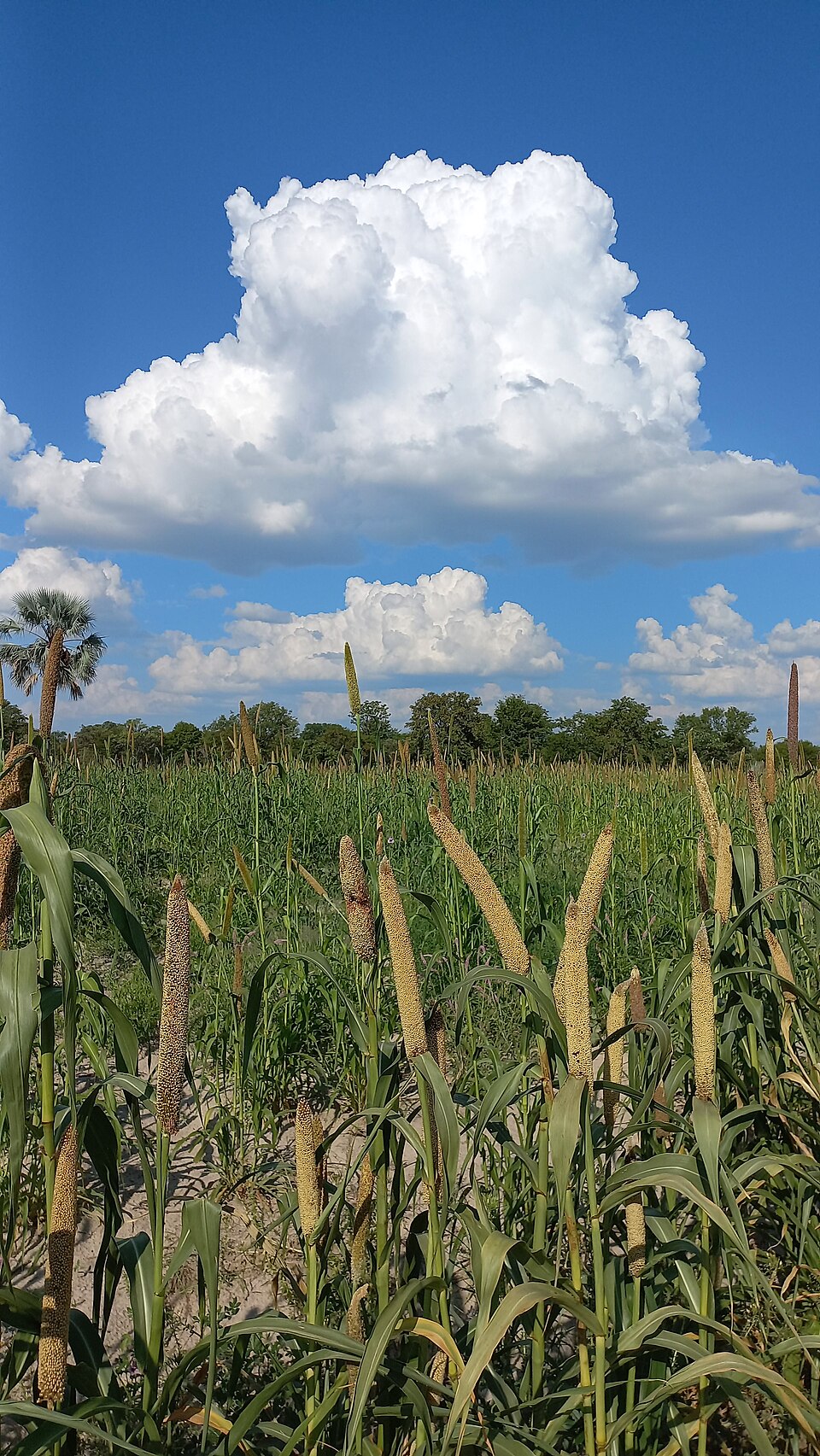
Correct — D, 75 cm. In Indian agricultural geography, dry-land (dry) farming is practised in regions receiving less than about 75 cm of annual rainfall, where there is no assured irrigation. Farmers rely on soil-moisture conservation and grow hardy, drought-resistant crops such as bajra, jowar, ragi, gram and oilseeds. Areas with more than 75 cm of rainfall support 'wet-land' farming.
Why the others are wrong
- (a)100 cm — Too high — around 100 cm marks well-watered, humid tracts suited to wet farming and paddy, not dry-land farming.
- (b)85 cm — Above the accepted cut-off; the standard threshold for dry-land farming is under 75 cm.
- (c)80 cm — Close but not the figure used; the conventional limit is less than 75 cm of annual rainfall.
Concept
Indian farming is split by moisture availability. Dry-land (rainfed dry) farming occurs where annual rainfall is below about 75 cm and there is no irrigation, so moisture conservation and drought-hardy crops dominate. Wet-land farming occurs where rainfall exceeds 75 cm or irrigation is assured, allowing water-loving crops such as rice and sugarcane.
The number to remember is 75 cm. Below it, without irrigation, only drought-resistant crops survive; above it, or with irrigation, richer cropping is possible. The distractors cluster just above 75 cm to tempt a near-miss.
Key facts
- Dry-land farming is largely confined to areas with less than about 75 cm of annual rainfall.
- Wet-land farming needs more than 75 cm of rainfall or assured irrigation.
- Typical dry-land crops are bajra, jowar, ragi, pulses such as gram, and oilseeds.
- Moisture-conservation methods (bunding, mulching, dry-farming techniques) are central to dry-land agriculture.
Study next
Common traps
- Picking a figure just above 75 cm (80, 85 or 100).
- Confusing dry-land farming with desert (arid) farming — dry-land is semi-arid, not true desert.
Asked as the rainfall threshold that defines dry-land farming, or by pairing dry-land and wet-land farming with their rainfall bands and crops.
Related PYQs
Consider the following crops of India : 1. Groundnut 2. Sesamum 3. Pearl millet Which of the above is/are predominantly rainfed crop/crops?
- (a) 1 and 2 only
- (b) 2 and 3 only
- (c) 3 only
- (d) 1, 2 and 3
Answer(d) 1, 2 and 3
Same concept — rainfed (dry-land) agriculture. UPSC asks which crops are predominantly rainfed; this NDA item asks the rainfall threshold (under 75 cm) that defines dry-land farming.
Practice
- practice — not a real PYQ
Which set of crops is best suited to dry-land (rainfed) farming?
- (a)Rice and sugarcane
- (b)Bajra, jowar and gram
- (c)Jute and tea
- (d)Banana and coconut
Answer(b) Bajra, jowar and gram — hardy, drought-resistant crops. - practice — not a real PYQ
Wet-land farming in India is generally practised where annual rainfall exceeds about
- (a)25 cm
- (b)50 cm
- (c)75 cm
- (d)150 cm
Answer(c) 75 cm — above this, or with irrigation, water-loving crops can be grown.