
Which one of the following does not represent the salt, Calcium Carbonate?
- (a)Lime water
- (b)Limestone
- (c)Chalk
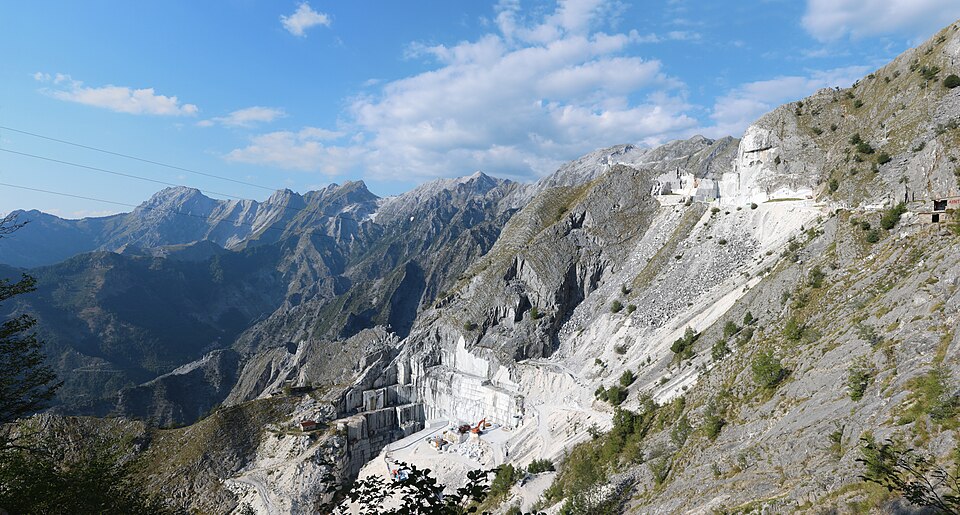
- (d)Marble
Answer
Why
Correct - A, lime water. Limestone, chalk and marble are all naturally occurring forms of the salt calcium carbonate, CaCO3 - marble is metamorphosed limestone and chalk is a soft, porous limestone. Lime water, however, is a solution of calcium HYDROXIDE, Ca(OH)2, in water - a different compound (a base), not calcium carbonate. So lime water is the one that does not represent CaCO3.
Why the others are wrong
- (b)Limestone — Limestone is a sedimentary rock made largely of calcium carbonate, so it does represent CaCO3 and is not the answer.
- (c)Chalk — Chalk is a soft white form of limestone - again calcium carbonate - so it also represents CaCO3.
- (d)Marble — Marble is a metamorphic rock formed from limestone and is chemically calcium carbonate, so it represents CaCO3 too.
Concept
Calcium carbonate (CaCO3) occurs in nature as limestone, chalk and marble - chemically the same salt in different physical and geological forms. Calcium hydroxide, Ca(OH)2, dissolved in water is 'lime water', the reagent that turns milky when carbon dioxide is bubbled through it, forming a precipitate of CaCO3. The two are distinct calcium compounds.
The odd one out is the calcium compound that is not a carbonate. Lime water is calcium hydroxide, a base, whereas limestone, chalk and marble are all the carbonate salt CaCO3.
Key facts
- Limestone, chalk and marble are all calcium carbonate, CaCO3.
- Lime water is a solution of calcium hydroxide, Ca(OH)2.
- Lime water turns milky with carbon dioxide because insoluble CaCO3 precipitates.
- Marble is metamorphosed limestone, and chalk is a soft, fine-grained limestone.
Study next
Common traps
- Assuming anything with 'lime' in the name is calcium carbonate - lime water is calcium hydroxide.
- Confusing quicklime (CaO) and slaked lime (Ca(OH)2) with the carbonate.
Asked by picking the odd substance out among forms of calcium carbonate, or by naming the compound in lime water.
Related PYQs
Match List I (Naturally occurring substances: Diamond, Marble, Sand, Ruby) with List II (Elements: Calcium, Silicon, Aluminium, Carbon) and select the correct answer.
- (a) I-C, II-A, III-B, IV-D
- (b) I-D, II-B, III-A, IV-C
- (c) I-B, II-A, III-C, IV-D
- (d) I-D, II-A, III-B, IV-C
Answer(d) I-D, II-A, III-B, IV-C
Directly reinforces that marble is calcium carbonate (its metal is calcium). Recognising marble, limestone and chalk as CaCO3 is exactly what this NDA question tests.
Practice
- practice — not a real PYQ
Which one of the following is chemically calcium hydroxide?
- (a)Marble
- (b)Chalk
- (c)Lime water
- (d)Limestone
Answer(c) Lime water - a solution of calcium hydroxide, Ca(OH)2. - practice — not a real PYQ
Lime water turns milky when the gas passed through it is
- (a)oxygen
- (b)carbon dioxide
- (c)hydrogen
- (d)nitrogen
Answer(b) carbon dioxide - it forms a precipitate of insoluble calcium carbonate.