
Consider the following statements related to the Virashaiva tradition in Karnataka: 1. The Virashaiva movement was led by a Brahmana named Basavanna, a minister in the court of the Kalachuri ruler in the twelfth century. 2. The Virashaivas encouraged practices, approved by the Dharmashastras, like post-puberty marriages and remarriage of widows. Which of the statement/s given above is/are correct?
- (a)1 only
- (b)2 only
- (c)Both 1 and 2
- (d)Neither 1 nor 2
Answer
Why
Correct — A, 1 only. Statement 1 is true: the Virashaiva (Lingayat) movement was led by Basavanna, a Brahmana who served as a minister in the court of the Kalachuri ruler in twelfth-century Karnataka. Statement 2 is false: the Virashaivas championed practices such as post-puberty marriage and widow remarriage precisely in defiance of Brahmanical norms — these were not approved by the Dharmashastras.
Why the others are wrong
- (b)2 only — This reverses the truth — statement 2 is the false one, because the Dharmashastras did not sanction the widow remarriage and post-puberty marriage that the Virashaivas encouraged.
- (c)Both 1 and 2 — Statement 1 is correct, but statement 2 is wrong about Dharmashastra approval, so both cannot be right.
- (d)Neither 1 nor 2 — Statement 1 is accurate about Basavanna and the Kalachuri court, so 'neither' is incorrect.
Concept
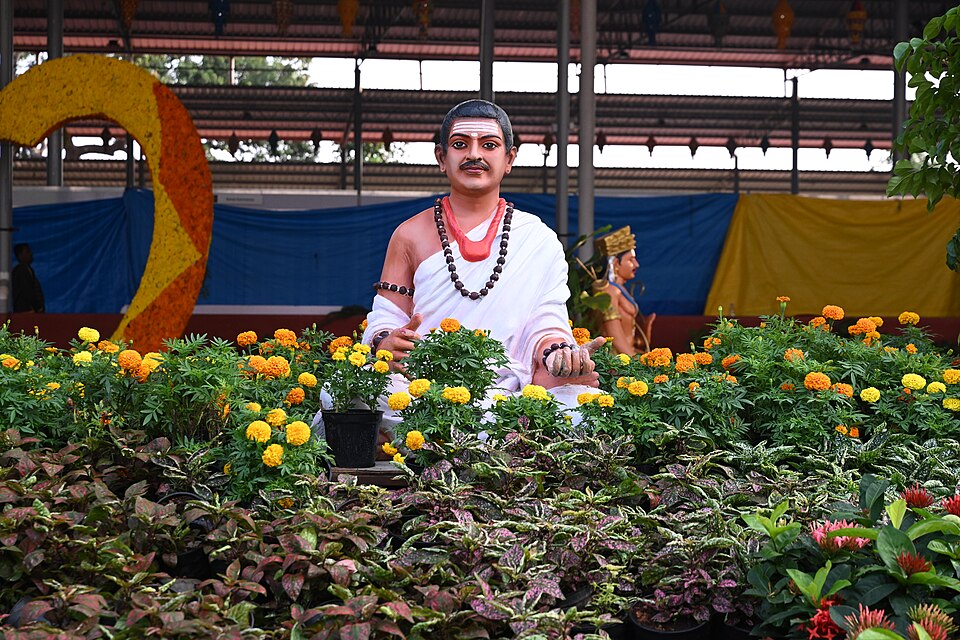
The Virashaiva or Lingayat tradition arose in Karnataka in the twelfth century under Basavanna. It worshipped Shiva in the form of the linga, rejected caste hierarchy and Brahmanical ritual, opposed the theory of rebirth, and endorsed social reforms — post-puberty marriage and widow remarriage — that ran counter to the Dharmashastras rather than following them.
The catch is in statement 2's phrase 'approved by the Dharmashastras'. The Virashaivas did encourage those marriage practices, but as a challenge to Brahmanical law, not with its approval — so the statement is subtly false. Statement 1's factual details about Basavanna are correct, giving '1 only'.
Key facts
- Basavanna was a Brahmana and a minister at the Kalachuri court in the twelfth century.
- The Virashaivas/Lingayats worship Shiva as the linga and reject caste hierarchy.
- They opposed the theory of rebirth and Brahmanical ritual.
- They favoured post-puberty marriage and widow remarriage — against Dharmashastra norms.
Study next
Common traps
- Being misled by 'approved by the Dharmashastras' — the Virashaivas' reforms defied Brahmanical law.
- Assuming both statements are true because statement 1 is accurate.
A two-statement item where one fact is true and the other carries a subtle error ('approved by the Dharmashastras') — check each clause against what the movement actually stood for.
Related PYQs
With reference to the cultural history of medieval India, consider the following statements: 1. Siddhas (Sittars) of Tamil region were monotheistic and condemned idolatry. 2. Lingayats of Kannada region questioned the theory of rebirth and rejected the caste hierarchy. Which of the statements given above is/are correct?
- (a) 1 only
- (b) 2 only
- (c) Both 1 and 2
- (d) Neither 1 nor 2
Answer(c) Both 1 and 2
Same concept — the Lingayat/Virashaiva tradition of Karnataka. UPSC affirms that the Lingayats questioned rebirth and rejected caste; this NDA item tests the details of Basavanna and the movement's social reforms.
Practice
- practice — not a real PYQ
The Lingayat (Virashaiva) movement was founded by
- (a)Ramanuja
- (b)Basavanna
- (c)Madhvacharya
- (d)Shankaracharya
Answer(b) Basavanna — the twelfth-century founder of the Virashaiva tradition in Karnataka. - practice — not a real PYQ
The Lingayats of the Kannada region are known for
- (a)strict adherence to caste hierarchy
- (b)worship of Vishnu as the sole deity
- (c)rejecting caste distinctions and the theory of rebirth
- (d)child marriage sanctioned by the Dharmashastras
Answer(c) rejecting caste distinctions and the theory of rebirth — central tenets of the Virashaivas.