 View answer copy →
Shakti DubeyAIR 1CSE 2024
Answered a very similar question
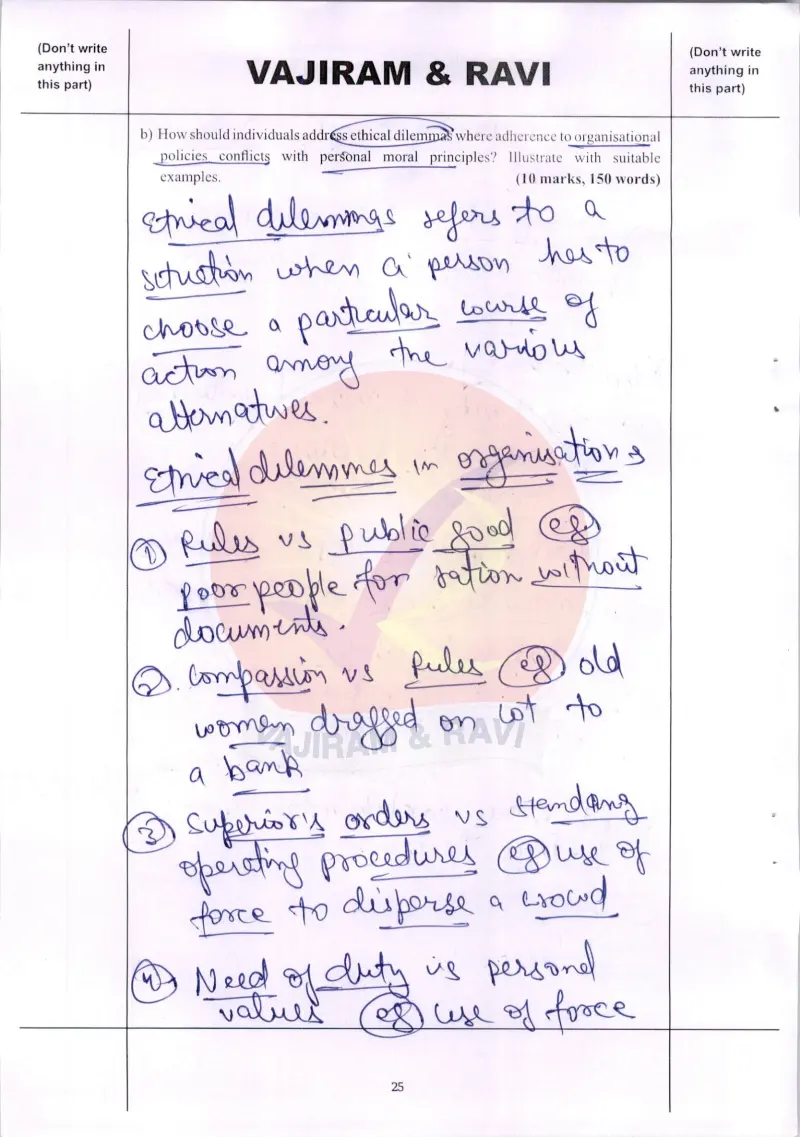
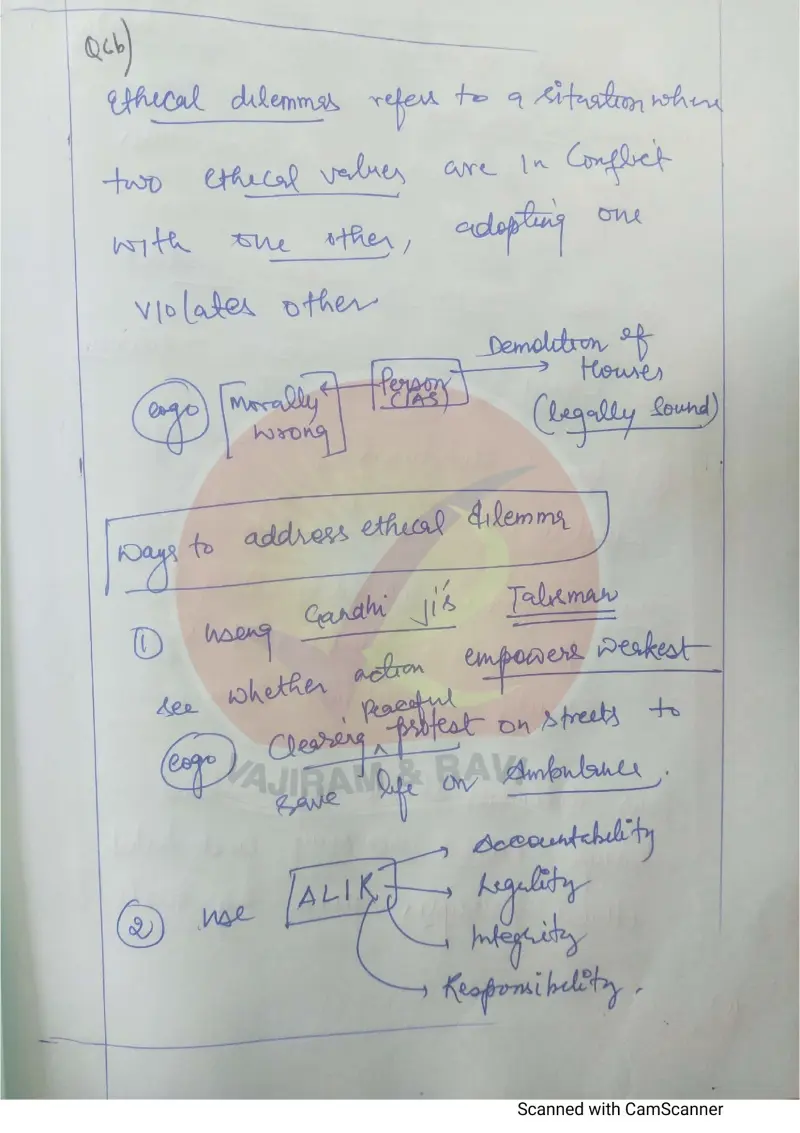
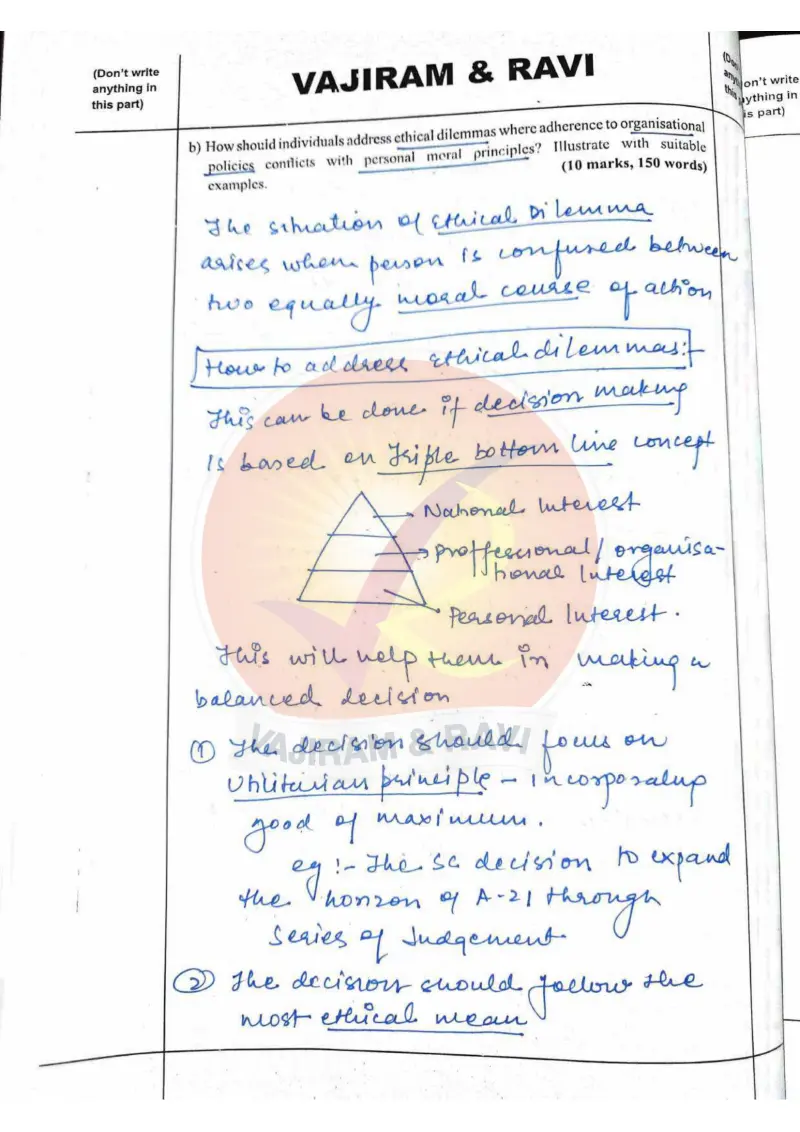
Their question: “Resolving ethical dilemmas where organisational policy conflicts with personal moral principles”
Her framework for resolving a policy-vs-personal-morality dilemma is exactly the 'process of resolving ethical dilemmas in Public Administration' 2018 Q8 asks to explain.
Key learnings from their answer
- ›Section-B case studies follow one rigid, repeatable template: framing line -> stakeholder bubble/spider diagram (e.g. Q7 maps DCP Aakash, SI Shipra, DIG Samar, Dinesh, public; Q8 maps SP, journalist Sahoo, MLA, channel owner, environment, society) -> numbered ethical issues -> each option weighed in a two-column Positive vs Negative layout (Q8, Q9, Q10) -> chosen option with reasons -> way forward -> Internalise one such case-study skeleton so that under time pressure you only fill content into a structure you never have to invent on the spot.
- ›Every 10-marker opens with a 'hook' before the term is even defined, a quotation (e.g. 'Sunlight is the best disinfectant' to open the citizen-charter/transparency answer 2a, Greta Thunberg's 'act as if our house is on fire' to open the climate-finance answer 5a, Gandhi's 'court above the court of law' to open the conscience answer 6a) OR an authority/data anchor (2nd ARC, IPCC 6th AR, WEF) -> Bank one or two relevant hooks per ethics theme and lead with them, so the examiner sees framing before content; an authority/report works just as well as a quote when you don't have one.