 View answer copy →
Answered a very similar question
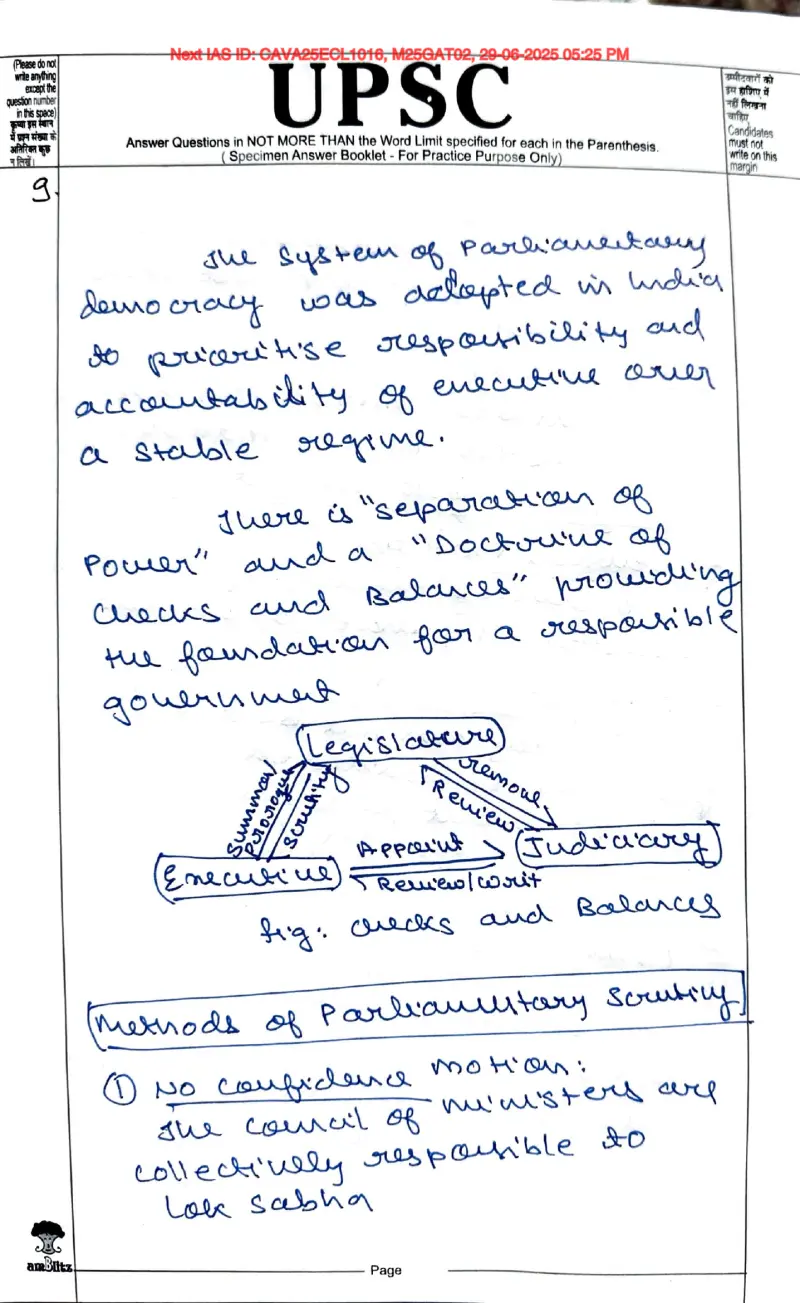
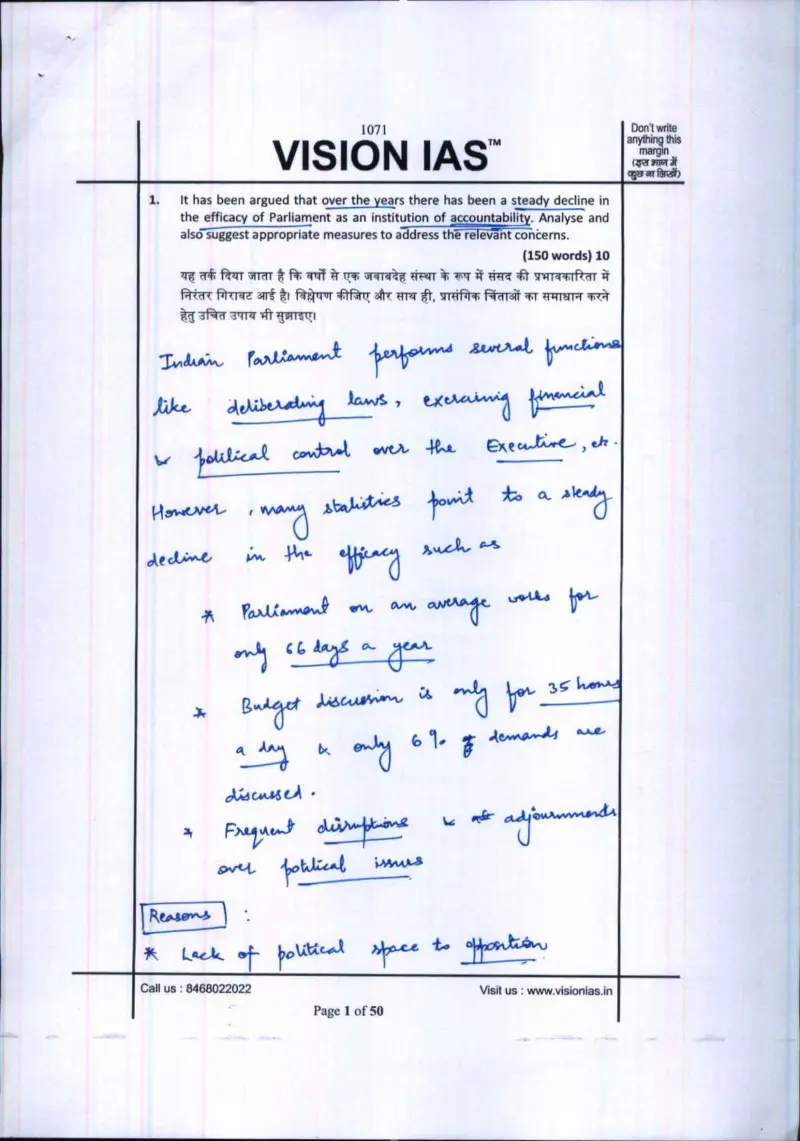
Their question: “Steady decline in efficacy of Parliament as an institution of accountability — analyse + measures”
The topper's stat-anchored diagnosis of Parliament's declining oversight plus reform measures directly answers the PYQ on the extent Parliament ensures the accountability of the executive.
Key learnings from their answer
- ›He turns soft polity claims into hard evidence: the Parliament answer drops 'sittings ~66 days/yr, budget discussed only ~6% / ~35 hours', the electoral-bond answer cites ADR's '~69% unaccounted funds, corporate funding ~88%', and the Ayushman answer uses '~70% out-of-pocket health spend, 1.2%-of-GDP public health outlay'. -> Memorise 2-3 exact statistics per high-frequency topic so generic assertions ('Parliament is in decline', 'health funding is low') land as proven facts, not opinion.
- ›His conclusions are one coined or borrowed phrase that does the work of a paragraph: he ends the Parliament answer on 'Accountability is the soul of democracy', labels the Finance Commission the 'Balancing Wheel of Indian Federalism', and offers a self-coined 'Organic Federalism' as the way forward in Q14. -> Bank a short, memorable normative line per theme to close on a verdict the examiner remembers, rather than trailing off after the last bullet.
What they cited: Parliament sitting statistics: ~66 days/year average; budget discussed only ~6% / ~35 hours (Q1) · Anti-Defection Law and Whips; NCRWC and Law Commission recommendations; fixed calendar of sittings; pre-poll alliances; Parliamentary Committees on demands for grants (Q1)
Quotes used: “"Accountability is the soul of democracy" — candidate's own concluding line in the Parliament answer (Q1), arguing it should not be compromised at any cost”