
 View answer copy →
Suvan SharmaRank 412CSE 2023scored 10m
Answered a very similar question
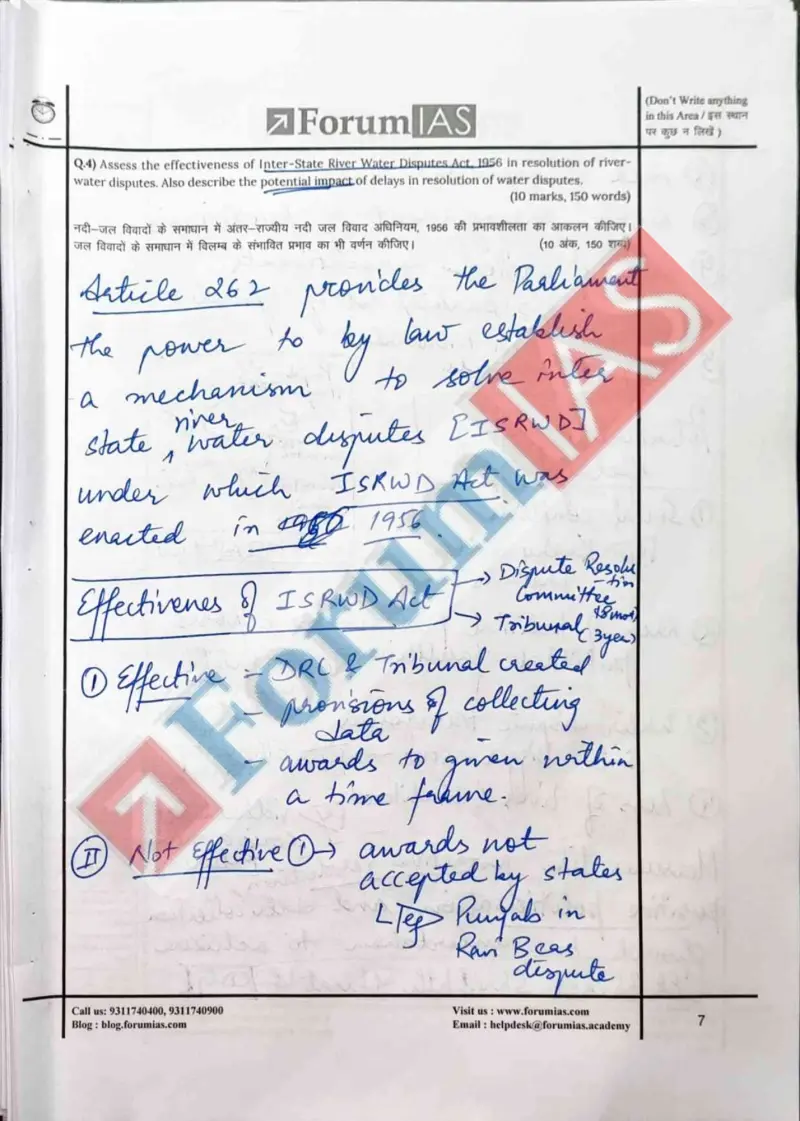
Their question: “Inter-State River Water Disputes Act 1956 — effectiveness & impact of delays (10m)”
The topper's answer directly evaluates why inter-state water dispute resolution fails (Act delays, tribunal weaknesses), which is exactly the structural-vs-process inadequacy the PYQ asks.
Key learnings from their answer
- ›He turns evaluations into sticky one-liners: NCW branded a 'toothless tiger' with 'no penal powers' (Q14), and the electoral-reform problem framed as 'voting for caste rather than casting vote' (Q2). -> Coin one compressed phrase that captures your verdict on the question, a memorable framing signals analytical command and gives the examiner a quotable takeaway, far better than a flat restatement.
- ›He lands conclusions on a value or right rather than a summary, Q17 (Jal Jeevan Mission) closes on 'Water for All' tied to Right to Life under Article 21, and recurring slogans like 'Sashakt Bharat' (Q8) and 'Sabke Saath Sabka Vikas' (Q10). -> End an answer by linking the topic back to a constitutional value or rights guarantee; it elevates a scheme/policy answer from administrative to principled in one sentence.
What they cited: Article 262; Cauvery / Punjab river disputes (Q4)