
With reference to 'Baking Soda', which of the following statements is/are correct ? 1. It is Sodium hydrogen carbonate. 2. It is used in fire extinguishers. Select the correct answer from the code given below :
- (a)Only 2
- (b)Both 1 and 2
- (c)Neither 1 nor 2
- (d)Only 1
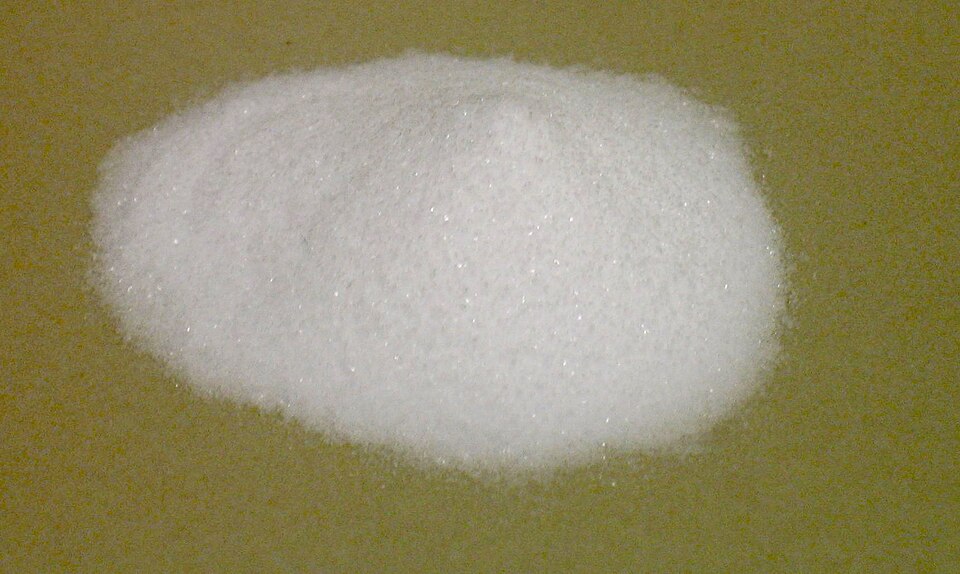
Correct — B, Both 1 and 2. Statement 1 is a naming question and it is right: baking soda is sodium hydrogen carbonate, NaHCO3. 'Sodium hydrogen carbonate' is simply the systematic name for what older books call sodium bicarbonate — one compound, two names. Statement 2 is right as well. In the classic soda-acid extinguisher, sulphuric acid is tipped into a sodium bicarbonate solution and the reaction releases carbon dioxide (2NaHCO3 + H2SO4 gives Na2SO4 + 2H2O + 2CO2); the gas both drives the liquid out in a jet and, being denser than air, blankets the burning surface and cuts off oxygen. The same salt is the powder in dry-chemical extinguishers, where the heat of the fire decomposes it (2NaHCO3 gives Na2CO3 + H2O + CO2) and releases carbon dioxide at the flame itself. Both statements therefore stand.
- (a)Only 2 — It accepts the use but rejects the chemical identity, which is the one thing here that is beyond argument. Baking soda is sodium hydrogen carbonate, NaHCO3 — the same substance as sodium bicarbonate.
- (c)Neither 1 nor 2 — Both statements are correct, so rejecting both is the worst available reading. NaHCO3 is baking soda, and it is the working chemical of both soda-acid and dry-chemical fire extinguishers.
- (d)Only 1 — The tempting half-answer for a candidate who thinks of baking soda purely as a kitchen ingredient. Its ability to release carbon dioxide is exactly why it appears in the kitchen AND in fire extinguishers — the same reaction, put to two different uses.
Sodium hydrogen carbonate, NaHCO3, is the salt of a strong base (sodium hydroxide) and a weak acid (carbonic acid), which makes its solution mildly alkaline. Its defining behaviour is that it gives up carbon dioxide easily — on gentle heating and on contact with any acid. Every common use follows from that single property: the gas raises a cake, neutralises excess acid in the stomach, and smothers a fire. It is manufactured industrially by the Solvay (ammonia-soda) process, the same process that yields sodium carbonate.
Questions on baking soda almost always turn on a confusion the examiner has planted, and there are two standard ones. The first is with washing soda, sodium carbonate decahydrate, Na2CO3.10H2O — a different compound with a different formula and a different use; UPSC used exactly this trap in 2005. The second is with baking powder, which is not a compound at all but a mixture of baking soda and a mild edible acid such as tartaric acid, added so that the sodium carbonate left after baking does not make the food bitter. If a statement gives the correct chemical name and a correct property, as both statements do here, there is no reason to reject either.
- Baking soda = sodium hydrogen carbonate = sodium bicarbonate, NaHCO3; its solution is mildly alkaline
- On heating: 2NaHCO3 gives Na2CO3 + H2O + CO2 — the reaction behind both baking and dry-chemical extinguishers
- In the soda-acid extinguisher: 2NaHCO3 + H2SO4 gives Na2SO4 + 2H2O + 2CO2; CO2 is denser than air, so it blankets the fire and shuts out oxygen
- Washing soda is a different compound — sodium carbonate decahydrate, Na2CO3.10H2O — and is the classic distractor
- Baking powder is a mixture: baking soda plus a mild edible acid (such as tartaric acid), which neutralises the bitter sodium carbonate produced on heating
- Sodium bicarbonate is made industrially by the Solvay (ammonia-soda) process, and is used medically as an antacid because it neutralises excess hydrochloric acid in the stomach
- Confusing baking soda (NaHCO3) with washing soda (Na2CO3.10H2O) — the single most-used trap in this area
- Treating 'sodium hydrogen carbonate' and 'sodium bicarbonate' as two different chemicals
- Equating baking soda with baking powder; the latter is a mixture of baking soda and a mild edible acid
Everyday chemistry is asked as compound-to-name or compound-to-use, either as two crisp statements as here, or as a match-the-pairs list. UPSC has used both formats on baking soda specifically, in 1998, 2004 and 2005.
Consider the following statements : 1. Anhydrous sodium carbonate is commonly known as baking soda 2. Baking soda is used in fire extinguishers 3. Bleaching powder is manufactured in Hasenclever plant Which of the statements given above is/are correct?
- (a) 1, 2 and 3
- (b) 2 and 3
- (c) 3 only
- (d) 1 and 2
Answer(b) 2 and 3
UPSC's statement 2 is word for word the same claim as statement 2 here, and it is true in both papers. Its statement 1 is the trap this question leaves out — anhydrous sodium carbonate is washing soda, not baking soda — so the two questions together fix the pair of compounds that candidates keep swapping.
Match List I with List II and select the correct answer using the codes given below the lists: List I I. Blue vitriol II. Epsom salt III. Baking soda IV. Caustic soda List II A) Sodium bicarbonate B) Sodium hydroxide C) Magnesium sulphate D) Copper sulphate
- (a) I-C, II-D, III-B, IV-A
- (b) I-D, II-C, III-A, IV-B
- (c) I-C, II-D, III-A, IV-B
- (d) I-D, II-A, III-B, IV-A
Answer(b) I-D, II-C, III-A, IV-B
The naming half of the same topic, tested as a match-the-pairs list: baking soda pairs with sodium bicarbonate, which is precisely what statement 1 of this question asserts, and caustic soda pairs with sodium hydroxide.
Which one of the following is NOT correctly matched ? (Substance) — (Use)
- (a) Silver bromide — artificial photosynthesis
- (b) Silver iodide — artificial rain
- (c) Lithium bicarbonate — treatment of rheumatism
- (d) Milk of magnesia — antacid
Answer(a) Silver bromide — artificial photosynthesis
The same substance-and-use format UPPSC likes for everyday chemistry, with milk of magnesia as an antacid among the pairs. The skill being tested is identical: hold each common compound with the property that gives it its use.
- practice — not a real PYQ
Washing soda is chemically:
- (a)Sodium hydrogen carbonate
- (b)Sodium carbonate decahydrate
- (c)Sodium hydroxide
- (d)Sodium sulphate
Answer(b) Sodium carbonate decahydrate, Na2CO3.10H2O — sodium hydrogen carbonate (NaHCO3) is baking soda, and sodium hydroxide is caustic soda.
- practice — not a real PYQ
Baking powder is a mixture of baking soda and:
- (a)A mild edible acid
- (b)Common salt
- (c)Washing soda
- (d)Slaked lime
Answer(a) A mild edible acid, such as tartaric acid — it neutralises the sodium carbonate left after heating, which would otherwise make the food taste bitter.