
Which of the following pairs is/are NOT correctly matched ? (City) – (River) 1. Budapest – Danube 2. Cologne – Rhine 3. New Orleans – Missouri 4. Hyderabad (India) – Paleru Select the correct answer from the code given below : Code :
- (a)Only 1, 2 and 3
- (b)Only 2, 3 and 4
- (c)Only 3 and 4
- (d)Only 1 and 2
Correct — C, Only 3 and 4. Read the stem twice before you read the options, because this question asks which pairs are NOT correctly matched. You are being asked to collect the errors, not the truths, and the two errors are pairs 3 and 4. Take the four in turn. Budapest and the Danube is correct: the Hungarian capital was formed in 1873 by uniting hilly Buda on the right bank with flat Pest on the left, and the river that separates and defines them is the Danube, Europe's second-longest river, which flows on to the Black Sea. Cologne and the Rhine is correct: Köln grew from the Roman colony of Colonia Claudia Ara Agrippinensium on the left bank of the Rhine, and its cathedral still stands a few hundred metres from the water in the Rhine's great industrial corridor. Pair 3 is wrong. New Orleans stands on the Mississippi, close to the river's delta in Louisiana, not on the Missouri. The Missouri is real and important, but it is a tributary of the Mississippi, joining it just above St. Louis roughly 1,600 kilometres upstream of New Orleans; the cities that sit on the Missouri are Kansas City, Omaha and Bismarck. Pair 4 is wrong too. Hyderabad in India stands on the Musi, a tributary of the Krishna, which cuts the historic Old City around the Charminar off from the newer city to the north and which is dammed upstream at Osman Sagar and Himayat Sagar. The Paleru is a different river altogether — also a Krishna tributary, but one that runs through Khammam district in Telangana and joins the Krishna near Mukteswarapuram in Andhra Pradesh's Krishna district, nowhere near Hyderabad. Two wrong pairs, numbers 3 and 4, and the option that names exactly those two is (c).
- (a)Only 1, 2 and 3 — This keeps the genuine error at pair 3 but adds Budapest–Danube and Cologne–Rhine as errors, and both of those are correct. Budapest exists because of the Danube: Buda on the hills of the right bank and Pest on the plain of the left bank were separate towns until 1873, and the Chain Bridge across the Danube is the structure that made the merger practical. Cologne is one of the classic Rhine cities, sitting on the left bank in North Rhine-Westphalia. The option also misses the Hyderabad error entirely, so it is wrong twice over.
- (b)Only 2, 3 and 4 — This one catches both real errors — New Orleans and Hyderabad — and then spoils it by adding Cologne–Rhine to the list. Cologne is on the Rhine; there is no ambiguity about it. Candidates sometimes doubt this pair because they half-remember that Düsseldorf, Bonn, Koblenz, Mainz and Rotterdam are also Rhine cities and assume one of the German ones must belong to a different river. They do not: all of those lie on the Rhine or on its delta. Adding a fourth name to a correct list is the commonest way to lose a mark on a NOT-matched question.
- (d)Only 1 and 2 — This is the exact inversion of the truth, and it is what a candidate marks who reads the stem as 'which pairs ARE correctly matched'. Budapest–Danube and Cologne–Rhine are precisely the two pairs that are right, so anyone who solved the geography correctly but skimmed the word NOT will land here. It is worth pausing on: the option is a trap built from a correct answer to the opposite question, which is why the word NOT in a UPPSC stem is worth circling before you look at anything else.
Great cities are almost never placed at random. Before railways, a river was the cheapest road, the water supply, the defensive moat and often the boundary, so settlements grew at bridgeheads, at confluences, at the highest navigable point and at the head of a delta. That is why examiners can build a whole question out of city–river pairs: the pairing is not trivia, it is the logic of where urban India and urban Europe were founded. The trap in such questions is almost always a river from the correct river's own basin — a tributary of the right river, or a nearby river of the same state — because a name that belongs to the same map feels right.
Handle a NOT-matched question in two passes. First pass: ignore the options completely and mark each numbered pair simply true or false. Here that gives true, true, false, false. Second pass: find the option that lists exactly your false ones — 3 and 4 — which is (c). Doing it in that order protects you from the single biggest error on this format, which is answering the question the examiner did not ask. Notice how both wrong pairs are built the same way. New Orleans is paired not with a random river but with the Missouri, the Mississippi's own great tributary; Hyderabad is paired not with a random river but with the Paleru, which like the Musi is a Krishna tributary in the same Telangana–Andhra country. In both cases the falsifier is a plausible neighbour, which is the standard UPPSC method.
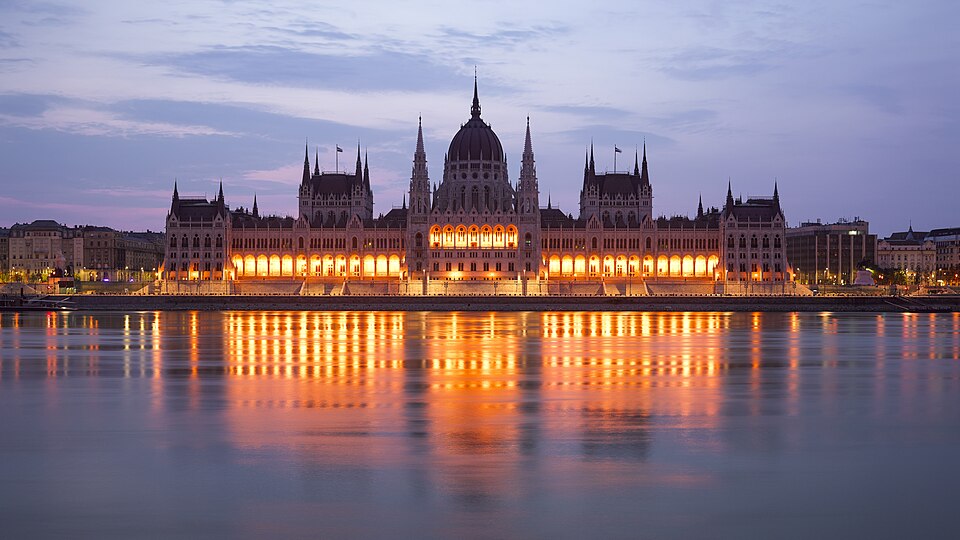
- Budapest lies on the Danube — Buda on the hilly right bank and Pest on the flat left bank were separate towns until they were united in 1873; the Danube is Europe's second-longest river and drains to the Black Sea
- Cologne (Köln) lies on the left bank of the Rhine in North Rhine-Westphalia, and grew out of the Roman colony that gave it its name
- New Orleans lies on the Mississippi in Louisiana, near the river's delta; the Missouri is a tributary of the Mississippi and joins it just above St. Louis, and the Missouri's own cities are Kansas City, Omaha and Bismarck
- Hyderabad lies on the Musi, 'a major tributary of the Krishna River in the Deccan Plateau', which divides the historic Old City from the newer city; it is dammed upstream at Osman Sagar (1920) and Himayat Sagar (1927), both built after the catastrophic Musi flood of 28 September 1908
- The Paleru is a separate Krishna tributary that flows through Khammam district in Telangana — dammed at Paleru village in Kusumanchi in Nizam times — and joins the Krishna near Mukteswarapuram in Jaggayyapeta mandal of Krishna district, Andhra Pradesh
- The same UPPSC method of pairing a city with a plausible neighbouring river recurs in UPSC's own papers — its 2009 question on this format made 'Berlin : Rhine' the wrong pair, because Berlin is on the Spree
- Answering the opposite question. The stem asks which pairs are NOT correctly matched; option (d) is the correct answer to 'which ARE correctly matched'. Circle the word NOT before you look at the options
- Assuming any big American river city is on the Missouri. The Missouri is a tributary; New Orleans is a Mississippi delta port more than 1,500 km downstream of the confluence
- Confusing the Musi with another Krishna tributary. The Paleru is a real river with a real reservoir, just not Hyderabad's — proximity of basin is exactly what makes the falsifier work
UPPSC likes the 'which of the following pairs is/are NOT correctly matched' format across geography — tributary and river, port and country, dam and river, city and river — and it usually plants one Indian pair among foreign ones so that a candidate strong in world geography can still be caught at home. UPSC asks the same content but more often as a straight match-the-list (its 2005 paper matched Washington, Berlin, Paris and Madrid to the Potomac, Spree, Seine and Manzanares) or as a single not-matched pair.
Which one of the following pairs is not correctly matched ? City — River (a) Berlin : Rhine (b) London : Thames (c) New York : Hudson (d) Vienna : Danube
- (a) Berlin : Rhine
- (b) London : Thames
- (c) New York : Hudson
- (d) Vienna : Danube
Answer(a) Berlin : Rhine
The same question in the same format — 'City — River', pick the pair that is not correctly matched — and even one shared answer option, the Danube. UPSC's falsifier there works exactly as UPPSC's does here: Berlin is paired with the Rhine, a major German river, when Berlin actually stands on the Spree, just as New Orleans is paired here with the Missouri, a major American river that is not its own.
Match List-I with List-II and select the correct answer using the codes given below the lists: List-I (City) A. Washington D.C. B. Berlin C. Paris D. Madrid List-II (River) 1. River Manzanares 2. River Seine 3. River Spree 4. River Potomac
- (a) A-2 B-3 C-4 D-1
- (b) A-4 B-1 C-2 D-3
- (c) A-2 B-1 C-4 D-3
- (d) A-4 B-3 C-2 D-1
Answer(d) A-4 B-3 C-2 D-1
The positive version of the same drill — match four world capitals to the rivers they stand on. Working through Washington on the Potomac, Berlin on the Spree, Paris on the Seine and Madrid on the Manzanares builds precisely the stock of city–river pairs that the UPPSC question tests by inversion, and it fixes Berlin/Spree, which is the pair UPSC's not-matched question used as its trap.
Which one of the following (Tributary – River) is not correctly matched?
- (a) Manjra – Godavari
- (b) Hemavathi – Kaveri
- (c) Pranhita – Mahanadi
- (d) Malaprabha – Krishna
Answer(c) Pranhita – Mahanadi
The identical not-matched format applied to Indian rivers — 'which one of the following (Tributary – River) is not correctly matched'. Its wrong pair, Pranhita with the Mahanadi when the Pranhita is a Godavari tributary, is built on the same principle as this paper's Hyderabad–Paleru: attach a river to a basin it does not belong to, and count on the candidate recognising only the name.
The river situated along the border between the United States of America and Mexico is -
- (a) The Colorado
- (b) The Mississippi
- (c) The Amazon
- (d) The Rio Grande
Answer(d) The Rio Grande
Shows UPPSC's habit of putting one world-river item into a paper otherwise full of Indian geography, and of using the Mississippi as a plausible wrong option. Knowing that the Mississippi is the American interior's main stem — and that the Rio Grande, not the Mississippi, marks the Mexican border — is the same body of knowledge that fixes New Orleans on the Mississippi rather than the Missouri.
- practice — not a real PYQ
The Musi River, on whose banks Hyderabad stands, is a tributary of which river?
- (a)Godavari
- (b)Krishna
- (c)Penna
- (d)Cauvery
Answer(b) Krishna — the Musi rises in the Anantagiri hills, flows through Hyderabad dividing the Old City from the new, and joins the Krishna in the Deccan Plateau.
- practice — not a real PYQ
Consider the following pairs: 1. Vienna — Danube 2. Hamburg — Elbe 3. Rotterdam — Rhine How many of the pairs given above are correctly matched?
- (a)Only one
- (b)Only two
- (c)All three
- (d)None
Answer(c) All three — Vienna is on the Danube, Hamburg on the Elbe, and Rotterdam sits on the Rhine–Meuse delta, making it the Rhine's great seaport.