
Arrange the following in chronological order of their rule and select the correct answer from the code given below. 1. Bajirao I 2. Balaji Bajirao 3. Balaji Vishwanath 4. Madhav Rao I
- (a)1, 3, 2, 4
- (b)3, 1, 2, 4
- (c)3, 1, 4, 2
- (d)1, 3, 4, 2
Correct — B, 3, 1, 2, 4. The four are successive Peshwas of the Bhat family and they ruled in this order: Balaji Vishwanath (1713-1720), Bajirao I (1720-1740), Balaji Bajirao or Nanasaheb (1740-1761) and Madhavrao I (1761-1772). The sequence is also a clean father-to-son line — Balaji Vishwanath was Bajirao I's father, Bajirao I was Balaji Bajirao's father, and Madhavrao I was Balaji Bajirao's son — so remembering the family tree alone fixes the order. Balaji Vishwanath was appointed Peshwa by Chhatrapati Shahu in 1713 and made the office hereditary in his house; Madhavrao I took charge in 1761 in the wreckage left by the Third Battle of Panipat (14 January 1761) and is credited with the Maratha revival before his early death in 1772.
- (a)1, 3, 2, 4 — It puts Bajirao I ahead of Balaji Vishwanath, i.e. the son before the father. Bajirao I became Peshwa in 1720 only on the death of his father Balaji Vishwanath, who had held the office from 1713.
- (c)3, 1, 4, 2 — It gets the first two right but then reverses Madhavrao I and Balaji Bajirao. Balaji Bajirao ruled 1740-1761; Madhavrao I succeeded him in 1761 after Panipat, so Madhavrao I cannot come before him.
- (d)1, 3, 4, 2 — It combines both mistakes — Bajirao I placed before his father Balaji Vishwanath, and Madhavrao I placed before Balaji Bajirao. Only one of the four names is in its right slot.
The Peshwa was originally the chief minister of the Maratha Chhatrapati. Under Chhatrapati Shahu the office passed in 1713 to Balaji Vishwanath of the Bhat family and thereafter became hereditary, so that real executive power drifted from the Chhatrapati at Satara to the Peshwa at Pune. Through the eighteenth century the Peshwas — not the Chhatrapatis — directed Maratha expansion, and the Maratha polity became a confederacy of houses (Scindia, Holkar, Gaekwad, Bhonsle of Nagpur) loosely coordinated from Pune.
Chronology questions on the Peshwas are won by reconstructing the family, not by memorising eight dates. Balaji Vishwanath → his son Bajirao I → his son Balaji Bajirao (Nanasaheb) → his son Madhavrao I: four generations in a straight line, 1713 to 1772. Anchor it with one hard date each side — 1713 (Shahu appoints Balaji Vishwanath) and 1761 (Panipat kills Nanasaheb's power and brings in Madhavrao I). UPPSC recycles this set with different names inserted (Narayan Rao, Raghunath Rao, Madhavrao II follow after 1772), so learn the full succession rather than the four in front of you.
- Peshwa reigns: Balaji Vishwanath 1713-1720, Bajirao I 1720-1740, Balaji Bajirao (Nanasaheb) 1740-1761, Madhavrao I 1761-1772
- The succession continues Narayan Rao (1772-1773), Raghunath Rao (1773-1774) and Madhavrao II or Sawai Madhavrao (1774-1796)
- Balaji Vishwanath was made Peshwa by Chhatrapati Shahu in 1713 and reorganised Maratha revenue and administration, including the chauth and sardeshmukhi claims in the Deccan
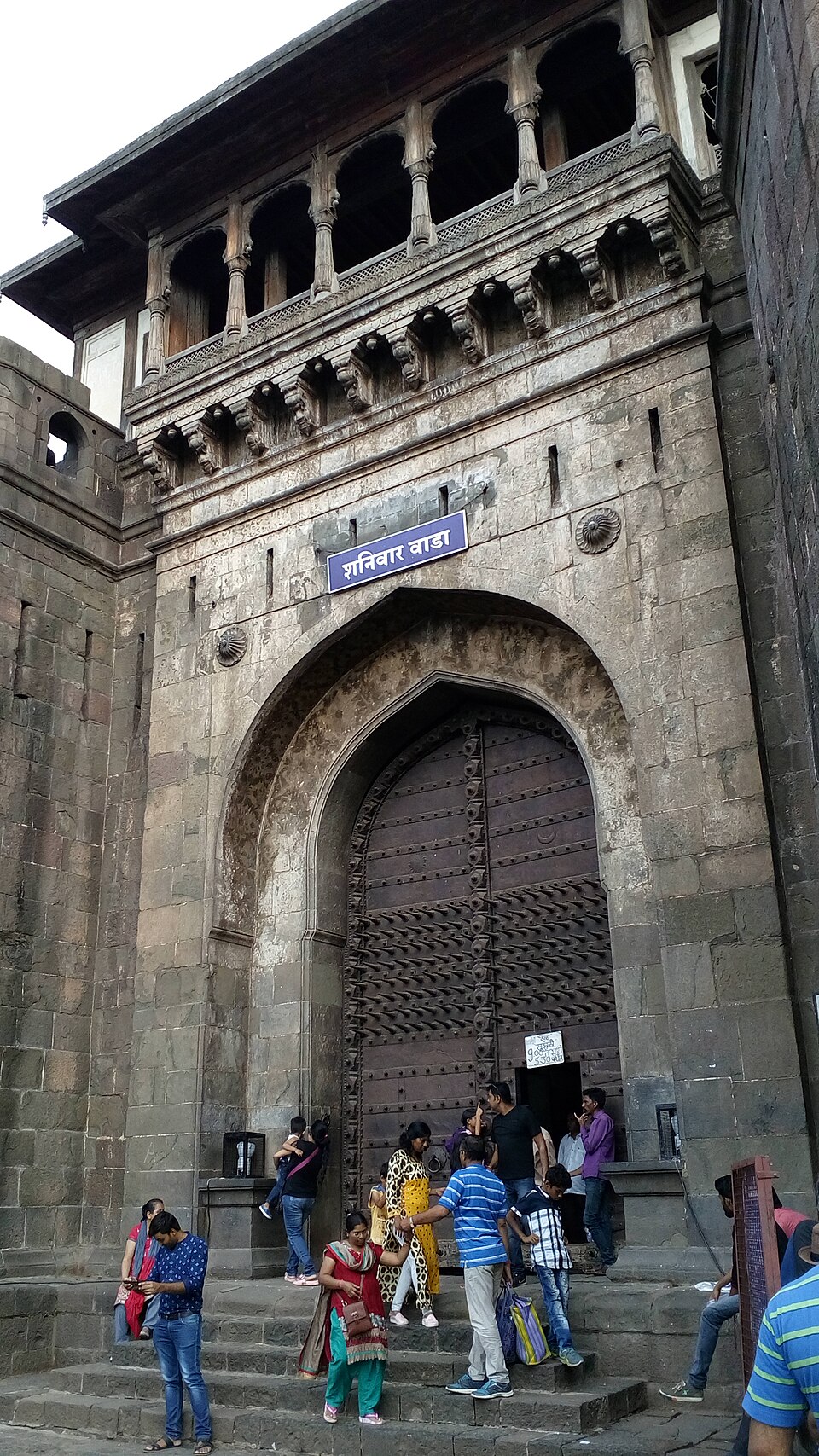
- Bajirao I laid the ceremonial foundation of Shaniwar Wada at Pune on 10 January 1730; the building was completed on 22 January 1732 — it became the Peshwas' seat
- Balaji Bajirao's tenure ended with the Third Battle of Panipat, 14 January 1761; Madhavrao I then presided over the recovery of Maratha power until his death in 1772
- Reading 'Balaji Bajirao' as 'Bajirao' and slotting him next to Bajirao I — they are father and son, twenty years apart
- Confusing Madhavrao I (Peshwa 1761-1772) with Madhavrao II / Sawai Madhavrao (1774-1796)
- Assuming the Chhatrapati ruled through this period — after 1713 executive power lay with the Peshwa at Pune, not at Satara
UPPSC asks the Peshwa succession as a pure 'arrange in chronological order' code question and has done so in consecutive cycles; UPSC prefers the analytical angle — who reorganised Maratha administration, which treaty ended which Anglo-Maratha war, or why the confederacy fragmented.
Who among the following streamlined the Maratha administration after Sambhaji?
- (a) Raja Ram
- (b) Balaji Viswanath
- (c) Ganga Bai
- (d) Nanaji Deshmukh
Answer(b) Balaji Viswanath
Same concept from the other end — it fixes Balaji Vishwanath as the first of the hereditary Peshwas and the administrative reorganiser, which is precisely why he heads the 2025 sequence.
Consider the reign of following Peshwas and arrange them in chronological order - (I) Balaji Viswanath (II) Bajirao I (III) Narayan Rao (IV) Madhav Rao I Select the correct answer using the code given below -
- (a) II, I, IV, III
- (b) I, II, IV, III
- (c) I, III, II, IV
- (d) I, II, III, IV
Answer(b) I, II, IV, III
Almost the same question two cycles earlier — three of the four names repeat and only Narayan Rao is swapped for Balaji Bajirao. Learning the full Peshwa succession once answers both.
- practice — not a real PYQ
Who among the following was the Peshwa of the Marathas at the time of the Third Battle of Panipat (1761)?
- (a)Bajirao I
- (b)Balaji Bajirao (Nanasaheb)
- (c)Madhavrao I
- (d)Narayan Rao
Answer(b) Balaji Bajirao (Nanasaheb) — he was Peshwa from 1740 to 1761 and died months after the defeat at Panipat; Madhavrao I succeeded him.
- practice — not a real PYQ
The office of Peshwa became hereditary in the Bhat family with the appointment of which of the following by Chhatrapati Shahu?
- (a)Bajirao I
- (b)Raghunath Rao
- (c)Balaji Vishwanath
- (d)Madhavrao II
Answer(c) Balaji Vishwanath — appointed Peshwa in 1713, after which the office passed within his family and became the real centre of Maratha power.