
With reference to ‘Brazil’ which of the following statements is/are correct ? 1. The equatorial rainforests of Brazil are called ‘Selvas’. 2. The dark black colour fertile land here is called ‘Terra Roxa’. Select the correct answer from the code given below : Code :
- (a)Only 2
- (b)Both 1 and 2
- (c)Neither 1 nor 2
- (d)Only 1
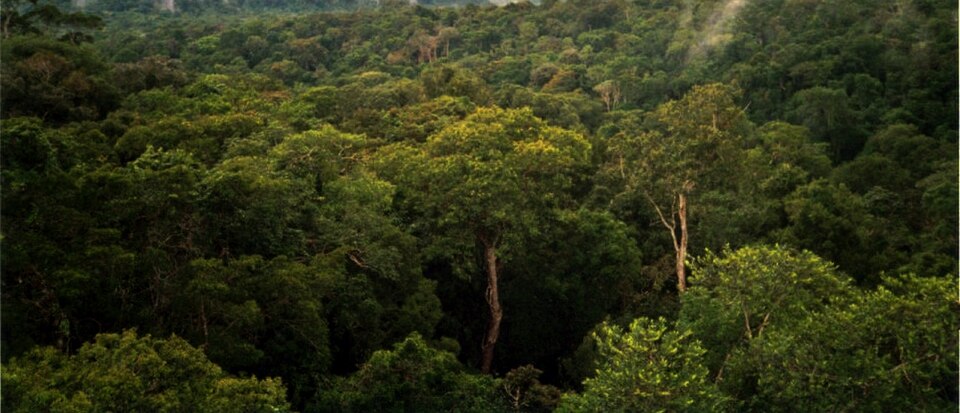
Correct — B, both 1 and 2. Statement 1 is the standard regional-geography term. 'Selva' is simply the Spanish and Portuguese word for forest or jungle, and it is the name the equatorial rainforest of the Amazon basin carries in regional geography — the Amazon rainforest is Selva Amazónica in Spanish. Brazil holds the largest share of that forest, so calling Brazil's equatorial rainforests the Selvas is correct. Statement 2 is also correct. Terra roxa is the name of the deep, dark, exceptionally fertile soil of southern Brazil, found across Paraná and São Paulo, and it is the soil on which Brazil's coffee belt was built — the coffee that leaves through Santos, long nicknamed the coffee port of the world. One honest qualification worth carrying into the exam hall rather than out of it: 'roxa' is Portuguese for purple, and the soil is more precisely a very dark reddish-purple than a true black. The question's phrase 'dark black colour' is a description of how dark and rich the soil looks, not a colour specification, and it is exactly how Indian regional-geography texts render terra roxa — comparing it, quite reasonably, with India's own dark and highly fertile black cotton soil. On the substance the question is pointing at the right soil under the right name, and the commission's key marks both statements correct.
- (a)Only 2 — Rejects statement 1, but statement 1 is sound. The equatorial rainforest of the Amazon basin is the Selvas, from the Spanish and Portuguese word for forest; Spanish names the Amazon rainforest Selva Amazónica. Candidates hesitate here because 'Selvas' sounds like an obscure invented term, when it is simply the local word for the forest in the local language.
- (c)Neither 1 nor 2 — Both statements are in fact correct, so this fails twice. It tempts anyone who has half-remembered that Amazonian soils are notoriously poor and leached and therefore assumes the whole soil statement must be wrong. That fact is true, but it is about the Amazon basin in the north; terra roxa is a different soil in a different part of the country, in the southern states of Paraná and São Paulo.
- (d)Only 1 — Rejects statement 2, usually on the ground that the famous fertile soil of Brazil is 'red', not 'black'. But terra roxa is precisely Brazil's dark, deeply fertile agricultural soil — the coffee soil of Paraná and São Paulo — and 'dark black colour fertile land' is how Indian geography texts describe it. Rejecting the statement on a shade of colour discards the only soil in Brazil that the description can possibly mean.
Regional geography gives the same physical feature different names in different parts of the world, and examiners love the resulting vocabulary. Brazil supplies two of the most-asked terms. The Selvas are the equatorial rainforest of the Amazon basin — hot and wet all year, with afternoon convectional thunderstorms, and a multi-storeyed structure of emergents, a closed canopy, sparse undergrowth, lianas and epiphytes. Terra roxa is something quite different and quite far south: the deep, dark, remarkably fertile soil of Paraná and São Paulo, classically described as the product of weathered volcanic rock, on which Brazil's coffee economy was built. The two belong to different parts of the country and should never be run together.
The question is really a vocabulary check with a geographical trap folded in. Both terms are Portuguese or Spanish words that Indian textbooks keep untranslated, which makes them feel harder than they are — selva just means forest, and roxa just means purple. The trap is the assumption that a spectacular rainforest must sit on spectacular soil. It does not. The Amazon's soils are heavily leached and poor in nutrients, and the forest sustains itself by cycling nutrients through the living biomass rather than by drawing on a rich soil store. Brazil's genuinely rich soil is terra roxa, several hundred kilometres to the south. A candidate who ties the two statements together and reasons 'the Amazon has bad soil, so statement 2 must be false' will mark the wrong answer; the statements are about different regions and stand or fall independently.
- Selva is the Spanish and Portuguese word for forest; the Amazon rainforest is Selva Amazónica in Spanish, and 'the Selvas' is the standard regional-geography name for the equatorial rainforest of the Amazon basin
- The equatorial climate that produces the Selvas is uniformly hot and wet through the year, with heavy afternoon convectional rain and no true dry season
- Terra roxa is a red-to-purple, dark and highly fertile soil common in southern and western Brazil, notably in the states of Paraná and São Paulo; 'roxa' is Portuguese for purple
- Terra roxa is the soil of Brazil's coffee belt, and Santos in São Paulo state grew on that trade to become known as the coffee port of the world
- Amazonian soils by contrast are heavily leached and nutrient-poor — the rainforest's fertility is stored in its biomass, not in its soil
- The same local-name pattern recurs across South America: Selvas for the equatorial forest, Campos for the Brazilian tropical grassland, Llanos for the Orinoco grassland and Pampas for the temperate grassland of Argentina
- Confusing terra roxa with terra rossa — the latter is the red clay soil that forms over limestone in Mediterranean karst country, an entirely different soil in an entirely different climate
- Assuming that because the Amazon rainforest is luxuriant, Amazonian soils must be fertile. They are leached and poor; the nutrients are held in the living forest
- Treating 'Selvas' as an exotic technical term. It is just the Spanish and Portuguese word for forest, and recognising that removes most of the difficulty
UPPSC sets this as a two-statement item on local geographical names, as here, or as a match-the-following pairing a vegetation or soil name with its region — it did exactly that in 2019 with Maquis, Fynbos, Chaparral and Matorral. UPSC prefers to describe the climate or the landscape in a short passage and ask candidates to name the region.
“Each day is more or less the same, the morning is clear and bright with a sea breeze; as the Sun climbs high in the sky, heat mounts up, dark clouds form, then rain comes with thunder and lightning. But rain is soon over.” Which of the following regions is described in the above passage?
- (a) Savannah
- (b) Equatorial
- (c) Monsoon
- (d) Mediterranean
Answer(b) Equatorial
Describes, without naming it, the climate that manufactures the Selvas — uniform heat, a morning sea breeze, and a short violent convectional downpour every afternoon. Recognising that regime is how you know a forest is equatorial rather than monsoon or savanna, and the Selvas are simply what that forest is called in the Amazon basin.
Which one of the following is known as the “Coffee port” of the world?
- (a) Sao Paulo
- (b) Santos
- (c) Rio de Janeiro
- (d) Buenos Aires
Answer(b) Santos
Santos is where terra roxa reaches the world. The coffee grown on the dark fertile soil of the São Paulo and Paraná belt is shipped from Santos, which is why that port and not a larger city carries the coffee nickname — the soil in statement 2 and this port are two ends of the same economic geography.
Match List – I with List – II and select the correct answer using the codes given below the lists. List – I (Vegetation Type) A. Maquis B. Fynbos C. Chaparral D. Matorral List – II (Region) 1. California 2. Mediterranean Sea Coastal Region 3. South Africa 4. Chile Codes :
- (a) A-2 B-3 C-1 D-4
- (b) A-4 B-3 C-2 D-1
- (c) A-3 B-4 C-1 D-2
- (d) A-4 B-2 C-3 D-1
Answer(a) A-2 B-3 C-1 D-4
Exactly the skill this question tests, in match-the-following form. Maquis, Fynbos, Chaparral and Matorral are four local names for one and the same Mediterranean scrub, just as Selvas is the local name for the equatorial rainforest. UPPSC returns to this vocabulary again and again.
Match List - I with List - II and select the correct answer using the codes given below the lists : List - I (Natural Vegetation) A. Epiphytes B. Acacia C. Baobab D. Cedars List - II (Region) 1. Mediterranean 2. Equatorial 3. Sahara 4. Savanna Codes :
- (a) A-2, B-3, C-4, D-1
- (b) A-2, B-3, C-1, D-4
- (c) A-2, B-4, C-3, D-1
- (d) A-2, B-4, C-1, D-3
Answer(a) A-2, B-3, C-4, D-1
Pins the equatorial forest by its plants rather than its name: epiphytes are matched to the equatorial region, the baobab to the savanna. The multi-storeyed, epiphyte-laden structure described there is the Selvas of the present question seen from the inside.
- practice — not a real PYQ
The tropical grassland of the Brazilian Highlands is known by which one of the following local names?
- (a)Llanos
- (b)Campos
- (c)Pampas
- (d)Selvas
Answer(b) Campos — the Brazilian tropical grassland; Llanos is the Orinoco grassland of Venezuela and Colombia, Pampas the temperate grassland of Argentina, and Selvas the equatorial rainforest of the Amazon basin.
- practice — not a real PYQ
Terra roxa, a dark and highly fertile soil, is most closely associated with the cultivation of which crop in Brazil?
- (a)Rubber
- (b)Coffee
- (c)Jute
- (d)Date palm
Answer(b) Coffee — terra roxa in Paraná and São Paulo is the soil of Brazil's coffee belt, whose exports built the port of Santos.