
With reference to the International Conference on Nuclear Security (ICONS – 2024), which of the following statements is/are correct ? 1. This conference was held on 25th May, 2024. 2. India has recently reconstituted an inter-ministerial Counter Nuclear Smuggling Team (CNST) to strengthen the nuclear security. Select the correct answer from the codes given below :
- (a)Only 2
- (b)Neither 1 nor 2
- (c)Only 1
- (d)Both 1 and 2
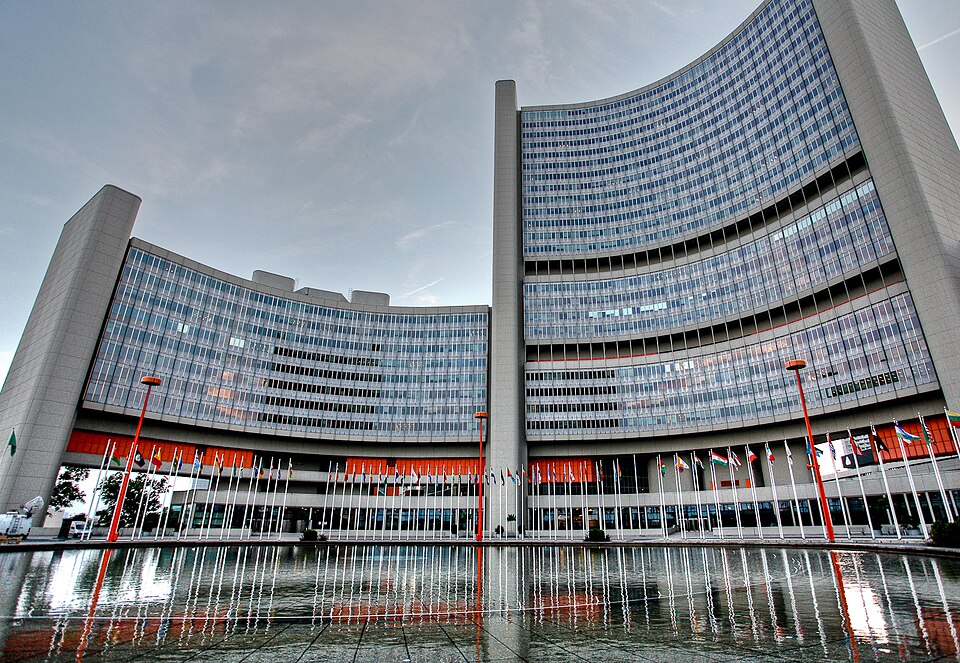
Correct — A, Only 2. Statement 1 is off by dates: the International Conference on Nuclear Security, ICONS 2024, ran from 20 to 24 May 2024 at the headquarters of the International Atomic Energy Agency in Vienna, not on 25 May 2024. It was the fourth in this series of ministerial-level conferences, held under the theme 'Shaping the Future', and it drew more than two thousand participants from some 142 countries — a week-long conference, in other words, not a one-day event, which is the structural giveaway that a single date is suspicious. Statement 2 stands. India has reconstituted its inter-ministerial Counter Nuclear Smuggling Team, the CNST, which brings the agencies concerned with prevention, detection, forensic investigation and prosecution of nuclear smuggling under one coordinating roof; India announced this in its national statement to ICONS 2024, delivered on 21 May 2024 by Ambassador Shambhu S. Kumaran. One statement true, one false, and the true one is the second — so the key marks (a). Note how the item is built, because UPPSC builds many of them this way: the substantive claim about India is accurate and the trap is planted in the ceremonial detail beside it.
- (b)Neither 1 nor 2 — Throws out the statement that is correct. India's reconstitution of the inter-ministerial Counter Nuclear Smuggling Team is real and was placed on record in India's own national statement to ICONS 2024 in May 2024.
- (c)Only 1 — Keeps the false half. ICONS 2024 was held from 20 to 24 May 2024 at IAEA headquarters in Vienna; 25 May is not the conference date, and in any case a quadrennial ministerial conference of this size runs across a week rather than a single day.
- (d)Both 1 and 2 — Accepts both, but the date in statement 1 does not survive checking. Statement 2 alone is correct, which is why the key is 'Only 2' and not 'Both 1 and 2'.
Three ideas that sound alike are examined separately and should be kept apart. Nuclear safety is about preventing accidents at a facility. Nuclear security is about protecting nuclear and other radioactive material from theft, sabotage, illegal transfer and trafficking — the criminal and terrorist threat rather than the technical one. Safeguards are the IAEA's verification activity, the inspections and accounting that confirm declared material is not diverted to weapons. ICONS is the IAEA's flagship conference on the middle one, nuclear security, convened roughly every four years since 2013 at ministerial level in Vienna, and it is where states report what they have done to secure material and to police trafficking.
The trap here is a lone precise-looking date attached to a multi-day international conference — the same device UPPSC used elsewhere in this paper. When a statement pins a summit or conference to a single day, ask whether the event is the kind that lasts a day; ministerial conferences at the IAEA, like ICONS, run across a week. The second statement, by contrast, is the kind of institutional detail that is nearly always true when it appears in a state PSC paper, because it comes from India's own official statement. Beyond the mechanics, note where India stands on this subject: it is not a member of the Nuclear Suppliers Group, but it is a party to the Convention on the Physical Protection of Nuclear Material and its 2005 Amendment, its Additional Protocol with the IAEA took effect in 2014, and it runs the Global Centre for Nuclear Energy Partnership in Haryana as a training centre of excellence in nuclear security and allied fields.
- ICONS 2024, the International Conference on Nuclear Security, was held from 20 to 24 May 2024 at IAEA headquarters in Vienna under the theme 'Shaping the Future' — the fourth edition of this roughly quadrennial ministerial conference, with over 2,000 participants from about 142 countries.
- India has reconstituted an inter-ministerial Counter Nuclear Smuggling Team (CNST) covering prevention, detection, forensic investigation and prosecution of nuclear smuggling; India's national statement to ICONS 2024 was delivered on 21 May 2024 by Ambassador Shambhu S. Kumaran.
- Nuclear security (protection of material against theft, sabotage and trafficking) is distinct from nuclear safety (prevention of accidents) and from IAEA safeguards (verification that declared material is not diverted).
- The Nuclear Security Summits of 2010–2016 were a separate, United States-initiated head-of-government process that has ended; ICONS is the IAEA's own conference series and is the one still running.
- Confusing ICONS with the Nuclear Security Summits. The Summits were a US-initiated process of 2010–2016 held at head-of-government level and are over; ICONS is the IAEA's own conference series in Vienna.
- Blurring nuclear security, nuclear safety and safeguards. Examiners test the boundary between them far more often than they test any single fact about a conference.
- Accepting a single-day date for a week-long ministerial conference. In this item that is exactly where the planted error sits.
UPPSC frames these as two-statement items pairing a conference date with an Indian institutional step, and plants the error in the date. UPSC asks the conceptual question instead — under whose aegis a process is held, what safeguards mean, or what membership of a regime would actually give India.
Consider the following statements: 1. The Nuclear Security Summits are periodically held under the aegis of the United Nations. 2. The International Panel on Fissile Materials is an organ of International Atomic Energy Agency. Which of the statements given above is/are correct?
- (a) 1 only
- (b) 2 only
- (c) Both 1 and 2
- (d) Neither 1 nor 2
Answer(d) Neither 1 nor 2
The same subject tested at the institutional level — who convenes nuclear-security processes and which bodies are actually part of the IAEA. Knowing that the Nuclear Security Summits were not UN events, and that ICONS is the IAEA's own series, is what keeps the two apart in an item like this one.
In India, why are some nuclear reactors kept under “IAEA Safeguards” while others are not?
- (a) Some use uranium and others use thorium
- (b) Some use imported uranium and others use domestic supplies
- (c) Some are operated by foreign enterprises and others are operated by domestic enterprises
- (d) Some are State-owned and others are privately-owned
Answer(b) Some use imported uranium and others use domestic supplies
Sets the boundary this card insists on: IAEA safeguards are about verifying that material is not diverted, and in India they apply to reactors running on imported fuel. Nuclear security, the subject of ICONS, is a different function altogether — protecting material from theft and trafficking.
- practice — not a real PYQ
The International Conference on Nuclear Security (ICONS) is convened under the aegis of
- (a)the United Nations Security Council
- (b)the International Atomic Energy Agency
- (c)the Nuclear Suppliers Group
- (d)the Comprehensive Nuclear-Test-Ban Treaty Organization
Answer(b) the International Atomic Energy Agency — ICONS is the IAEA's ministerial-level conference series on nuclear security, held at its Vienna headquarters, the 2024 edition running from 20 to 24 May 2024. The Nuclear Security Summits, by contrast, were a separate US-initiated process that ended in 2016.
- practice — not a real PYQ
In the context of the IAEA, 'nuclear security' is best described as
- (a)measures to prevent accidents at nuclear installations and limit their consequences
- (b)verification that declared nuclear material is not diverted to weapons programmes
- (c)protection of nuclear and other radioactive material against theft, sabotage and illegal transfer or trafficking
- (d)the international agreement limiting the number of nuclear warheads a state may hold
Answer(c) protection of nuclear and other radioactive material against theft, sabotage and illegal transfer or trafficking. Option (a) describes nuclear safety and option (b) describes safeguards; both are distinct IAEA functions.