Which of the following is/are stated in the Constitution of India ? 1. The President shall not be a member of either of the Houses of the Parliament. 2. The Parliament shall consist of the President and both Houses. Select the correct answer from the codes given below :
- (a)Both 1 and 2
- (b)Only 2
- (c)Neither 1 nor 2
- (d)Only 1
Correct — A, Both 1 and 2. Each statement reproduces the express language of an Article, which is exactly what the question demands ("is/are stated in the Constitution"). Statement 1 is Article 59(1): "The President shall not be a member of either House of Parliament or of a House of the Legislature of any State, and if a member of either House of Parliament or of a House of the Legislature of any State be elected President, he shall be deemed to have vacated his seat in that House on the date on which he enters upon his office as President." Statement 2 is Article 79: "There shall be a Parliament for the Union which shall consist of the President and two Houses to be known respectively as the Council of States and the House of the People." Both are therefore stated in the Constitution, and the two sit together without contradiction: the President is a constituent part of Parliament without being a member of either House — the Indian version of the British 'King-in-Parliament'. That is why no Bill passed by the two Houses becomes law until the President assents to it under Article 111, and why the President summons and prorogues the Houses (Article 85), addresses them (Articles 86–87) and promulgates ordinances when Parliament is not in session (Article 123).
- (b)Only 2 — It accepts Article 79 but rejects Article 59(1). Article 59(1) is not an inference or a convention — it is written text, and it goes further than statement 1 by also barring the President from being a member of any State legislature and by deeming a sitting member's seat vacated the day he takes office as President.
- (c)Neither 1 nor 2 — Both statements are literal paraphrases of Articles 59(1) and 79 respectively, so neither can be rejected. This option would only work if the two rules were mere practice, which they are not.
- (d)Only 1 — This is the intended trap. It accepts the President's non-membership but denies that the Constitution makes the President part of Parliament — the common misconception that 'Parliament = Lok Sabha + Rajya Sabha'. Article 79 says otherwise in so many words. UPSC set the identical trap in 2012 (statement: 'According to the Constitution of India, the Parliament consists of the Lok Sabha and the Rajya Sabha only' — marked incorrect).
India's Parliament is a three-limbed institution: the President, the Council of States (Rajya Sabha) and the House of the People (Lok Sabha). The President is a part of the legislature but not a member of it — an office that stands inside Parliament for the purpose of law-making yet outside both Houses for the purpose of membership. This is inherited from the Westminster idea of the Crown-in-Parliament, and it is what makes the presidential assent under Article 111 a legislative step rather than a courtesy.
Statement-pair questions of this kind reward students who can separate 'what the text says' from 'what people assume'. Two habits create wrong answers here. The first is the schoolbook shorthand that Parliament means the two Houses, which makes statement 2 look false. The second is confusing 'not a member of either House' with 'not part of Parliament', which makes statements 1 and 2 look mutually contradictory — they are not. Anchor the answer on the two Article numbers: 59(1) for the disqualification, 79 for the composition. Note also that the ban runs in both directions in time: a sitting MP or MLA who is elected President is deemed to have vacated that seat on the day he enters office, so the Constitution does not force him to resign first.
- Article 79 — 'There shall be a Parliament for the Union which shall consist of the President and two Houses to be known respectively as the Council of States and the House of the People.'
- Article 59(1) — the President shall not be a member of either House of Parliament or of a House of the Legislature of any State; a member elected President is deemed to have vacated his seat on the date he enters upon office.
- Article 59(2) bars the President from holding any other office of profit; Article 59(3) guarantees emoluments and allowances that cannot be diminished during the term.
- The President's legislative functions flow from being part of Parliament: summoning and proroguing the Houses and dissolving the Lok Sabha (Article 85), the special address (Articles 86–87), assent to Bills (Article 111), and ordinances (Article 123).
- The President nominates 12 members to the Rajya Sabha for special knowledge or practical experience in literature, science, art and social service (Article 80). The separate power to nominate Anglo-Indians to the Lok Sabha under Article 331 lapsed on 25 January 2020 with the 104th Constitutional Amendment.
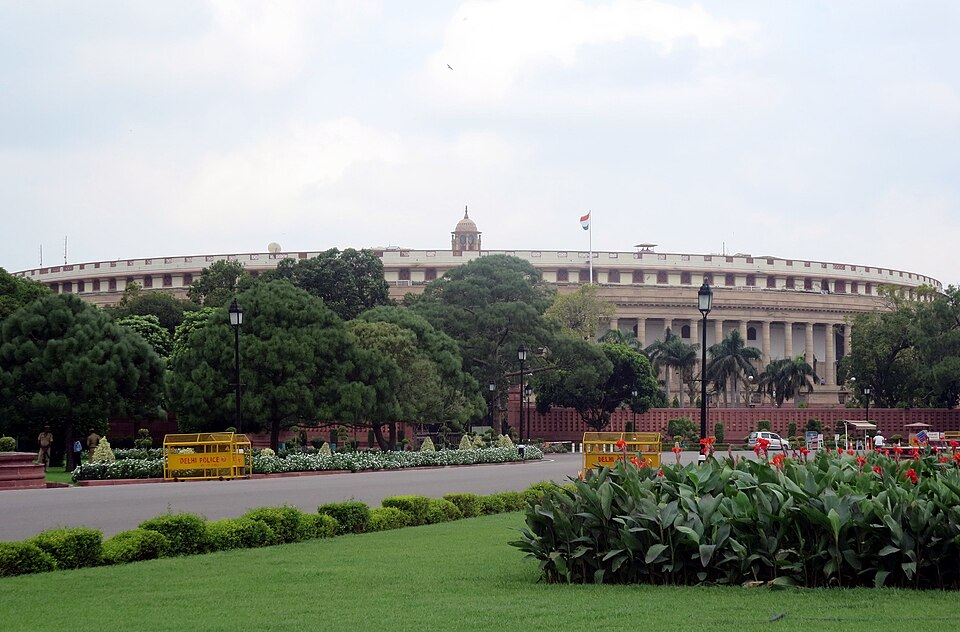
- Believing that 'Parliament' means only the Lok Sabha and the Rajya Sabha. Article 79 includes the President.
- Treating statements 1 and 2 as contradictory. Being a constituent part of Parliament and being a member of a House are two different things.
- Forgetting that Article 59(1) also bars membership of a State legislature, and that an elected member's seat is deemed vacated automatically rather than by resignation.
Both UPPSC and UPSC test this as a 'which of these is stated in the Constitution' pair or as an Assertion–Reason item where the assertion is 'The President is a part of the Parliament' and the reason is the assent requirement under Article 111.
Which one of the following are/is stated in the Constitution of India? I. The President shall not be a member of either House of Parliament. II. The Parliament shall consist of the President and two Houses. Choose the correct answer from the codes given below:
- (a) Neither I nor II
- (b) Both I and II
- (c) I alone
- (d) II alone
Answer(b) Both I and II
The same question, statement for statement — UPPSC has reproduced a 1997 UPSC prelims item almost verbatim, with the options merely reshuffled.
Consider the following statements : 1. Union Territories are not represented in the Rajya Sabha. 2. It is within the purview of the Chief Election Commissioner to adjudicate the election disputes. 3. According to the Constitution of India, the Parliament consists of the Lok Sabha and the Rajya Sabha only. Which of the statements given above is/are correct?
- (a) 1 only
- (b) 2 and 3
- (c) 1 and 3
- (d) None
Answer(d) None
Its third statement is precisely the misconception behind option (d) here — 'Parliament consists of the Lok Sabha and the Rajya Sabha only' is marked incorrect because Article 79 includes the President.
Given below are two statements, one is labelled as Assertion (A) and other as Reason (R) - Assertion (A) - The President is a part of the Parliament. Reason (R) - A bill passed by the two Houses of the Parliament cannot become a law without the assent of the President. Select the correct answer using the code given below -
- (a) Both (A) and (R) are true but (R) is not correct explanation of (A)
- (b) (A) is true but (R) is false
- (c) (A) is false but (R) is true
- (d) Both (A) and (R) are true and (R) is correct explanation of (A)
Answer(d) Both (A) and (R) are true and (R) is correct explanation of (A)
The same proposition as statement 2, asked as Assertion–Reason: the President is part of Parliament, and the assent requirement under Article 111 is why.
With reference to the special address of the President of India, which of the following statements is/are correct ? 1. The President addresses the joint meeting of both houses of Parliament at the commencements of the first session after each general election of the house of the people and at the commencement of the first session of each year. 2. The President in his address informs the Parliament of the causes of its summons. Select the correct answer using the codes given below. Codes :
- (a) 1 only
- (b) 2 only
- (c) Both 1 and 2
- (d) Neither 1 nor 2
Answer(c) Both 1 and 2
The practical consequence of the same rule — because Article 79 makes the President part of Parliament, Article 87 gives the President a special address to both Houses assembled together.
- practice — not a real PYQ
Which Article of the Constitution of India provides that Parliament shall consist of the President and two Houses?
- (a)Article 74
- (b)Article 79
- (c)Article 80
- (d)Article 85
Answer(b) Article 79 — it names the two Houses as the Council of States and the House of the People; Article 80 deals with the composition of the Rajya Sabha and Article 85 with summoning and prorogation.
- practice — not a real PYQ
A sitting member of the Lok Sabha is elected President of India. As per the Constitution, his seat in the Lok Sabha:
- (a)Continues until he formally resigns it
- (b)Is deemed to have been vacated on the date he enters upon his office as President
- (c)Is deemed to have been vacated on the date the election result is declared
- (d)Continues, since the President is a part of Parliament
Answer(b) Is deemed to have been vacated on the date he enters upon his office as President — the express wording of Article 59(1).