
Consider the following days and arrange them in chronological order : 1. World Health Day 2. National Maritime Day 3. World Athletics Day 4. World Red Cross Day Select the correct answer from the codes given below :
- (a)4, 2, 3, 1
- (b)2, 1, 3, 4
- (c)2, 3, 4, 1
- (d)3, 2, 1, 4
Correct — B, 2, 1, 3, 4. 'Chronological order' here means the order in which the four observances fall across the calendar year, and all four sit in a five-week window in April and May. (2) National Maritime Day is India's own observance, on 5 April, marking the sailing of the SS Loyalty of the Scindia Steam Navigation Company from Bombay to the United Kingdom in 1919 — the first voyage on that route by an Indian-owned ship at a time when the sea lanes were British-controlled. (1) World Health Day is on 7 April, the anniversary of the coming into force of the Constitution of the World Health Organization in 1948; the First World Health Assembly fixed the date, to run from 1950 onwards. (3) World Athletics Day is commonly given as 7 May — it was instituted by the international athletics federation to promote athletics among schoolchildren, and Indian general-studies compendia print 7 May. (4) World Red Cross and Red Crescent Day is on 8 May, the birth anniversary of Henry Dunant, born at Geneva on 8 May 1828, whose account of the battlefield at Solferino led to the founding of the International Committee of the Red Cross; he received the first Nobel Peace Prize in 1901. So 5 April → 7 April → 7 May → 8 May, which is 2, 1, 3, 4 — option (b). One honest caveat for a student who likes precision: the athletics day is the only soft entry in the set. Unlike the other three it has never had a single fixed statutory date, and the federation's own observances have been held on different days in May in different years. It does not change the answer, because every date on record for it falls after 7 April and around 8 May, and no option other than (b) survives the two dates in April.
- (a)4, 2, 3, 1 — Puts World Red Cross Day first and World Health Day last. Red Cross Day is 8 May and World Health Day is 7 April, so this reverses the only pair in the set that most candidates already know. Both the first and last positions are wrong.
- (c)2, 3, 4, 1 — Starts correctly with National Maritime Day on 5 April but then pushes World Health Day to the very end, behind both the May observances. World Health Day is 7 April — just two days after Maritime Day — so it must be second, not fourth.
- (d)3, 2, 1, 4 — Places World Athletics Day, in May, ahead of National Maritime Day and World Health Day, which are both in the first week of April. The order of the last three is otherwise right, but leading with the May observance breaks the sequence at the first step.
Important-days questions are pure recall, but the recall is cheaper if each date is attached to the event it commemorates rather than memorised as a bare number. Three of the four here are anniversary-derived: 5 April is the SS Loyalty's 1919 voyage, 7 April is the day the WHO Constitution entered into force in 1948, and 8 May is Henry Dunant's birthday. Learn the story and the date comes with it. The fourth, World Athletics Day, is a promotional observance created by a sports federation rather than an anniversary, which is exactly why its date is the least firmly fixed of the four.
Treat a 'days' question as a calendar-sorting exercise, not a memory test. Sort what you are sure of first: World Health Day on 7 April and World Red Cross Day on 8 May are the two most widely known, and simply placing 7 April before 8 May kills option (a). National Maritime Day on 5 April then has to come before World Health Day, which kills (d). Between (b) and (c) the question is only whether World Health Day is second or last, and since it is 7 April it cannot be last — so (b). Notice you never actually needed to know the date of World Athletics Day. That is the general lesson: in a four-item sequence you rarely need all four dates, only enough of them to leave one option standing.
- National Maritime Day (India) — 5 April. It commemorates the voyage of the SS Loyalty, the first ship of the Scindia Steam Navigation Company, from Bombay to the United Kingdom in 1919, the first such passage by an Indian-owned vessel on a British-controlled route.
- World Health Day — 7 April, the anniversary of the entry into force of the WHO Constitution in 1948. The First World Health Assembly, held in 1948, resolved that 7 April be observed as World Health Day with effect from 1950.
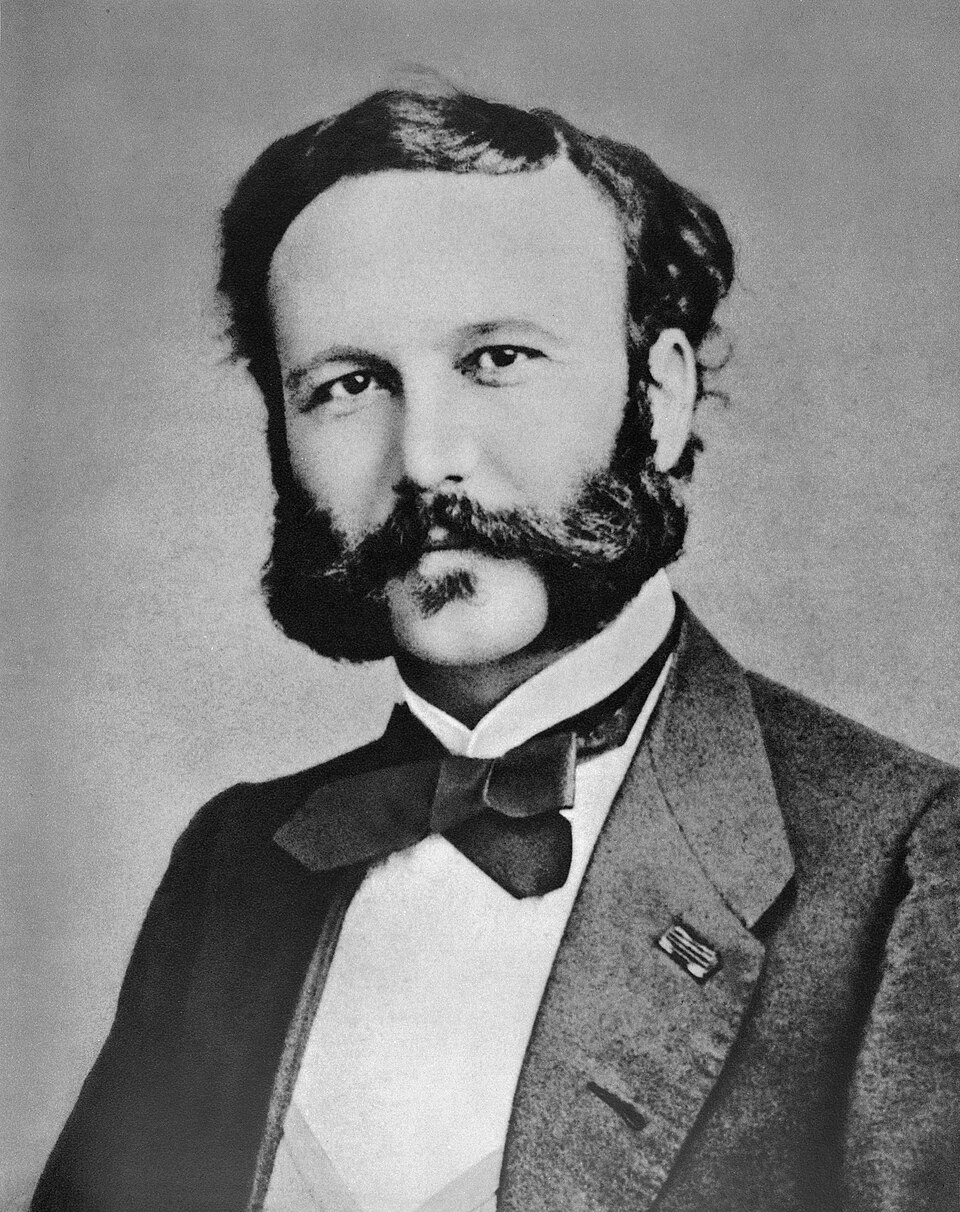
- World Red Cross and Red Crescent Day — 8 May, the birth anniversary of Henry Dunant (born Geneva, 8 May 1828), founder of the International Committee of the Red Cross and the first recipient of the Nobel Peace Prize in 1901. First observed on 8 May 1948; the present name was adopted in 1984.
- World Athletics Day — usually cited as 7 May. It was created by the international athletics federation to encourage athletics among young people, but it is a promotional observance without a fixed statutory date, and events under the name have in practice been held on different days in May in different years. For the exam, remember it as an early-May observance that falls after World Health Day.
- Reading 'chronological order' in a days question as the year the observance was instituted rather than its position in the calendar. UPPSC means the calendar order.
- Mixing up World Health Day (7 April) with World Health Assembly sessions in May, or with World Hypertension Day (17 May) and World No Tobacco Day (31 May).
- Assuming every observance has a single fixed date. World Athletics Day and observances like World Habitat Day (first Monday of October) move; anniversary-based days such as 7 April and 8 May do not.
UPPSC asks days either as a straight single-date question ('World Ozone Day is celebrated on…') or, as here, as a chronological sequence with coded options; UPSC has historically preferred the match-list form, pairing an important day with its date.
Match List I with List II and select the correct answer using the codes given below the Lists: List I (Important Day) I. World Environment Day II. World Forestry Day III. World Habitat Day IV. World Ozone Day List II (Date) A) March 20 B) June 5 C) September 16 D) October 3 E) December 10
- (a) I-B, II-A, III-D, IV-E
- (b) I-A, II-B, III-D, IV-C
- (c) I-A, II-B, III-C, IV-D
- (d) I-B, II-A, III-D, IV-C
Answer(d) I-B, II-A, III-D, IV-C
The same content asked in UPSC's preferred form — important day matched to its date. It also shows why the caveat about World Athletics Day matters: World Habitat Day here is the first Monday of October, a movable date the examiner had to pin to a particular year.
'World Ozone Day' is celebrated on
- (a) 25th December
- (b) 21st April
- (c) 16th September
- (d) 30th January
Answer(c) 16th September
The single-date form of the same topic, and a demonstration of the anniversary rule that solves this whole category: 16 September is the day the Montreal Protocol was signed, just as 7 April is the day the WHO Constitution came into force.
Which of the following is known as "World Wetlands Day"?
- (a) 1 February
- (b) 2 February
- (c) 10 January
- (d) 15 January
Answer(b) 2 February
Confirms that UPPSC returns to important days almost every year, and again the date is an anniversary — the Ramsar Convention was signed on 2 February 1971.
- practice — not a real PYQ
India's National Maritime Day, observed on 5 April, commemorates which event?
- (a)The founding of the Indian Navy in 1612
- (b)The maiden voyage of the SS Loyalty from Bombay to the United Kingdom in 1919
- (c)The nationalisation of the Shipping Corporation of India in 1961
- (d)The opening of the Suez Canal in 1869
Answer(b) The maiden voyage of the SS Loyalty, the first ship of the Scindia Steam Navigation Company, which sailed from Bombay for the United Kingdom in 1919 — the first Indian-owned vessel to make that passage on a route the British then controlled.
- practice — not a real PYQ
World Red Cross and Red Crescent Day is observed on 8 May because that date marks
- (a)the signing of the first Geneva Convention
- (b)the founding of the International Committee of the Red Cross
- (c)the birth anniversary of Henry Dunant
- (d)the adoption of the Red Crescent emblem by the Ottoman Empire
Answer(c) The birth anniversary of Henry Dunant, born at Geneva on 8 May 1828. His account of the battlefield of Solferino led to the creation of the Red Cross, and he was awarded the first Nobel Peace Prize in 1901.