
Given below are two statements, one is labelled as Assertion (A) and the other as Reason (R). Assertion (A) : CO2, SO2 and NO2 gases get dissolved in rain water and produce acid rain. Reason (R) : Atmospheric air is polluted due to high concentration of gases like carbon dioxide, sulphur dioxide and oxides of nitrogen. Select the correct answer from the codes given below :
- (a)Both (A) and (R) are true and (R) is the correct explanation of (A).
- (b)(A) is false, but (R) is true.
- (c)Both (A) and (R) are true, but (R) is not the correct explanation of (A).
- (d)(A) is true, but (R) is false.
Correct — A, both (A) and (R) are true and (R) is the correct explanation of (A). Taken as written, the assertion describes the standard mechanism of acid deposition: acidic oxides in the air dissolve in atmospheric moisture and come down as acidified precipitation. Sulphur dioxide dissolves to sulphurous acid and is oxidised to sulphuric acid; nitrogen dioxide gives nitrous and nitric acid; carbon dioxide dissolves to carbonic acid. The reason then supplies the cause the assertion presupposes — rain turns acidic only because the air carries these oxides in raised concentrations, chiefly from coal-fired power stations and smelters (SO2) and from high-temperature combustion in engines and furnaces (NOx). Because the pollutant loading is precisely what makes the dissolution happen on a scale that acidifies rainfall, (R) explains (A) rather than merely sitting alongside it, and the key marks (a). One refinement a serious student should carry, because UPSC has examined exactly this point: of the three gases named, only sulphur and nitrogen oxides yield the strong acids that define acid rain. Carbon dioxide dissolves to give carbonic acid, which is weak and is already present in clean air, so it sets the natural baseline — unpolluted rain has a pH of about 5.6 — and 'acid rain' is conventionally defined as precipitation more acidic than that baseline. In UPSC Prelims 2003 an assertion–reason item on this very subject was keyed (b) on the ground that oxides of carbon are not the principal acid-rain precursors. UPPSC's item is worded differently: its reason does not single out carbon, it names all three oxides as the pollution load, so the pairing holds together and (a) stands.
- (b)(A) is false, but (R) is true. — Rejected because the assertion is not false. Each of the three named gases genuinely dissolves in water to yield an acid — SO2 to sulphurous and then sulphuric acid, NO2 to nitrous and nitric acid, CO2 to carbonic acid — and the resulting acidified precipitation is what is called acid rain. One could argue the assertion is imprecise for putting carbon dioxide on the same footing as the sulphur and nitrogen oxides, but imprecision is not falsity, and the key treats the statement as true.
- (c)Both (A) and (R) are true, but (R) is not the correct explanation of (A). — This is the trap option, and it fails on the logic rather than on the facts. Both statements are indeed true, but they are not independent observations: the assertion describes the effect and the reason states the cause. Acidic oxides can only dissolve into rain in acidifying amounts if they are present in the air in raised concentrations, which is exactly what (R) asserts. Where a reason supplies the necessary condition for the assertion's mechanism, it is the correct explanation, so (c) understates the link.
- (d)(A) is true, but (R) is false. — The reason is not false. Elevated atmospheric concentrations of carbon dioxide, sulphur dioxide and nitrogen oxides are the defining signature of anthropogenic air pollution — SO2 overwhelmingly from burning sulphur-bearing coal and from ore smelting, NOx from combustion at high temperature in vehicles and boilers, CO2 from all fossil-fuel burning. All three are listed pollutants under India's National Ambient Air Quality Standards, so (R) is a plain statement of fact.
Acid rain is precipitation — rain, snow, fog or dry deposited particles — made abnormally acidic by pollutant gases. Even clean rain is mildly acidic, because atmospheric carbon dioxide dissolves in it to form carbonic acid, giving a pH of roughly 5.6; rainfall measurably below that figure is called acid rain. The extra acidity comes from sulphur dioxide and oxides of nitrogen, which are oxidised in the atmosphere and combine with water to give sulphuric and nitric acid — strong acids, unlike carbonic acid. Because the reaction happens while the air mass is moving, the damage often falls hundreds of kilometres downwind of the chimney that caused it, which is why acid rain became the classic example of transboundary pollution.
An assertion–reason item is decided in two steps: first judge each statement on its own, then ask whether the second is the cause of the first. Here both statements survive step one, so the whole question turns on step two, and the temptation is to settle for (c) — the safe-looking 'both true but unrelated' option that examiners use to catch candidates who do not test the causal link. Test it explicitly: rain acidifies *because* the air is loaded with these oxides, so the reason is the cause and not a coincidence. Note also the direction of the wording. UPPSC's reason names all three gases as the pollution load, which keeps the pairing coherent; had the reason singled out oxides of carbon as the acidifying agent, the correct code would flip, which is exactly what happened in the UPSC 2003 version of this question. Read what the reason actually claims before choosing.
- Unpolluted rain has a pH of about 5.6 because dissolved atmospheric CO2 forms weak carbonic acid; precipitation below that pH is termed acid rain, and readings of about 4 to 5 are common in badly affected regions.
- The strong acids in acid rain come from SO2 (to sulphurous, then sulphuric acid) and from oxides of nitrogen (to nitrous and nitric acid). Coal-fired thermal power stations and metal smelters are the main SO2 sources; NOx is formed wherever combustion runs hot, including in vehicle engines.
- The term 'acid rain' was coined by the Scottish chemist Robert Angus Smith in 1852 from his study of rainfall around industrial Manchester.
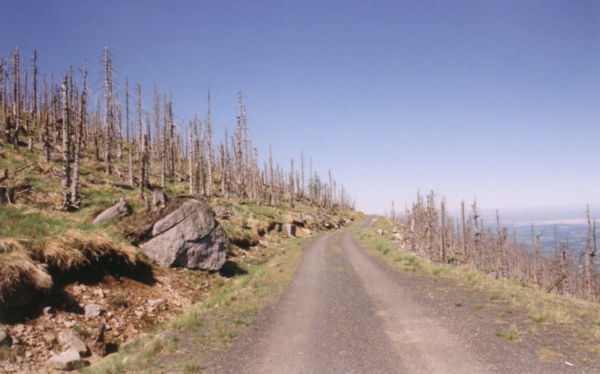
- Acid rain acidifies lakes and soils, leaches nutrients and mobilises toxic aluminium, causes forest dieback, and corrodes carbonate stone — CaCO3 in marble and limestone reacts with sulphuric acid to form soluble gypsum, the 'marble cancer' cited in the campaign to protect the Taj Mahal, which led to the Taj Trapezium Zone restrictions on polluting industry.
- Acid deposition is transboundary — emissions travel with the air mass and fall far downwind — which is why it was tackled by treaty, through the 1979 Convention on Long-Range Transboundary Air Pollution and its sulphur protocols.
- Settling for 'both true but R is not the explanation' without actually testing causation — it is the most-chosen wrong option in assertion–reason items.
- Treating carbon dioxide as an acid-rain gas in every context. It does form carbonic acid and sets rain's natural pH of about 5.6, but acid rain proper is attributed to SO2 and NOx; UPSC has keyed a question specifically on that distinction, so read whether the statement is about the acidity baseline or about the pollution that pushes rain below it.
- Mixing acid rain up with the greenhouse effect or with ozone depletion. Acid rain is caused by SO2 and NOx, warming by CO2, methane and other greenhouse gases, and ozone-layer damage by CFCs and halons.
This area is a UPPSC and UPSC staple in three formats — assertion–reason on the mechanism, 'which of the following gases cause acid rain', and a match or statement item on effects such as monument corrosion. The examinable core is short: SO2 and NOx give the strong acids, CO2 sets the natural pH of about 5.6, and the damage travels downwind.
Assertion (A): Coal-based thermal power stations contribute to acid rain. Reason (R): Oxides of carbon are emitted when the coal burns.
- (a) Both A and R are individually true and R is the correct explanation of A
- (b) Both A and R are individually true but R is NOT the correct explanation of A
- (c) A is true but R is false
- (d) A is false but R is true
Answer(b) Both A and R are individually true but R is NOT the correct explanation of A
The same assertion–reason structure on acid rain, but keyed differently — and the contrast is the lesson. There the reason singled out oxides of carbon, which are not the principal acid-rain precursors, so the link broke and the answer was 'both true but R does not explain A'. Here the reason names the sulphur and nitrogen oxides too, so the causal link holds.
Consider the following: 1. Oxides of Hydrogen 2. Oxides of Nitrogen 3. Oxides of Sulphur Which of the above causes/cause acid rain?
- (a) 1 and 2 only
- (b) 3 only
- (c) 2 and 3 only
- (d) 1, 2 and 3
Answer(c) 2 and 3 only
Isolates the chemistry the assertion depends on: which oxides actually acidify rain. Fixing that only nitrogen and sulphur oxides are the standard answer is what lets you judge the UPPSC assertion's inclusion of carbon dioxide with confidence rather than panic.
Smog is essentially caused by the atmospheric presence of
- (a) Oxygen and ozone
- (b) Ozone and nitrogen
- (c) Oxygen and nitrogen
- (d) Oxide of nitrogen and sulphur
Answer(d) Oxide of nitrogen and sulphur
The same pollutant pair asked through the other classic effect of urban air pollution. Smog and acid rain are two outcomes of one chemistry — oxides of nitrogen and sulphur in the lower atmosphere — so the two items reinforce each other.
- practice — not a real PYQ
The approximate pH of unpolluted rain water, below which precipitation is classified as acid rain, is:
- (a)7.0
- (b)6.5
- (c)5.6
- (d)4.0
Answer(c) 5.6 — dissolved atmospheric carbon dioxide forms weak carbonic acid, so even clean rain is mildly acidic at about pH 5.6; readings below this are treated as acid rain, and values around 4 to 5 are common downwind of heavy coal use.
- practice — not a real PYQ
The corrosion of marble monuments such as the Taj Mahal by acid rain, sometimes called 'marble cancer', occurs because sulphuric acid reacts with marble to form:
- (a)Calcium sulphate
- (b)Calcium carbonate
- (c)Calcium silicate
- (d)Calcium nitride
Answer(a) Calcium sulphate — marble is calcium carbonate, and sulphuric acid converts it to calcium sulphate (gypsum), which is softer, bulkier and washes away, pitting and dulling the stone. Concern over this drove the Taj Trapezium Zone controls on polluting industry around Agra.