
Which one of the following is the targeted group under the 'Pradhan Mantri Swanidhi Scheme' ?
- (a)Marginal farmers
- (b)Dairy farmers
- (c)Landless agricultural labourers
- (d)Street vendors
Correct — D, Street vendors. The scheme's own name says so: PM SVANidhi stands for Pradhan Mantri Street Vendor's AtmaNirbhar Nidhi. It was launched on 1 June 2020 by the Ministry of Housing and Urban Affairs, with SIDBI as the implementing agency, to put working capital back into the hands of urban street vendors whose earnings had collapsed in the COVID-19 lockdown. Eligibility is defined around that trade and no other: a vendor must have been vending on or before 24 March 2020 and must be identified by the urban local body, holding either a Certificate of Vending or a Letter of Recommendation from the ULB or Town Vending Committee. The credit is a collateral-free working-capital loan that grows with repayment — 10,000 rupees in the first cycle, 20,000 in the second and 50,000 in the third — with a 7 per cent annual interest subsidy credited directly to the vendor's bank account for timely repayment, plus a monthly cashback of 50 to 100 rupees for using digital payments.
- (a)Marginal farmers — PM SVANidhi is an urban scheme run by the Ministry of Housing and Urban Affairs; marginal farmers are served by a different set of instruments — the Kisan Credit Card for crop credit and PM-KISAN for income support, both under the agriculture ministry.
- (b)Dairy farmers — Dairy support runs through cooperative societies, the National Dairy Development Board and dedicated dairy infrastructure funds under the animal husbandry and dairying department. Nothing in PM SVANidhi's eligibility — a vending certificate from an urban local body — fits a dairy farmer.
- (c)Landless agricultural labourers — The livelihood guarantee for rural landless labour is MGNREGA, with rural livelihood support through the Deendayal Antyodaya Yojana. PM SVANidhi lends to a person who runs a micro-business on a street in a town; being landless is neither a qualification nor a disqualification under it.
PM SVANidhi sits at the meeting point of two policy strands. One is the recognition of street vending as a lawful occupation rather than an encroachment, given statutory shape by the Street Vendors (Protection of Livelihood and Regulation of Street Vending) Act, 2014, which requires urban local bodies to survey vendors, constitute Town Vending Committees and issue Certificates of Vending. The other is micro-credit for people the formal banking system will not lend to because they have no collateral and no credit history. PM SVANidhi links the two: the vending certificate created by the 2014 Act becomes the identity document that unlocks a small collateral-free loan, and repaying that loan builds the digital and credit footprint that lets the vendor borrow more next time.
The name is the answer here, and the lesson generalises: many Indian scheme names encode their beneficiary, and 'SVANidhi' is an acronym built on 'Street Vendor'. If the name gives nothing away, the next question to ask is which ministry runs the scheme, because that fixes the rural–urban and sectoral boundary immediately. PM SVANidhi belongs to the Ministry of Housing and Urban Affairs, which rules out all three farm-sector distractors at a stroke. The scheme is also anchored in time — it was a COVID-19 response launched in June 2020, two years before this exam.
- PM SVANidhi = Pradhan Mantri Street Vendor's AtmaNirbhar Nidhi; launched 1 June 2020 by the Ministry of Housing and Urban Affairs, with SIDBI as implementing agency
- Eligibility: vendors vending on or before 24 March 2020, identified by the urban local body, with a Certificate of Vending or a Letter of Recommendation from the ULB or Town Vending Committee
- Collateral-free working-capital loan ladder: 10,000 rupees, then 20,000 on timely repayment, then 50,000
- Interest subsidy of 7 per cent a year credited directly to the beneficiary's bank account for timely repayment
- Cashback of 50 to 100 rupees a month for digital transactions, designed to build a digital footprint and a credit history
- The statutory backdrop is the Street Vendors (Protection of Livelihood and Regulation of Street Vending) Act, 2014, which created vending certificates and Town Vending Committees
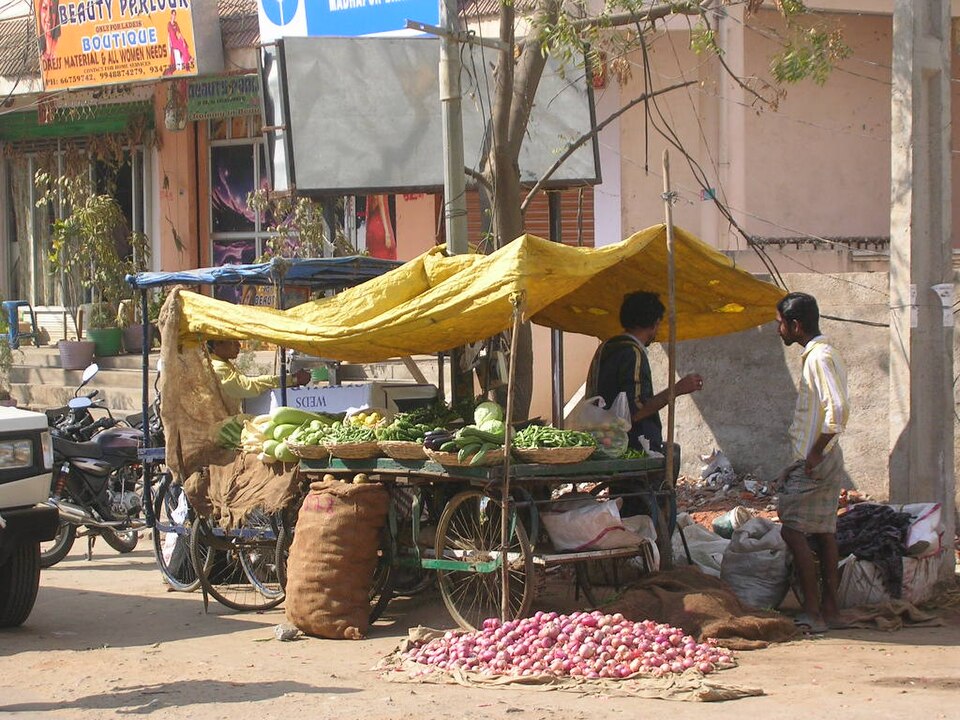
- Reading 'Nidhi' as a farm or pension fund; the beneficiary here is defined by an urban vending certificate, not by land or livestock
- Confusing PM SVANidhi (Ministry of Housing and Urban Affairs, street vendors) with PM MUDRA Yojana (Ministry of Finance, small non-farm enterprises generally)
- Assuming it is a grant — it is a repayable loan, and the benefit is that it needs no collateral and carries an interest subsidy
UPPSC asks schemes as one-line target-group or launch-year recall, or as a match-list of scheme to year or ministry. UPSC does not ask the target group; it asks how a scheme works — who refinances it, what the eligibility condition is, whether a particular claim about it is true — so learn the ministry, the year and one distinguishing design feature for every scheme in the news.
Pradhan Mantri MUDRA Yojana is aimed at
- (a) bringing the small entrepreneurs into formal financial system
- (b) providing loans to poor farmers for cultivating particular crops
- (c) providing pensions to old and destitute persons
- (d) funding the voluntary organizations involved in the promotion of skill development and employment generation
Answer(a) bringing the small entrepreneurs into formal financial system
The same idea one rung up. MUDRA and PM SVANidhi both push collateral-free credit at people the banking system normally refuses, with the aim of pulling them into the formal financial system; MUDRA covers non-farm micro-enterprises generally, PM SVANidhi one specific urban trade.
With reference to ‘Stand Up India Scheme’, which of the following statements is/are correct? 1. Its purpose is to promote entrepreneurship among SC/ST and women entrepreneurs. 2. It provides for refinance through SIDBI. Select the correct answer using the code given below:
- (a) 1 only
- (b) 2 only
- (c) Both 1 and 2
- (d) Neither 1 nor 2
Answer(c) Both 1 and 2
The delivery machinery behind schemes of this kind, and the format UPSC prefers — a target group plus an institutional fact. SIDBI, which refinances Stand Up India, is also the implementing agency for PM SVANidhi.
Pradhan Mantri Mudra Yojana comes under which of the following ? 1. Ministry of Corporate Affairs 2. Ministry of Rural Development 3. Ministry of Finance Select the correct answer from the code given below : Code :
- (a) 1 and 2
- (b) 2 and 3
- (c) Only 3
- (d) Only 1
Answer(c) Only 3
The scheme-to-ministry test, and a useful contrast. MUDRA sits under the Ministry of Finance while PM SVANidhi sits under Housing and Urban Affairs — attaching each scheme to its ministry is what eliminates the three farm-sector options in this question.
- practice — not a real PYQ
The PM SVANidhi scheme is implemented by which Union Ministry?
- (a)Ministry of Finance
- (b)Ministry of Rural Development
- (c)Ministry of Housing and Urban Affairs
- (d)Ministry of Micro, Small and Medium Enterprises
Answer(c) Ministry of Housing and Urban Affairs — PM SVANidhi is an urban scheme for street vendors, delivered through urban local bodies with SIDBI as implementing agency.
- practice — not a real PYQ
Which legislation requires urban local bodies to constitute Town Vending Committees and issue Certificates of Vending to street vendors?
- (a)The Street Vendors (Protection of Livelihood and Regulation of Street Vending) Act, 2014
- (b)The Unorganised Workers' Social Security Act, 2008
- (c)The Micro, Small and Medium Enterprises Development Act, 2006
- (d)The Code on Social Security, 2020
Answer(a) The Street Vendors (Protection of Livelihood and Regulation of Street Vending) Act, 2014 — the vending certificate it created is what PM SVANidhi uses to identify eligible borrowers.