
Match List – I with List – II and select the correct answer from the code given below the lists. List – I (Day) A. April 18 B. May 22 C. July 29 D. December 5 List – II (Event) 1. International Tiger Day 2. World Heritage Day 3. World Soil Day 4. International Day of Biodiversity Code :
- (a)A-1, B-2, C-3, D-4
- (b)A-3, B-2, C-1, D-4
- (c)A-4, B-3, C-2, D-1
- (d)A-2, B-4, C-1, D-3
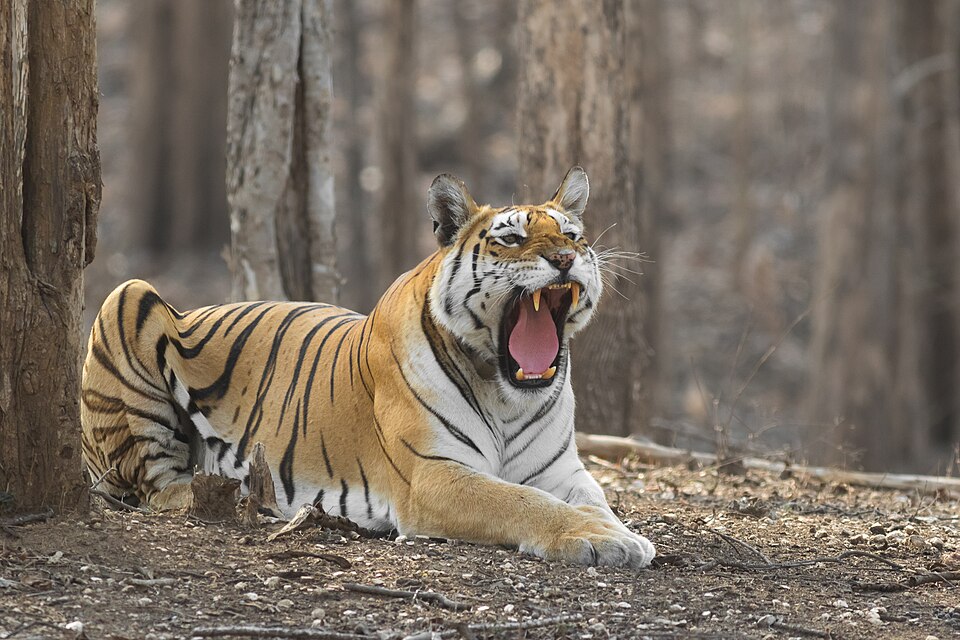
Correct — D, A-2, B-4, C-1, D-3. All four pairings check out against the record of how each observance was created. A-2: 18 April is the International Day for Monuments and Sites, which is what the paper calls World Heritage Day; it was proposed by the International Council on Monuments and Sites (ICOMOS) on 18 April 1982 and approved by UNESCO's General Conference at its 22nd session in 1983. B-4: 22 May is the International Day for Biological Diversity — the date on which the text of the Convention on Biological Diversity was adopted in 1992. It was not the original date: from 1993 to 2000 the day was kept on 29 December, the anniversary of the Convention's entry into force, and the UN moved it to 22 May on 20 December 2000, partly because late December is crowded with other observances. C-1: 29 July is International (Global) Tiger Day, created in 2010 at the St Petersburg Tiger Summit in Russia to build support for protecting tiger habitat. D-3: 5 December is World Soil Day, designated by the sixty-eighth session of the United Nations General Assembly on 20 December 2013. Read the list in that order — 18 April heritage, 22 May biodiversity, 29 July tiger, 5 December soil — and only option (d) reproduces it.
- (a)A-1, B-2, C-3, D-4 — Every one of the four pairs is wrong. It puts Tiger Day in April, World Heritage Day in May, World Soil Day in July and Biodiversity Day in December. The December 5 – Biodiversity pairing is the only one with any historical echo, since the biodiversity day did sit in late December until 2000 — but on 29 December, not 5 December, and it has been on 22 May ever since.
- (b)A-3, B-2, C-1, D-4 — It gets only C-1 (29 July – Tiger Day) right. It swaps the other three, putting World Soil Day in April instead of December, World Heritage Day in May instead of April, and Biodiversity Day in December instead of May.
- (c)A-4, B-3, C-2, D-1 — All four pairs are misplaced. It shifts every event one slot out of position — Biodiversity to April, Soil to May, Heritage to July and Tiger to December — so not a single date matches its observance.
International observance days are anchors for whole treaty and programme regimes, and the anchor is usually a date from the treaty's own history. 22 May is the International Day for Biological Diversity because the text of the Convention on Biological Diversity was adopted on that day in 1992; the day was originally kept on 29 December, the anniversary of the Convention entering into force, and was shifted in December 2000. 18 April, the International Day for Monuments and Sites, came from a professional body rather than a treaty — ICOMOS proposed it in 1982 and UNESCO's General Conference endorsed it the following year. 29 July, International Tiger Day, was created at a summit of tiger range states in St Petersburg in 2010, and 5 December, World Soil Day, was designated by the UN General Assembly in December 2013.
Matching questions on international days are pure recall, so the way to make them cheap is to store the dates by theme rather than one by one. The environment calendar clusters: 22 March water, 22 April Earth Day, 22 May biodiversity, 5 June environment, 29 July tiger, 16 September ozone, 5 December soil. Notice that this set gives you three of the four rows straight away and the fourth — 18 April, heritage — is the only cultural rather than environmental item in the list, so it takes the only date that is not part of the environment cluster. The tempting error is the pull of 5 June and 22 May towards each other: World Environment Day and Biodiversity Day sit two weeks apart in the same season and both trace back to 1992-era environmental diplomacy, so candidates who half-remember 'the big environment day is in the middle of the year' can slide the biodiversity date around.
- 18 April — International Day for Monuments and Sites, commonly called World Heritage Day; proposed by ICOMOS on 18 April 1982 and approved by UNESCO's General Conference at its 22nd session in 1983.
- 22 May — International Day for Biological Diversity, marking the adoption of the text of the Convention on Biological Diversity in 1992; observed on 29 December from 1993 to 2000 and moved to 22 May on 20 December 2000.
- 29 July — International (Global) Tiger Day, established in 2010 at the St Petersburg Tiger Summit in Russia to promote a global system for protecting tiger habitat.
- 5 December — World Soil Day, designated by the sixty-eighth session of the UN General Assembly on 20 December 2013.
- The neighbouring dates that this set is usually tested against: 22 March World Water Day, 5 June World Environment Day and 16 September World Ozone Day, the last marking the signing of the Montreal Protocol.
- Sliding the biodiversity date onto 5 June. World Environment Day is 5 June; the International Day for Biological Diversity is 22 May.
- Confusing 18 April, World Heritage Day, with November 1972, when the World Heritage Convention itself was adopted. The observance and the convention have different anniversaries.
- Mixing 5 December (World Soil Day) with 22 March (World Water Day) or 3 March (World Wildlife Day) — three separate resource-themed observances that examiners rotate through the same option slots.
Both examinations set this as a four-row date-to-event match or as a 'which pair is NOT correctly matched' item, and increasingly as a chronological-ordering question where you must sequence four observances within the calendar year. UPPSC has used all three forms in consecutive papers, so learn the dates as an ordered calendar rather than as isolated pairs.
Match List I with List II and select the correct answer using the codes given below the Lists: List I (Important Day) I. World Environment Day II. World Forestry Day III. World Habitat Day IV. World Ozone Day List II (Date) A) March 20 B) June 5 C) September 16 D) October 3 E) December 10
- (a) I-B, II-A, III-D, IV-E
- (b) I-A, II-B, III-D, IV-C
- (c) I-A, II-B, III-C, IV-D
- (d) I-B, II-A, III-D, IV-C
Answer(d) I-B, II-A, III-D, IV-C
The same day-to-date match in UPSC's own hand, and it shares the two anchor dates of the environment calendar — 5 June for environment and 16 September for ozone — that this UPPSC set is set against.
Which of the following pairs is/are NOT correctly matched ? (Day) - (Date) 1. International Ozone Day - 16 September 2. World Environment Day - 5 June 3. World Wildlife Day - 22 March Select the correct answer from the code given below : Code:
- (a) 1 and 3
- (b) 2 and 3
- (c) Only 3
- (d) Only 1
Answer(c) Only 3
The same calendar tested in the negative form — World Wildlife Day is 3 March, not 22 March, which is World Water Day. Exactly the neighbouring-date confusion this 2022 match is built on.
Consider the following events and arrange them in chronological order : 1. World Heritage Day 2. World Thyroid Day 3. World No Tobacco Day 4. International Day of Light Select the correct answer from the codes given below :
- (a) 3, 1, 2, 4
- (b) 1, 4, 2, 3
- (c) 2, 3, 1, 4
- (d) 4, 2, 3, 1
Answer(b) 1, 4, 2, 3
World Heritage Day appears again, this time as the earliest of four observances to be ordered — showing that UPPSC expects the calendar to be known as a sequence, not just as isolated pairs.
- practice — not a real PYQ
The International Day for Biological Diversity is observed on 22 May because that date marks the
- (a)entry into force of the Convention on Biological Diversity
- (b)adoption of the text of the Convention on Biological Diversity in 1992
- (c)opening of the Rio Earth Summit
- (d)adoption of the Nagoya Protocol
Answer(b) adoption of the text of the Convention on Biological Diversity in 1992 — the day was earlier kept on 29 December, the anniversary of the Convention's entry into force, and was moved to 22 May in December 2000.
- practice — not a real PYQ
Global Tiger Day, observed on 29 July, was instituted at a summit held in
- (a)Nairobi
- (b)New Delhi
- (c)St Petersburg
- (d)Rio de Janeiro
Answer(c) St Petersburg — the 2010 Tiger Summit in Russia created the observance to build support for protecting tiger habitat.