
With reference to the Deep Carbon Observatory (DCO) which of the following statements is/are correct ? 1. It is Global Research Programme to outreach role of carbon on earth. 2. It conducts field observations of deep microbial ecosystem. Select the correct answer using the codes given below : Codes :
- (a)1 only
- (b)2 only
- (c)Both 1 and 2
- (d)Neither 1 nor 2
Correct — C, Both 1 and 2. The Deep Carbon Observatory was a ten-year international research programme, launched in August 2009 with support from the Alfred P. Sloan Foundation, whose stated purpose was to transform our understanding of carbon inside the Earth — how much there is, where it sits, how it moves and where it came from. That is exactly what statement 1 describes (the paper's English is clumsy — 'outreach' here stands for exploring and communicating carbon's role in the Earth), so statement 1 is correct. Statement 2 is correct too, and it is the part students most often doubt: the DCO was organised into four research communities — Deep Life, Reservoirs and Fluxes, Extreme Physics and Chemistry, and Deep Energy — and the Deep Life community did precisely field work on subsurface microbial ecosystems, sampling microbes from deep continental boreholes, deep mines and sub-seafloor sediments. Its headline result was that this 'deep biosphere' holds roughly 15 to 23 billion tonnes of carbon in living microbial matter, far below any sunlight. Both statements being correct, the answer is (c). The programme was topical for a December 2019 paper because its decadal run was closing in 2019-20 and its deep-life findings were being reported through 2018-19.
- (a)1 only — This rejects statement 2, but field observation of deep microbial ecosystems was one of the DCO's four core work-streams — its Deep Life community sampled microbes from boreholes, mines and sub-seafloor sediments and estimated the size of Earth's deep biosphere.
- (b)2 only — This rejects statement 1, yet the DCO was by definition a global research programme on the role of carbon in the Earth — that is the whole meaning of its name and its ten-year mandate.
- (d)Neither 1 nor 2 — Both statements are accurate descriptions of the DCO, so denying both cannot be right.
Almost all of Earth's carbon is not in the air, the oceans or living things on the surface — it is locked in rocks, sediments, the crust and the mantle. That deep reservoir is not inert: carbon moves down into the mantle at subduction zones and comes back up through volcanoes and vents, on timescales of millions of years. This 'slow' or deep carbon cycle sets the long-term background level of atmospheric carbon dioxide, and a whole biosphere of microbes lives inside it, feeding on chemical energy rather than sunlight. The Deep Carbon Observatory was the coordinated international effort to measure that hidden system.
You can reason to (c) without recalling programme details. Statement 1 is little more than a restatement of the name — an 'observatory' for 'deep carbon' is obviously a research effort about carbon inside the Earth. Statement 2 asks whether such a programme would study deep microbes; the deep biosphere is precisely the part of the deep-carbon story that made news, since a large mass of living carbon sits kilometres below the surface. Neither statement contains the sort of over-specific claim (a date, a number, an agency) that examiners normally use to make a statement false, so 'both correct' is the safe reading.
- The Deep Carbon Observatory was launched in August 2009 as a decadal (ten-year) global research programme, initiated with support from the Alfred P. Sloan Foundation.
- It worked through four communities: Deep Life, Reservoirs and Fluxes, Extreme Physics and Chemistry, and Deep Energy.
- Its Deep Life community carried out field sampling of subsurface microbial ecosystems in continental boreholes, deep mines and sub-seafloor sediments.
- It estimated that Earth's deep biosphere contains about 15 to 23 billion tonnes of carbon in subsurface microbial life.
- The programme's ten-year run was concluding around 2019-20, which is why it appeared in the news near this December 2019 paper.
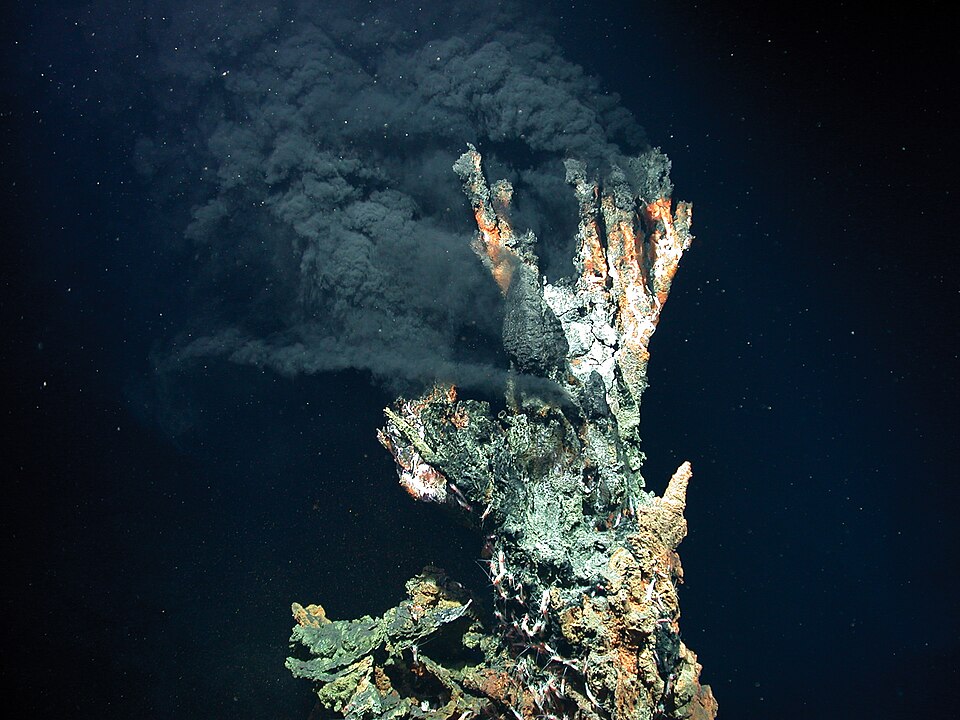
- Confusing the Deep Carbon Observatory with satellite programmes of similar name, such as NASA's Orbiting Carbon Observatory, which measures atmospheric CO2 from space.
- Assuming the DCO is a UN body or a treaty organisation — it was a scientist-led research programme, not an intergovernmental institution.
- Reading 'deep microbial ecosystem' as ocean plankton; the deep biosphere means life inside rocks and sediments, not in sunlit surface water.
UPPSC tends to ask 'with reference to X, which statements are correct' about a programme or body that was in the news, while UPSC prefers the underlying science — what adds carbon dioxide to the carbon cycle, or which organisms live without sunlight.
Which of the following adds/add carbon dioxide to the carbon cycle on the planet Earth? 1. Volcanic action 2. Respiration 3. Photosynthesis 4. Decay of organic matter Select the correct answer using the code given below.
- (a) 1 and 3 only
- (b) 2 only
- (c) 1, 2 and 4 only
- (d) 1, 2, 3 and 4
Answer(c) 1, 2 and 4 only
Both questions rest on the same idea — that Earth's carbon cycle has a deep, geological limb. Volcanic degassing is the surface expression of exactly the deep carbon that the DCO was created to quantify.
The movement of nutrient elements through the various components of an ecosystem is called
- (a) Bio-geo-chemical cycle
- (b) Bio-geological cycle
- (c) Ecological succession
- (d) Biological cycle
Answer(a) Bio-geo-chemical cycle
The carbon cycle the DCO studied is a biogeochemical cycle; this 2020 item tests the same framework of elements moving between living and non-living components of the Earth system.
- practice — not a real PYQ
The Deep Carbon Observatory, a decadal international research programme that concluded around 2019-20, was primarily concerned with
- (a)monitoring atmospheric carbon dioxide from satellites
- (b)the quantities, movements, forms and origins of carbon inside the Earth
- (c)operating the global market in carbon credits
- (d)mapping soil organic carbon in agricultural land
Answer(b) The quantities, movements, forms and origins of carbon inside the Earth — the DCO studied deep carbon in the crust and mantle, including the microbial life that lives there.
- practice — not a real PYQ
The term 'deep biosphere' refers to
- (a)plankton communities in the sunlit surface layer of the oceans
- (b)microbial life living deep within continental rocks and sub-seafloor sediments
- (c)the layer of soil microbes just below the surface of forests
- (d)vegetation growing in deep river valleys and gorges
Answer(b) Microbial life living deep within continental rocks and sub-seafloor sediments — it survives on chemical energy rather than sunlight and holds a large mass of carbon.