
Which among the following was the first 100 percent organic state in the world?
- (a)Queensland (Australia)
- (b)California (United States of America)
- (c)Sikkim (India)
- (d)Quebec (Canada)
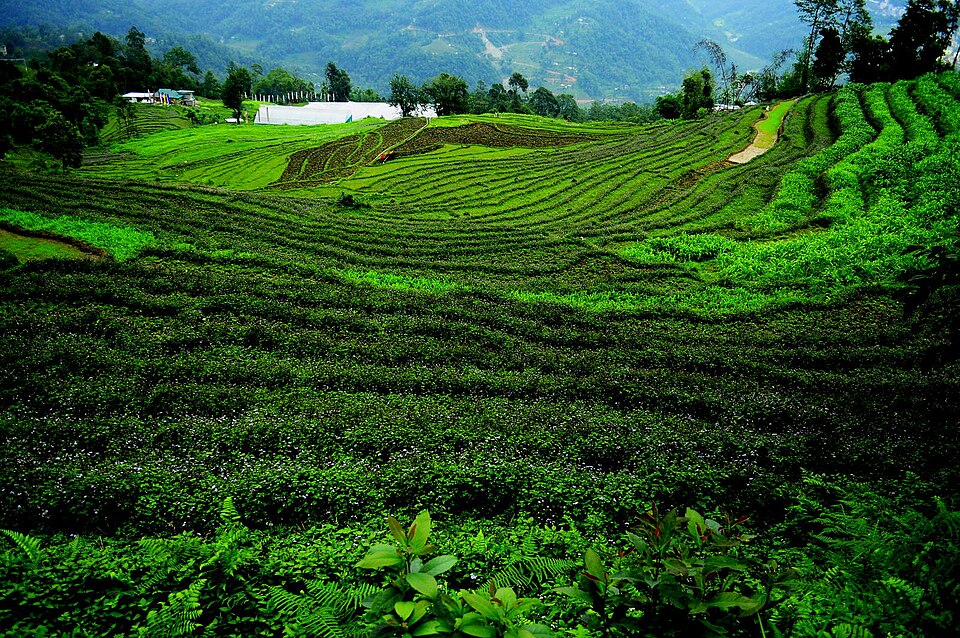
Correct — C, Sikkim (India). Sikkim took a policy decision in 2003 to convert every hectare of its farmland to organic cultivation, phased out and then banned the sale and use of chemical fertilisers and pesticides, and completed the conversion of roughly 75,000 hectares by 2015-16. Prime Minister Narendra Modi formally declared it India's first fully organic state at Gangtok on 18 January 2016. The claim in the question is the stronger one — not merely India's first but the world's first entire state or region to go 100 per cent organic — and it was internationally endorsed in 2018 when the FAO gave Sikkim's policy the Future Policy Gold Award, judging it the world's best policy promoting agroecology. Note what makes Sikkim different from any other 'organic' region: it is a legally enforced, state-wide conversion covering all farmland, not a voluntary certification scheme covering the farms that choose to join.
- (a)Queensland (Australia) — Australia has a very large certified-organic land area, which is what makes this option sound plausible, but no Australian state has converted all its farmland to organic. Organic certification there is voluntary and covers a share of holdings alongside conventional agriculture; there is no state-wide ban on synthetic fertilisers or pesticides.
- (b)California (United States of America) — California is a heavyweight in organic production and marketing, but organic there is a market segment served by voluntary certification under the US National Organic Program, not a state-wide agricultural regime. Conventional and organic farming operate side by side across the state.
- (d)Quebec (Canada) — Quebec has organic certification and support programmes like other Canadian provinces, but it has never declared or achieved fully organic status. This option is filler — its job is to make the list look like a set of rich-country candidates so that the Indian answer feels too modest to be right.
Organic farming rejects synthetic fertilisers, chemical pesticides and genetically modified seed, relying instead on compost, farmyard manure, biofertilisers, crop rotation and biological pest control. Almost everywhere in the world it operates as a voluntary, certified market niche: a farm opts in, is inspected, and sells at a premium. Sikkim is the exception that changed the vocabulary — the state converted its entire agricultural area by policy, backed by law, in a phased programme running from 2003 to 2016, so 'organic' there is the default condition of farming rather than a choice made farm by farm.
The reasoning short-cut is scale, not geography. A whole-territory conversion is only realistic where the farmed area is small, holdings are tiny, and chemical use was already low to begin with — which describes Sikkim, India's second-smallest state by area and one where hill agriculture had never been heavily chemicalised. That is precisely why the answer is a small Himalayan state and not California or Queensland, where millions of hectares of intensive commercial agriculture would have to be turned around. Candidates go wrong by assuming that a 'world first' in sustainability must belong to a developed country.
- Sikkim decided in 2003 to convert all its farmland to organic and completed the conversion by 2015-16; about 75,000 hectares were converted.
- It was declared India's first fully organic state on 18 January 2016 at Gangtok by Prime Minister Narendra Modi.
- The state phased out and then banned the sale and use of chemical fertilisers and pesticides — the conversion was legally enforced, not voluntary.
- Sikkim's organic policy won the FAO's Future Policy Gold Award in 2018 as the world's best policy promoting agroecology.
- Assuming a 'world's first' in sustainability must be a developed-country region — the answer here is an Indian state.
- Confusing 'India's first fully organic state' with 'the world's first' — Sikkim is both, but questions sometimes test only one of the two claims, and other Indian states have since announced organic ambitions without completing a conversion.
- Mixing up the year of the decision (2003) with the year of the declaration (2016) and the year of the FAO award (2018).
Both UPPSC and UPSC ask this either as a direct one-liner ('which was the first fully organic state') or embedded as one statement inside a multi-statement question on organic farming institutions, where the Sikkim statement is the true one and the ministry or agency named alongside it is the false one — so learn NPOP's parent ministry as carefully as you learn Sikkim.
With reference to organic farming in India, consider the following statements: 1. "The National Programme for Organic Production" (NPOP) is operated under the guidelines and directions of the Union Ministry of Rural Development. 2. "The Agricultural and Processed Food Products Export Development Authority" (APEDA) functions as the Secretariat for the implementation of NPOP. 3. Sikkim has become India's first fully organic State. Which of the statements given above is/are correct?
- (a) 1 and 2 only
- (b) 2 and 3 only
- (c) 3 only
- (d) 1, 2 and 3
Answer(b) 2 and 3 only
The same fact, one year earlier at UPSC — statement 3 is the Sikkim claim being tested here. It also supplies the institutional half UPPSC left out: NPOP sits under the Ministry of Commerce & Industry, with APEDA as its secretariat.
- practice — not a real PYQ
Sikkim's organic farming policy received which international recognition in 2018?
- (a)UNEP Champions of the Earth Award
- (b)FAO Future Policy Gold Award
- (c)UNESCO Biosphere Reserve status
- (d)Ramsar Award for Wetland Wise Use
Answer(b) FAO Future Policy Gold Award — awarded in 2018 for the world's best policy promoting agroecology.
- practice — not a real PYQ
In which year was Sikkim formally declared India's first fully organic state?
- (a)2003
- (b)2010
- (c)2016
- (d)2018
Answer(c) 2016 — declared on 18 January 2016 at Gangtok; 2003 was the year the conversion policy was adopted.