Which of the following substances is NOT a protein ?
- (a)Cotton
- (b)Hair
- (c)Spider silk
- (d)Hoof
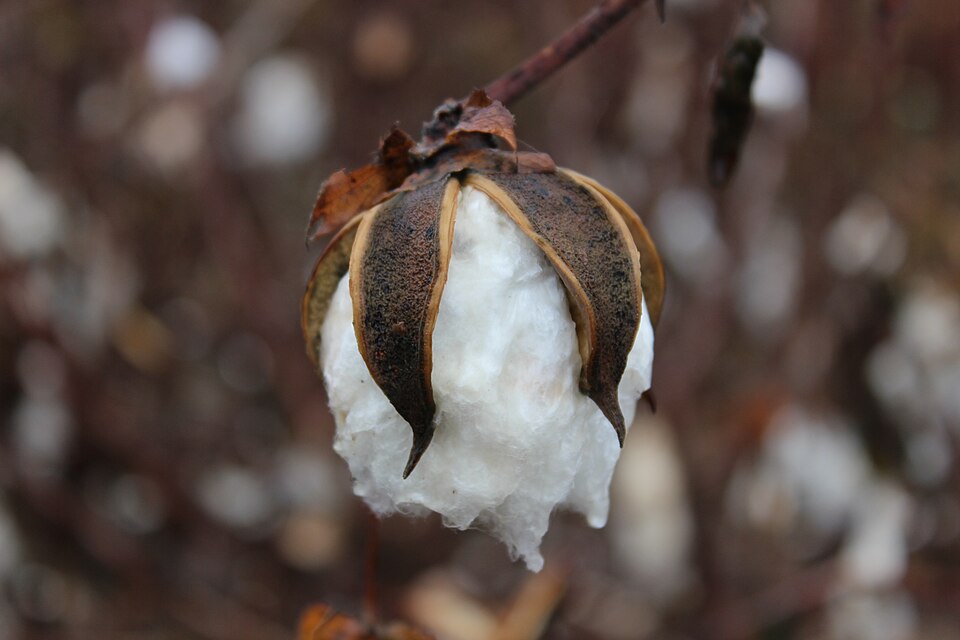
Correct — A, Cotton. Cotton is the only plant product in the list and it is not a protein at all — it is a carbohydrate. Each cotton fibre is a single elongated epidermal cell growing out of the cotton seed coat, and the dry mature fibre is roughly 90 per cent cellulose, a long chain of glucose units joined by beta-1,4 links. Cellulose is built only from carbon, hydrogen and oxygen: there is no nitrogen in it, no amino acids and no peptide bonds, which are the defining features of a protein. The other three are all animal products and all protein fibres — hair and hoof are keratin, and spider silk is a spun protein — so cotton is the odd one out.
- (b)Hair — Hair IS a protein. Mammalian hair is made of keratin, a fibrous structural protein unusually rich in the sulphur-containing amino acid cysteine; the disulphide bridges between cysteine units give hair its strength and elasticity, and it is these bonds that hair-straightening and perming chemicals break and re-form.
- (c)Spider silk — Spider silk IS a protein. It is spun from spidroins, proteins stored as a concentrated liquid in the spider's silk glands and converted into a solid fibre as the spider draws it out through the spinnerets. Weight for weight it has exceptional tensile strength and toughness — but chemically it is simply a protein fibre, like the fibroin of silkworm silk.
- (d)Hoof — Hoof IS a protein. A hoof is hardened keratin — the same protein family as hair, horn, nail, claw and feather. Its toughness comes from densely packed, heavily cross-linked keratin, not from any mineral.
Fibres of biological origin fall into two chemical camps. Plant fibres — cotton, jute, flax, hemp, coir — are cellulosic: polysaccharides of glucose containing only C, H and O. Animal fibres — wool, hair, silk, hoof, horn, nail, feather — are proteins: polymers of amino acids linked by peptide bonds, always containing nitrogen and usually sulphur as well. The single fastest test in an exam is the nitrogen test: proteins contain nitrogen, carbohydrates do not.
Do not be misled by appearance. All four options are thread-like, tough and fibrous, so texture tells you nothing. Sort by origin instead: hair, hoof and spider silk are made by animals, cotton is made by a plant. In an 'odd one out' among biological fibres, the plant fibre is the carbohydrate. The same logic separates natural silk (a protein) from rayon, the so-called 'artificial silk' that is really cellulose.
- Cotton fibre is almost pure cellulose — a carbohydrate of C, H and O only, with no nitrogen
- Hair, hoof, horn, nail, claw and feather are all keratin, a fibrous protein cross-linked by cysteine disulphide bonds
- Spider silk (spidroin) and silkworm silk (fibroin, coated with sericin) are both protein fibres
- Every protein contains carbon, hydrogen, oxygen and nitrogen; most also contain sulphur
- Plant fibres (cotton, jute, flax, hemp, coir) are cellulosic; animal fibres (wool, silk, hair) are proteinaceous
- Assuming anything strong and thread-like must be a protein — cotton and jute are plant carbohydrates
- Confusing natural silk (a protein) with rayon, marketed as 'artificial silk' but actually regenerated cellulose
- Thinking hooves and horns are mineral like bone — they are keratin, a protein
UPPSC and UPSC both ask this as 'which is/is not a protein', 'which fibre is of plant origin', or by naming a protein (keratin, fibroin, collagen, myoglobin) and asking where it is found — one clean plant-versus-animal fibre list answers all of them.
Alpha-keratin is a protein present in
- (a) blood
- (b) skin
- (c) wool
- (d) eggs
Answer(c) wool
The same fact from the other direction — keratin is the protein of animal fibres such as wool, hair, hoof and horn, which is exactly why options (b) and (d) here are proteins and cotton is not.
Which of the following elements are present in all proteins? I. Carbon II. Hydrogen III. Oxygen IV. Nitrogen Select the correct answer from the codes given below:
- (a) I and II
- (b) I, II and IV
- (c) I, III and IV
- (d) I, II, III and IV
Answer(d) I, II, III and IV
Supplies the decisive test used here — every protein contains nitrogen, while cellulose (cotton) contains only carbon, hydrogen and oxygen, so cotton cannot be a protein.
Which among the following is a constituent of natural silk?
- (a) Phosphorus
- (b) Nitrogen
- (c) Magnesium
- (d) Potassium
Answer(b) Nitrogen
Same concept, same fibre family — natural silk is a protein (fibroin), so it contains nitrogen; cotton, being cellulose, does not.
Which one of the following substances is NOT synthetic?
- (a) Fibroin
- (b) Lexan
- (c) Neoprene
- (d) Teflon
Answer(a) Fibroin
Tests the same protein-fibre knowledge — fibroin is the natural protein of silk, the animal-fibre counterpart of the keratin in hair and hoof named in this question.
- practice — not a real PYQ
Which one of the following fibres is NOT of animal origin?
- (a)Wool
- (b)Mulberry silk
- (c)Jute
- (d)Pashmina
Answer(c) Jute — a bast fibre obtained from the stem of the jute plant and made of cellulose. Wool, mulberry silk and pashmina are all animal protein fibres.
- practice — not a real PYQ
The protein that makes up human hair and nails and the hooves and horns of animals is:
- (a)Collagen
- (b)Keratin
- (c)Elastin
- (d)Albumin
Answer(b) Keratin — a fibrous, sulphur-rich structural protein. Collagen is the protein of connective tissue and skin, elastin gives tissues their elasticity, and albumin is a soluble protein of blood plasma and egg white.